 |
 |
|
|
|
|
| The 18th Dynasty began around 1552 BC and ended around 1296 BC. This Dynasty, along with Dynasties XIX and XX, is referred to as the New Kingdom. Pharaohs of the dynasty include Amenophis I-III, Tuthmosis I-IV, Hatshepsut, Akhenaten, and Tutankhamun. This was a time of great prosperity for Egypt, as is demonstrated by the lavish works of art and architecture of this period. |
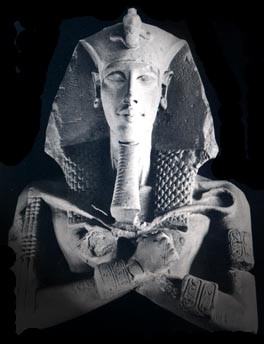
Akhenaten
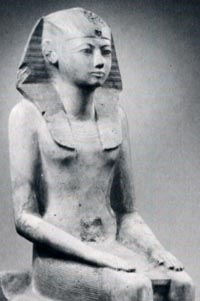
Queen Hatshepsut
| Queen Hatshepsut was the daughter
of Tuthmosis I and wife of Tuthmosis II. When her husband died she named
herself pharaoh instead of obeying her husband's wish for Tuthmosis III,
her stepson, to rule. Needless to say, Tuthmosis III was very upset about
this. When he did finally become pharaoh, after Hatshepsut's death, he
put forth a great deal of effort to erase evidence of her rule. Fortunately,
he was not too successful.
Artists of the time had a hard time depicting her. Hatshepsut's feminine features were often diminished in order to represent the conventional pharaonic portrait. |

Akhenaten and his family with Aten
| Akhenaten is sometimes called
the 'heretic king'. He was bold enough to denounce all of the Egyptian
gods and promote his god, Aten. He was born Amenophis IV, but changed his
name to honor Aten.
Aten was represented by a disk with extending rays and had no other form. At the end of the rays were little hands that held ankhs. Only Akhenaten and his family were allowed to worship Aten. The people of Eygpt were to worship Akhenaten. It is believed that the Eygptians continued to worship their previous gods. The time of his rule (1353-1333) is referred to as the Amarna period, named after the new city Akhenaten founded. Conventions of art changed a great deal during his reign. Heads and necks were elongated; hips, thighs, and buttocks were enlarged and the royal family was shown interacting in a loving manner. Some Egyptologists believe that Akhenaten was the father of Tutankhamen, but there is some debate over this. |
 |
 |
 |