
|
|
 |
|
General (top) Introduction (top)
|
|
|
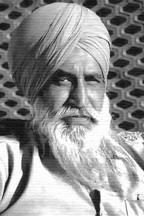
| Majiid is a family man and a teacher. When not deep in his studies, he is telling stories to young children, training his apprentices, or taking care of promises made. He believes one gets back more than one gives, and so practices benign openness. He is quick to identify the layabouts though, and has short shrift with them: hard work is the only path to perfection. Any shirking is to be dealt with ruthlessly. He does not judge others though, unless they have made a promise to him. If so, he holds them to it. He is strict with himself while being overflowingly generous with others, socially. He is convinced that selfish thought and action stains one's soul, and while pragmatic, he considers the long-term consequences of his personal thoughts and deeds and acts virtuously (when he does not give in to temptation, and it is a rare event when he does). He is a man of passionate and strong will and intellect, yet that passion is turned only to himself and the protection of others. He considers it his holy duty to protect the interests of the weak and ignorant, though the interests of the larger group always outweighs those of the individual. He is a man of deep thought and complex philosophy. He does not expect anything of others, however: their paths to enlightenment are their own, though he may guide them upon their request (only). He does not volunteer his views, unless he considers the greater good would be harmed by his non-interference. He will move to stop evil, however. Evil being defined as self-interested action that harms others, especially the long-term benefits of the larger number vs. the smaller. etc. |
|
|
| Past (top)
Majiid started life as a third son in the Al-Muhendis clan business devoted to the design and construction of marvels mystical and mundane, highly engineered, and simpler devices. The Al-Muhendis are inheritors and descendents of an ancient and illustrious line of Third-Empire architects, builders, and natural philospher magicians responsible for many of the great civil works now buried by the decay of time and desert winds. Until the arrival of the Pelai, the al-Muhendis were sought out by all the great nobles and princes of the Delta. Such things came easily to Majiid, with his great natural intellect and ascetic inclination. They came so easily that while his siblings were sweating over their studies, he had finished his and was off with the story-tellers, marveling in their tales, and learning their trade. He was also so effective at directing various projects, that he had more than enough time to spare to increase his more esoteric grasp of the higher arts of engineering, artifice, alchemy, astrology, and numerology, excelling at the mystical side to the family business, diminished though it was compared to the glories of times past. Still, his greatest satisfaction came from hearing and telling stories of wondrous things of times past, and he grew quite accomplished and famous, sought out by accomplished Rawun and others to share stories and lore. In fact, his knowledge became so great, that he was sought by certain scholars for his knowledge and they shared many conversations and exchanges of knowledge with a wide variety of interested folk. In time, Majiid drew the attention of the priests of Enki, who saw in him a fellow scholar and prime candidate for the priesthood. Majiid grew interested and achieve good relations with them, but never quite came into their fold. During this time, Majiid was also approached by members of a mysterious cult devoted to the restoration of the worship of Thoth-Atuk, and a return to the learned days of the Third Empire. This time, Majiid was hooked and was brought into the priesthood. As was the need with such a hidden cult, he kept his efforts secret, hiding his devotion behind a veneer of a follower of Enki. Time passed, and Majiid became steeped in ancient lore and mystical knowledge. He grew influential and powerful within the cult of Thoth-Atuk, eventually rising to nearly the highest levels of the priesthood and stopped. At the highest levels, the politics were convoluted and less than savory to one of Majiid's morals and philosophy. He grew in conflict with his peers, and not adept or interested in such political wrangling, faded from influence. Disenchanted and disappointed, though keeping his faith, Majiid gravitated away from the priesthood, eventually retiring from active efforts, and devoted himself more and more to his mystical studies. His focus was in the natural lore of the ancient philosophers of the Third Empire. Their emphasis on the interaction between the energies of the Helix and physical things and how magical effects could be precisely determined by rigorous astrological observation, numerological calculation, and alchemical interactions with elements, flora, and fauna captured his full attention. He became knowledgeable, accomplished, and powerful in such magics. His understanding grew until he became known and respected in astrological, alchemical, and numerological circles. By now, Majiid was an old man. He was into his fourth career now. First, as an architect and engineer, then as a sage steeped in ancient legends and lore, later secretively as a cult priest of the Thoth-Atuk, god of knowledge, and now as a Natural Philospher Magician: a philosopher, teacher, astrologer, alchemist, and numerologist (aye, and artificer). |
| Present (top)
Majiid is retired from the family business, though they consult with him at need. He has a wife and several children and maintains a household in Tel-Ashurah. He maintains contacts with scholars and enthusiasts of legends and lore. His personal interests cause him to travel far and wide, visiting ancient sites, searching for knowledge. Sometimes he does tasks for his colleagues in order to gain access to their scholarly collections. Sometimes he acts as a purveyor of laboratory equipment and special materials. He belongs to a secret society called the "Magre Yodaile "Grand Alliance whose motto is "H'kartha for the H'karthans." The Vault of Secrets, located in a secret location in the Al-Jhoz is the headquarters fo the group. Their aim is drive out the outworlders: Pelai, Prometheans, Ufrai, Demon and Slaadi from H'kartha and found a human dominated Fourth Empire. The alliance consists of the Sisterhood of the Ta'ax Gharu, The male counterpart to this group: the Viziers, The Society of the Shifting Sands (aka 'The Antiquaries), The Red-Eyes, the Order of the True Flame (Pyromancers), the Servitors of the Constellations, and with loose ties to the Yildirim Ghazim (Thunderbolt Warriors of the Faith). Majiid is a member of the "Antiquaries". Whitens his hair and beard with cantrips to appear older, and thus even more respectable. His travels in all weathers and experiences has added lines to his face, helping him achieve the masquerade. Even so, in only a few more years he will feel the affects of age to match appearances. |
| Future (top)
Majiid despises the Pelai for keeping his people as slaves, and wishes to work to remove their influence. While respecting the Ishandeshee and their cultural contributions, he feels the Third Empire and earlier human civilizations's accomplishments are being diluted by sea-elf influence. He tries to promote human achievements without condemning the positive contributions of the elves. |
|
|
| Class (triple): Bard / Cleric / Wizard |
Experience: 20,000/55,000/142,000 |
Armor Class
|
Active
Spell |
|
| Level: 6(7) / 7 / 9 |
Experience Needed: 250,000 |
9
|
None
|
|
| Race: Human (Kiresh) |
Hit Points: 41 (6+4+5+5+5+5+6+3+2) |
5
|
Armor
|
|
| Alignment: Lawful Neutral (Good) |
Size: 168 cm (5'6") tall and of small frame. |
3 |
Shield
|
|
| Age: 55 (looks 10 years older). |
Weight: 72 kg (159 lbs) |
2 (3-1)
|
Invisible Mail
|
|
|
Notes: |
||||
| Strength: |
11
|
hit/damage adj.: +0, Weight Allow 40lbs., Maximum Press 115lbs., Open Doors 6/20, BB/LG 2% |
| Dexterity: |
15
|
Reaction/Missile Adj +0, Defensive Adj -1 |
| Constitution: |
13
|
HP Adj +0, Sys Shock 85%, Res. Survival 90% |
| Intelligence: |
18
|
Bonus Proficiency Slots 7, Max Spell Level 9th, Chance to Learn Spells 85%, Max Spells/Level: 18, Bonus Spells: (2) 1st, (2) 2nd, (1) 3rd, (1) 4th level spell |
| Wisdom: |
18
|
Magical Def Adj +4, Chance of Spell Failure: 0%, Bonus Spells: (2) 1st, (2) 2nd, (1) 3rd, (1) 4th level spell |
| Charisma: |
16
|
Max Henchmen 8, Loyalty Base +4, Reaction Adj +5 |
|
|
|
WP
|
Type
|
Level
|
Cost
|
|
Dagger
|
Third Empire Noble
|
Journeyman
|
1
|
|
Quarter Staff
|
Third Empire Architect
|
Journeyman
|
1
|
|
|
|
NWP
|
Emphasis
|
Level
|
Cost
|
NWP
|
Emphasis
|
Level
|
Cost
|
|---|---|---|---|---|---|---|---|
|
Ancient History |
Sage
|
Adept 2 |
-
|
Alchemy |
Transmutation
|
Journeyman
|
2
|
|
~ A.H. |
Age of Nine Nations of Men
|
Journeyman
|
1
|
Artifice/Technomancy |
Enchantment
|
Adept
|
7
|
|
~ A.H. |
Age of Six Empires
|
Journeyman
|
1
|
Astrology, Astronomy & Navigation |
Spellcrafting
|
Journeyman
|
*
|
|
~ A.H.
|
Age of Heroes
|
Master
|
3
|
Calligraphy |
Scribe Dweomer
|
Journeyman
|
1
|
|
~ A.H.
|
Age of Wonders
|
Journeyman
|
1
|
Engineering |
Civil Works
|
Journeyman
|
2
|
|
~ A.H.
|
Age of Sorrows
|
Journeyman
|
*
|
Numerology |
Spell Design
|
Journeyman
|
1
|
|
Ancient Languages
|
Sage
|
Master
|
-
|
Spellcraft (wizard) |
Enchantments
|
Journeyman
|
1
|
|
~ A.L.
|
Ta-Mu-Karesh
|
Master
|
*+2
|
Sixth Sense |
Spellcrafting
|
Journeyman
|
2
|
|
Legends & Lore
|
H'kartha
|
Journeyman
|
1
|
||||
| Modern Languages |
Sage
|
Journeyman
|
-
|
||||
|
~ M.L.
|
Gondwanapal (Kireshku)
|
Journeyman
|
free
|
||||
|
~ M.L.
|
Ishandir
|
Journeyman
|
free
|
||||
|
Read/Write.
|
Fharul Script
|
Journeyman
|
*
|
||||
|
Storytelling
|
Kiresh
|
Journeyman
|
1
|
||||
| * Loremaster Bonus | * Loremaster Bonus | ||||||
|
|
|
Skill
|
Base
|
Lore master
|
Dex
|
No Armor
|
95 pts.
|
Score
|
Special
|
|
Pick Pockets
|
10%
|
-5%
|
-
|
+5%
|
-
|
10%
|
Includes: undo/redo; palm/place; lift/drop; strip/garb;
sleight of hand; adjust items; exchange; slit.
|
|
Detect Noise
|
20%
|
+5%
|
-
|
-
|
+20%
|
45%
|
Includes: number of beings; race; nature of beings; exact
direction; movement; bits of conversation; distance to beings.
|
|
Climb Walls
|
50%
|
-10%
|
-
|
+10%
|
-
|
50%
|
|
|
Read Languages
|
5%
|
+15%
|
-
|
-
|
+75%
|
95%
|
|
|
Legend Lore
|
30%
|
-
|
-
|
-
|
-
|
30%
|
See Legend Lore above.
|
|
|
| Legend Lore (top) One of the most useful abilities of the Lore master is his knowledge of famous magical items and uncanny knack for figuring out how they function. To perform legend lore, the Lore master must scrutinize the item closely. This does not necessarily require actually handling the item, but it must be fully visible to the bard. Scrutiny takes 1d10 rounds, after which a percentile roll is made. The Lore master has a 5% chance per level of knowing something about the item. The exact information revealed is up to the DM. The bard draws upon history, rumors, and clues based on the item's construction to gain this information. Typical information revealed includes the item's history, maker, name, and other less technical aspects. Information such as the number of pluses, exact command words, etc., are rarely learned. This type of specific information is left for spells, such as identify, commune, limited wish, and so on. If the roll is equal to or less than the Lore master's level, some very specific information should be given to the Lore master player. Furthermore, if the roll is 01, the Lore master should know almost everything there is to know about the item. The Legend Lore table may be used as a fast method to determine what is known about an item that was successfully examined by a Lore master. To use this table, the Lore master must first succeed with the legend lore percentile roll. If this roll succeeds, the player should roll on the table once per level of the Lore master. Results that come up more than once are not rerolled; the Lore master simply knows a lot about this aspect of the item. After rolling, give the DM some time to come up with a suitable background and history. Few items are detailed with this type of information. After all, Lore masters tend to be more curious about the legends and lore that lie behind an item's powers than most others. |
| Arcane Lore (top) Through their devoted study of the past, Lore masters come across numerous texts on the arcane lore of magic. They read all of these, hoping that some great tale will be uncovered. Lore masters eventually gain a fundamental understanding of many strange magical items not normally usable by the bard class. Thus, Lore masters can attempt to use any magical item. A Wisdom check is rolled; if it is successful, the Lore master successfully uses the magical item in question. This does not mean that the Lore master fully understands the operation of the item, only that his attempt to use it in this particular way is successful. Lore masters also pore over scrolls and spell books whenever they get the chance. This enhances their understanding of magical spells so much that they memorize and cast spells as if they were one level higher. Thus, a 1st-level Lore master casts spells the same way as a 2nd-level True Bard. |
| Persuasion (top) Usually Lore masters recite their collections of historical fables and legends to a crowd simply to entertain and educate. Although these oral performances are wonderful to hear, they do not necessarily have any direct impact upon the crowd. When a Lore master wishes to affect the mood or actions of an audience, he uses his great skills of verbal persuasion, oratory, and rhetoric. He might relate the legend of the horrible massacre of Tothar Keep by lizard men in an attempt to incite the crowd to hate and despise lizard men. Using such persuasion takes at least 1d10 rounds. All who are listening to and can understand the Lore master must roll a saving throw vs. paralyzation with a -1 penalty for every three levels of the Lore master. Those who fail have their reactions adjusted one level up or down (as desired by the Lore master). Those who succeed are not inspired by the tale, and those few who roll a natural 20 strongly disagree with the tale and have their reactions adjusted one level in the opposite direction. |
| Etymology (top) Lore masters can make their read languages attempt twice if the language in question is an ancient one (a language no longer spoken). They can also use their read languages ability to decipher runes, glyphs, pictograms, ideograms, or any other form of ancient visual communication. Even though a Lore master cannot be proficient in a newly encountered ancient language, if he makes his Ancient Languages proficiency check, he understands the basics of the ancient language. Elementary use of the language is gained, allowing for written or even spoken communication at one-tenth the normal rate. |
|
|
|
3d6 Roll
|
Information Gained |
|
3
|
How many charges/uses left |
|
4
|
Whether item is intelligent |
|
5
|
Whether items is cursed/evil |
|
6
|
Value on the open market |
|
7
|
Name |
|
8
|
Famous past owners |
|
9
|
Age of item |
|
10
|
What race created it |
|
11
|
Where it was made |
|
12
|
Who crafted it |
|
13
|
Alignment of owners |
|
14
|
Who can use it |
|
15
|
General effects |
|
16
|
How to activate it |
|
17
|
Item type (as per DMG ) |
|
18
|
Let player read DMG entry |
|
|
|
Thoth-Atuk, God of Knowledge: The Kiresh god of Magic, Knowledge, and
Truth. His shrines were great libraries. He was the patron of the city
of Nippya for a time. He is said to have revealed the secrets of the various
magical writings in use today and in the past. |
|
|
|
Specialist |
Race |
Abilities |
Signature Spells (schools) |
Accessable Schools |
Inaccessable Schools |
|
Natural Philosophy Magician (NPM) |
H,1/2E,E |
16 Int, |
Alteration, Metamagic |
Abjuration, Alteration, Conjuration (1/2), Divination, Enchantment (1/2), Evocation (1/2), Illusion (1/2) |
Summoning (1/2), Charm (1/2), Invocation (1/2), Phantasm (1/2), Necromancy |
| Signature Spells All spells from the Alteration and Metamagic (see below) "signature schools" that do not also belong to inaccessable schools. Signature Spells, in this sense, does not reflect the Signature Spell option from Players Options: Spells & Magic. |
|||||
|
Description |
|||||
|
Requirements |
|||||
|
Notes |
|||||
|
Advantages (+85) (+7) Metamagic Mastery: Metamagic
spells, knowledge, and effects are treated (researched, learned, and memorized)
as if the mage's intelligence is one point greater (cumulative with the
below Learning Bonus). Any bonus spells must come from Metamagic only. (+5) Proficiency Group Crossovers: due to their broad education, Natural Philosopher Magicians may learn proficiencies from the Priest group for no additional cost. |
|||||
|
Disadvantages (-45) (-10) Hazardous Spells: natural philospher magicians directly
manipulate the magical energies that flow through their spell assemblages.
If they lose focus, the energies will do harm: each time a spell is successfully
cast, the natural philospher magician must save vs. Death Magic or take
1d4 subdual damage per spell level. If the spell is not successfully cast,
the natural philospher magician must save vs. Death Magic or take 1 hp
per spell level of physical damage in addition to the 1d4 subdual damage
per spell level. Any break in caster concentration results in a
failure to successfully cast a spell. (-5) Slower Casting Time: Unlike other spellcasters whose use of spell components simply aids in the efficacy of spells, all spells must be cast using a method called "spellcrafting". The method requires the use of specially crafted Talismans. The spellcrafting rituals take a long time since natural philospher magician spells are unusually complicated and so take the next greater time limit to cast. Time Limits: Segment, Turn, Round, Hour, Day, Week, Month, Year. |
|||||
|
|
| Metamagic includes all magical spells and effects that Create, Percieve, Transform, Destroy, or Control magical Power, including modifying the game statistics of OTHER spells: Range, Components, Duration, Casting Time, Area of Effect, Saving Throw, Mana Shells, Spell Slots. See Metamagic Spell List. |
| Inspiration: Ars Magica ~ Arts: Create (Creo), Perceive (Intellego), Transform (Muto), Destroy (Pergo), Control (Rego). ~ Techniques: Power (Vim). |
| Metamagic Spell List 1st: 2nd: 3rd: 4th: 5th: 6th: 7th: 8th: **INCOMPLETE** |
|
|
| 1st level | 5 (3 base + 2 int bonus*) Any school of magic. Acts as if 1 level higher for casting and memorization. |
| 2nd level | 4 (2 base + 2 int bonus*) Any school of magic. Acts as if 1 level higher for casting and memorization. |
| 3rd level | 2 (1 base + 1 int bonus*) Any school of magic. Acts as if 1 level higher for casting and memorization. |
| 1st level | 5 (3 base + 2 wis bonus) |
| 2nd level | 5 (3 base + 2 wis bonus) |
| 3rd level | 3 (2 base + 1 wis bonus) |
| 4th level | 2 (1 base +1 wis bonus) |
| 1st level | 8 (4 base + 2 int + 2 signature {1 specialty, 1 signature Int }) |
| 2nd level | 7 (3 base + 2 int + 1 signature {specialty} +1 metamagic {metamagic Int}) |
| 3rd level | 5 (3 base + 1 int + 1 signature {specialty}) |
| 4th level | 6 (2 base + 1 int + 2 signature {1 specialty, 1 signature Int} + 1 metamagic {metamagic Int}) |
| 5th Level | 2 (1 base + 0 int + 1 signature {specialty}) |
|
|
| Chromatic Orb (Alteration, Evocation) (WHB) |
S
|
Alter Self (Alteration) (PHB) |
S
|
Enchanted Weapon (Enchantment) (PHB) |
S
|
Bestow Enchantment (Enchantment) (WSC1) |
L
S |
Enchant an Item (Enchantment) (PHB) |
S
|
| Color Spray (Alteration) (PHB) |
S
|
Cantrip Extension (Alteration, Enchantment) |
Item (Alteration) (PHB) |
S
|
Enchant Lesser Item (Enchantment) |
Extension II (Alteration) (PHB) |
S
|
||
| Conjure Spell Component (Conjuration) (TOM) |
Charge (Alteration, Conjuration) (WSC1) |
L
S |
Invisible Mail (Abjuration, Evocation) (WHB) |
Fabricate (Alteration, Enchantment) (PHB) |
S
|
Nemicron's Transference (Alteration) (WSC3) |
L
S |
||
| Copy (Alteration) (WHB) |
S
|
Enchant Greater Amulet (reversable) |
Jalartru's Miraculum (Alteration) (WSC2) |
L
S |
Magic Staff (Enchantment) (TOM) |
S
|
Reflection (Abjuration) (WSC3) |
L
S |
|
| Deeppockets (Alteration, Enchantment) (PHB) |
S
|
Greater Cantrip (All / Accessable) |
Lance of Disruption (Evocation) (PO:S&M) |
Rary's Mnemonic Enhancer (Alteration) (PHB) |
S
|
||||
|
Enlarge (reversable) |
S
|
Minor Enchant Lesser Item (Enchantment) |
L
N S |
Leomund's Secure Shelter (Alteration, Enchantment) (PHB) |
S
|
Stoneskin (Alteration) (PHB) |
S
|
||
| Erase (Evocation / U) (PHB) |
Past Life (Divination) (TOM) |
Magic Mirror (Enchantment, Divination) (PHB) |
S
|
||||||
| Find Familiar (Conjuration, Summoning) (PHB) |
Preserve (Abjuration) (WSC3) |
Maladweomer (reversable) (Alteration) (WSC2) |
L
S |
||||||
| Identify (Divination / U) (PHB) |
Ride the Wind (Alteration) (TOM) |
S
|
Minor Enchant an Item (Enchantment) |
L
N S |
|||||
|
Mending |
S
|
Sense Shifting (Alteration) (TOM) |
S
|
Spelltouch (Enchantment ) (WSC3) |
L
S |
||||
| Metamorphose Liquids (Alteration) (TOM) |
S
|
Serrel's Minor Enchantment (Enchantment) (WSC3) |
L
S |
||||||
|
Enchant Lesser Amulet (reversable) |
Smelting
(reversable) (Alteration) (WSC3) |
L
S |
|||||||
| Prot. from Hunger & Thirst (Alteration) (WHB) |
S
|
||||||||
| Shield (Evocation) (PHB) |
|||||||||
| Reveal Magic (Alteration, Divination) (WSC3) |
L
S |
||||||||
| Write (Evocation) (WSC4) |
|||||||||
| L
indicates a link to a definition below N indicates new spells found or researched by Majiid al Qadir S indicates signature spells as defined below in the Natural Philosopher Magician entry WHB = Complete Wizard's Handbook; TOM = Tome of Magic; PO:S&M = Player's Option: Spells & Magic; WSC1-4 = Wizard's Spell Compendium Volumes I-IV Green spells have been exchanged as of this revision of majiid.html |
|||||||||
|
|
| Increases the duration of Cantrip effects to the duration of the Cantrip spell itself. May empower appropriate Cantrip effects to last up to 101 days when cast on a night of High Magic (I cannot think of any examples). Alternatively can extend any other game statistics (Range, Components, Duration, Casting Time, Area of Effect, and Saving Throw) to some value no greater than any 1st-level spell and GM conditions and/or acceptance. It is the cantrips of greater power that are benefitted by the Extension aspect of this spell. Extension III effects may be justified by comparing the duration of a cantrip effect with the equivalent modifed game statistic Basically, any 1st level game statistic may be duplicated by this spell. The guiding purpose of this spell is to allow convenience magicks that are real and useful, but too trivial to devote a 1st-level spell to. |
| Same as Cantrip (1st level), but is able to replicate the more powerful Cantrips from the Wiizard's Spells Compendium IV (includes 1st edition Unearthed Arcana cantrips as well as Forgotten Realms cantrips), the Great Net Spellbook, and Peako's Book O' Cantrips, with exceptions. Note that the 2nd level Sinister Cantrip effects may be duplicated with this spell. Note especially that the Wizard's Spells Compendium IV states that 1st edition cantrips can be used to represent the effects of the 2nd edtion Cantrip spell (1st level), even though the Cantrip spell itself states that cantrip effects only last as long as the caster concentrates upon them. Many 1st edition cantrips have longer durations or other game statistics. The Greater Cantrip spell takes care of these discrepancies, allowing for greater (but ill defined) power of cantrips. Option: the casting of powerful cantrips accelerates the expiration of this spell. Related Idea: a typical cantrip effect is no greater than a subjective 1/3 of a 1st level spell. Any cantrip that exceeds the subjective 1/3 level uses up the spell duration in whatever way the GM sees fit. In a low-mana area, the Greater Cantrip spell might dissipate. In a high-mana area, greater cantrip powers can be sustained. In normal mana areas, an hour (60-120 cantrips) or more of cantrip duration might be expended. The closer to 1st level effect, the more duration is used until at some point shy of a 1st level effect, the Greater Cantrip spell dissipates. Possibly the mage must make a save vs. spells or suffer some kind of ill effect (headache, palsied hands, bleeding ears, etc.). The goal is to allow a variety of useful, yet trivial effects while penalizing overreaching in some reasonable fashion. Those who want to take the risk suffer the penalties as well as gaining the benefits (or not). |
|
Same as Protective Amulet (1st level) except it is reversible, its component reuseable, and the spell can be optionally applied to an inanimate object of no greater than Large size (book, cloak, shoe, door, keystone, etc.). The reversed form of this spell, Enchant Lesser Bane causes the bearer to be subject to greater effect of the specified spell up to maximum or greater effect where appropriate and subject to GM whim. Possibilities include Sleep affecting higher levels, spell effects subject to a -4 save or allow no saving throw at all, or suffer maximum effect. Refer to Maladweomer for further possibilities. The full capability of this spell is dependent upon the quality of the crafted amulet. Garbage in, garbage out. The GM can thus declare a need for special materials, time, money, etc. to control abuse of this spell and keep it reasonable. Whoever or whatever bears the amulet/bane gets the effect, so it can be passed around until the spell expires. |
|
Same as Create Enchanted Tattoo (2nd level) except can be applied to any symbol/glyph/rune/inscription, etcs. that symbolically (thaumaturgy - like produces like) represents the desired result. Can be applied to a target to affect the target, living or inanimate, can be applied to any surface or material capable of bearing the application. Whatsoever is bearing the amulet (the object with the applied symbol) gains the advantage, and so the amulet can be given or attached to another and that target then gains the amulet's advantage until its enchantment fails. It is wise to discard the amulet after its duration or else suffer possible side effects of residual magic.??? Other powers that are appropriate for amulets can be invested with this spell. The Artifice skill is used to design new abilities, with the length of time for such development dependent upon skill in Artifice as well as the power of the ability. The Charms, Talismans, and Wards skill is a specialized form of Artifice that is particularly effective at coming up with new abilities, possibly even on the spur of the moment.???. The reversed form if this spell Enchant Greater Bane creates a cursed charm that causes reversed effects on the bearer of the Bane. Whoever or whatever bears the amulet/bane gets the effect, so it can be passed around (if possible) until the spell expires. Tattoos, for example, are hard to pass around, but a piece of tattooed skin could be... |
|
Same as Enchant Lesser Item, (5th level) spell except that it costs half as much, takes half the time to enchant, and must begin and end on a night of High Magic, which may lengthen the process as there may be stops and starts before the Lesser Item enchantment is finally completed in order to work under cosmological constraints.. Also, unlike the 101 days to 101 years longevity of items made with the Enchant Item III spell, lesser items only last 1d4 days per caster level before their magical energies begin to degrade and eventually dissipate. Thus such items should be used within the time limit or be wasted. As usual, fine quality and Alchemical Refinement can extend the duration of the enchantment, but to no more than 101 days. Due to degraded residual magic, a previously enchanted item that expires before used becomes unstable and should be left alone for some time after its magic theoretically expires. |
|
Same as Enchant an Item, (6th level) spell except that it costs half as much, takes half the time to enchant, and must begin and end on a night of High Magic, which may lengthen the process as there may be stops and starts before the Lesser Item enchantment is finally completed in order to work under cosmological constraints.. Also, unlike the 101 days to 101 years longevity of items made with the Enchant and Item spell, lesser items only last 1d4 days per caster level before their magical energies begin to degrade and eventually dissipate. Thus such items should be used within the time limit or be wasted. As usual, fine quality and Alchemical Refinement can extend the duration of the enchantment, but to no more than 101 days. Due to degraded residual magic, a previously enchanted item that expires before used becomes unstable and should be left alone for some time after its magic theoretically expires. |
|
Note: In H'kartha Adventures, magi require an enchantments spell to create any magical items in addition to all of the attendant rules indicated in published 2nd edition AD&D rules as well as H'kartha Adventures Home Rules. Magi must normally be 9th level to create scrolls or potions, so the enchantment spell(s) should be 5th level. Only one enchantment spell is necessary for such related one-shot magical items. This is that spell: Scrolls, Potions, and Minor Items require this spell and certain
proficiencies to be crafted: |
|
|
Spells from the Wizard's Spells Compendium Volumes I-IV
Bestow Enchantment spells
/ (top)
(Enchantment)
(Metamagic)
Level: 5
Range: Touch
Components: V
Casting Time: As spell bestowed + 1
Duration: As spell bestowed
Area of Effect: Creature touched
Saving Throw: None
Source: WSC1
By casting this simple enchantment, the enchanter is able to cast on another being a spell he could normally cast only on himself (that is, range 0, area of effect ãthe casterä). For example, the enchanter first casts bestow enchantment on his fighter companion, then follows it up with an alter self spell. The fighter can manipulate the alter self spell as if he had cast the spell himself. The duration of the bestow enchantment spell ends when the duration of the bestowed spell ends.
Charge spells
/ (top)
(Alteration, Conjuration)
(Artifice)
Level: 2
Range: 0
Components: V, S, M
Casting Time: 4 rds.
Duration: Permanent
Area of Effect: 1 object
Saving Throw: Special
Source: WSC1
The caster of this spell brings forth an electrical charge from the quasi-elemental
plane of Lightning. The charge is placed onto an inanimate object or item to
protect it from the touch of any but the caster. The charge cannot be placed
on creature or sentient object; in this case, the dweomer fails and the spell
is lost. If the caster tries to cast this spell on an object already protected
by a warding glyph or spell, then the charge fails. The first living creature
to touch the charged object is shocked by an electrical discharge for 2 points
of electrical damage per level of the caster (save vs. spell for half damage).
The spell will not inflict more than 20 points of damage (a 10th-level caster
or better) and will not harm the caster in any event. The charge is transferred
through any conductive material, so it is passed through daggers, metal tools,
etc. The charge lasts until triggered by a living creature, dispelled, or negated
by the caster (by touching the protected object and dismissing the charge).
The material component is a thin strand of drawn copper wrapped around a small
piece of lodestone.
Create Enchanted Tattoo spells
/ (top)
(Alteration, Enchantment)
(Metamagic)
Level: 2
Range: Touch
Components: V, S, M
Casting Time: 1 turn
Duration: 1 day/level
Area of Effect: Creature touched
Saving Throw: None
Source: WSC1
This spell allows the creation of enchanted tattoos. The exact nature of the
tattoo is determined by the caster, and the tattooâs effect is based upon the
level of the caster. Only one tattoo is created by this spell, although multiple
applications are possible.
A wizard of 3rd to 6th level can inscribe the following tattoos:
+1 to any one saving throw (vs. death magic, vs. wands, and so on);
+1 to attack rolls; or
-1 to AC.
A wizard of 7th to 12th level can inscribe the lower level tattoos, plus the
following:
+1 to all saving throws;
One extra attack every two rounds; and
One extra spell - this can be of 1st or 2nd or 3rd level (only one spell, and
only one level, not one of each).
A wizard of 13th level or higher can inscribe all of the above tattoos plus
the following:
+5% magic resistance;
+1 to any one attribute; or
+1 level of casting ability (this increases the casterâs effective level, hut
not the total number of spells-an 1 lth-level wizard raised in casting ability
in this manner casts spells as a 12th-level wizard in terms of range, area of
effect, and so on, but does not gain access to the increased number of spells
or to 6th-level spells until he actually becomes a 12th-level wizard).
Several restrictions limit the number and type of magical tattoos that an individual
can bear. An individual cannot have more than three enchanted tattoos, and none
of these can be of the same type. The casting wizard must also have a modicum
of artistic talent, to sketch the desired tattoo. Some skin artists in Bezantur
and elsewhere have prospered solely from their natural artistic talent and the
use of this spell.
**NOTE: I didn't use this spell because it would become a 1st-level spell for Majiid (I wanted to and while I liked the capability of the spell and its association to symbology, I wanted an amulet version. I also wanted it to be 2nd level for Majiid, so I upped it to a 3rd level spell with Enchant Greater Amulet**
Jalartruâs Miraculum spells
/ (top)
(Alteration)
(Metamagic)
Level: 3
Range: 0
Components: S
CastingTime: 1
Duration: Special
Area of Effect: 1 memorized spell
Saving Throw: None
Source: WSC2
This spell modifies one other spell that the caster has currently memorized. It allows the latter spell to be cast without one of its normal components (verbal, somatic, or material). Spells that normally have only one component can be cast by silent act of will alone if a Jalartru's Miraculum is used first. A specific component of a particular spell must be chosen to be omitted when this spell is cast. Then is no time liibetween the casting of the miruculum and the unleashing of the modified spell. However, the caster must not have been slain m the intervening period or the modified spell does not work.
**NOTE: I think this has to apply only to "normal" material components as with Thaumaturgical symbolic associations (like produces like; once together, always together). Where an object is imbued with power, as with enchantments, the object must still be present. Where expensive gems are ground up and sprinkled, clearly money is being used as a power limiter. In those and related cases, the GM decides how much of the material component is dispensed with by using this spell. For Majiid, any spells cast through his technomantic template require special reusable talismans that can cost a lot in terms of time and money.**
Maladweomer spells
/ (top)
(Alteration)
(Metamagic)
Reversible
Level: 3
Range: 10 yds.
Casting Time: 3
Components: V, S, M
Duration: 1 rd/level
Area of Effect: 1 creature
Saving Throw: Neg.
Source: WSC2
By means of this spell, a wizard causes any and all spells and spell-like powers cast or wielded by a target creature, including items used, to be at the nadir of their effectiveness; that is, any damage caused by offensive magics will be the minimum possible. Saving throws against such magics are enhanced by a +4 bonus, and spells that are extant (such as magical charms) and ongoing at the time the maladweomer takes effect are reduced in efficacy. For instance, a charmed individual who had previously failed to save against the spell might immediatesly be allowed another saving throw, with the +4 bonus. The material component of this spell is a small, clear glass or crystal prism, which is smashed (with a weapon-blow, or against a wall, rock, or floor) in the spellcasting.
The reverse, dweomerboost (also called empradweomer) permits all magic cast or wielded by the recipient creature to be of maximum efficacy (maximum damage and effects) for one round. If the caster makes a saving throw vs. spell at the end of the first round, the dweomerboost lasts a second round [and so on]. While the material component is the same as for maladweomer, the crystal need not be smashed; rather, it vanishes when spellcasting is complete.
Both forms of the spell can be cast upon the wizard, so that maladweomer would enable a wizard to lessen his powers when compelled to work magic against his wishes.
Nemicronâs Transference spells
/ (top)
(Alteration)
(Alchemy)
Level: 5
Range: Touch
Components: V, S
Casting Time: 5
Duration: Permanent
Area of Effect: Two objects
Saving Throw: None
This spell can be cast upon any two nonmagical objects of less than one cubic foot mass. One physical property is switched between the two at the casterâs discretion, such as strength, weight, melting and boiling points, edibility, and so on. The caster must touch both objects to effect the spell. For example, a wizard could cast this enchantment upon a glass beaker and an iron bar, causing them to exchange their strengths. This would give the beaker the saving throw of hard metal against blows and falls, while reducing the saving throw of the iron bar to glass. Each object retains its weight, shape, and appearance. This spell does not work on magical objects.
Preserve spells
/ (top)
(Abjuration)
(Alchemy)
Level: 2
Range: Touch
Components: V, S, M
Casting Time: 2 rds.
Duration: Permanent
Area of Effect: 1/2 cu. ft./level
Saving Throw: None
A preserve spell enables the caster to retain some item fresh and whole until some later time when it is needed. Of course, the dweomer is in effective in retaining the magical potency living component materials such as mistletoe, holly berries, and similar stuffs that must be gathered at specific times or under specific conditions. It is likewise ineffective in preserving the deceased for later resurrection. The material that can be treated by a preserve spell depends upon the level of the caster. 2nd level: Hard, relatively dry material 5th level: Soft, relatively wet material 8th level: Semi-liquid and liquid material A container is necessary only when a relatively high degree of moisture is concerned. The material components of the spell are a pinch of dust, a bit of resin (or amber), and a drop of brandy.
Protective Amulet spells
/ (top)
(Enchantment)
(Artifice, Metamagic)
Level: 1
Range: 0
Components: V, S, M
Casting Time: 1 hr.
Duration: 1 week/level
Area of Effect: 1 piece of jewelry
Saving Throw: None
Source: WSC3
This enchantment is cast on a small talisman, such as a pendant, amulet, or
other item of jewelry. The item is thus transformed into a protective device
against a single specific spell. The spell must allow a saving throw and be
one that the caster knows how to cast. For instance, an amulet can be made to
protect against charm person, but not against sleep or magic missile. If the
wearer of a protective amulet is attacked by the spell the amulet wards against,
a normal saving throw is rolled. If the saving throw fails, the amulet absorbs
the spell energy and shatters; the wearer is treated as if the saving throw
succeeded. A protective amulet must be an item of jewelry, costing at least
25 gp to protect against a 1st-level spell. The cost doubles for each spell
level: 50 gp for an amulet against a 2nd-level spell, 100 gp for a 3rd-level
spell, 200 gp for a 4th-level spell, and so on to 6,400 gp for an amulet against
a 9th-level spell. If a person wears more than one amulet of protection against
the same spell, their energies cancel and none of them work.
**NOTE: I didn't use this spell because it would becom a 0-level effect (cantrip) for Majiid. I preferred a 1st level spell for Majiid, so I upped it to a 2nd level spell with Enchant Lesser Amulet**
Reflection pells
/ (top)
(Abjuration)
(Metamagic)
Level: 5
Range: Special
Components: V, S, M
Casting Time: 5
Duration: 1 rd./4 levels
Area of Effect: The caster
Saving Throw: None
Source: WSC3
By means of this spell, the wizard reflects all harmful 1st through 3rd-level spells cast at him back upon the casters. The casters are allowed saving throws against their own spells, as applicable. The duration of this spell is one round for every four full levels of the caster; for example, the spell lasts two rounds for an 11th-level wizard. The spell also reflects all normal and magical missiles hurled at the wizard during the spellâs duration. The reflection spell does not affect attackers physically meleeing the wizard, nor does it affect area spells not cast directly upon the wizard. The material component is a small mirror.
Reveal Magic spells
/ (top)
(Alteration, Divination)
(Metamagic)
Level: 1
Range: Special
Components: V, S
Casting Time: 2
Duration: 1 rd./level
Area of Effect: Special
Saving Throw: None
Source: WSC3
With this spell, a wizard can make the hidden auras of magical spells and items visible to all, rather than personally viewing the same via detect magic. The spell can be cast two different ways, each with distinct effects:
A) Cast on an Area. The spell reveals all magical radiations within a 10-foot radius, with an additional 5-foot radius for every two levels of the wizard (for example, a 7th-level wizard reveals magic in a 25-foot radius area). This casting is immobile. The intensity and type of magic cannot be determined, as all magical items and fields glow equally bright (akin to torchlight).
B) Cast on One Item. The spell reveals the itemâs magical aura as flickering flames; the higher the flames, the more powerful the magic. The color of the flames grants the wizard a 10% chance per level to identify whether a certain type of magic is present: alteration, conjuration, etc. If a curse is present on the item, the magical flames are 20% likely to be black; otherwise, they just register the type of magic in the item.
Like detect magic, this spell is blocked by 1-foot thick stone walls, solid metal of 1-inch thickness, or a yard or more of solid wood.
Serrelâs Minor Enchantment spells
/ (top)
(Enchantment)
(Metamagic)
Level: 3
Range: Touch
Components: V, S, M
CastingTime: 1 turn
Duration: 1 turn + 1 rd./level
Area of Effect: 1 item
Saving Throw: None
Source: WSC3
When a wizard casts this spell upon a normal item, a +1 protective bonus is temporarily bestowed. This spell only affects armor, shields, cloaks, and other objects worn by an individual. For example, a cloak would gain a +1 protection. This spell can be cast upon a permanently enchanted item. The spell increases the itemâs bonus by +1, but only if the combined bonus is +3 or less. The material components are powdered silver and a cracked gem valued at 100 gp or more.
**NOTE: I assume this spell can cast multiple times and stacked like Enchant Weapon.**
Smelting spells
/ (top)
(Alteration)
(Province: Flame, Sand)
Reversible
Level: 2
Range: 0
Components: V, S
Casting Time: 3 turns
Duration: Special
Area of Effect: Up to 2,000 lbs. of ore
Saving Throw: None
Source: Al-Q, WSC3
This spell refines the poorest ore into ingots of pure metal. The ore is refined by the casting of the spell. Only metal of the proper type can be extracted from a pile of ore, and the better the quality of ore, the better the results. High-grade ore releases 1 lb. of metal for 10 lbs. of ore; low-grade ore releases only 1 lb. metal for 100 or even 1,000 lbs. of ore. This spell does not affect gems or semi-precious stones, and fails when cast on stone that contains no metal. Interrupting the casting stops the process at that point, but even a dispel magic spell will not return refined ingots to their original ore. The reversed form of this spell, hide normal metal, takes ingots or even worked metal and makes it part of the nearby earth again, thus magically hiding it from sight. Dispelling the reversed form restores the metal to its original condition. The reversed form cannot affect enchanted metals or any creature.
Spelltouch spells
/ (top)
(Enchantment)
(Metamagic)
Level: 4
Range: Touch
Components: V, S, M
Casting Time: 4
Duration: Special
Area of Effect: 1 item (of less weight and volume than the caster)
Saving Throw: None
Source: WSC3
This spell, cast on a nonliving item, allows any spell of 3rd level or less cast on it in the following round to be stored and remain dormant until the item touches a target creature. The caster of the spelltouch can specify what race and sex, or type (undead, summoned, living, avian, etc.) of creature will trigger or be affected by the second spell. The second spell (which need not be known to or be castable by the caster of the spelltouch) is unleashed by contact between the item and the triggering creature. Any saving throws allowed by the stored spell are resolved normally. For example, a gem set into a throne could unleash aflreball spell when triggered by the touch of a guard. (ãA living human maleä or ãfemaleä can be specified, but not ãa wizardä or ãthe king.ä) During casting, the caster can designate a single type of being as immune to the spell. An immune being will not trigger the stored spell and, if in the unleashed spellâs area of effect, receives a +4 bonus to any saving throw the unleashed spell allows. An item can bear only one spelltouch effect or equivalent. The material components of this spell are a pinch of powdered gemstone (of 200 gp value per level of the stored spell) and a pinch of the ash left by any fire created or augmented by a spell, combined with a drop of water and touched to the item during the casting. The components of the stored spell are also required. The item must be purified and magically prepared for the casting, a process that requires a full week per level of the stored spell.
Option: The DM may require spelltouch effects to be renewed at least monthly or fade away. This and similar effects should not replace standard magical item fabrication procedures.
Write spells
/ (top)
(Evocation)
(Geometry, Metamagic)
Level 1
Components: V, S, M
Range: 0
Casting Time: 1 rd.
Duration: 1 hr./level
Area of Effect: 1 magical spell
Saving Throw: Special
Source: WSC4
This spell allows a wizard to transcribe a spell that he or she cannot understand at the time (due to lack of level or Intelligence) into a tome or other compilation used to maintain a library of spells. It in no way allows the use of the transcribed spell unless the other conditions for its use are met (for example, a successful ãto knowä roll and sufficient Intelligence to add the spell to the number of spells known). The wizard must make a successful saving throw vs. spell to carry out this procedure, with the following adjustments: +2 if the spell is up to one level greater than the highest spell level the caster currently uses; 0 if two levels higher; -1 if three or more levels higher. If the saving throw fails, the wizard takes ld4 points of damage for every level of the spell to be transcribed, and is knocked unconscious for one turn per spell level. The damage, if not fatal, can be healed only at the rate of ld4 points per day, as it is damage to both the body and psyche. Transcribing the desired spell takes one hour per spell level; during this time, the wizard is in a trance state and can be surprised by any foe. In addition to the writing surface upon which the spell is to be transcribed, the caster needs a fine ink composed of rare substances (a minimum cost of 200 gp per bottle, if available at all without manufacture by the wizard).
|
|
| General Items (top) | |
| scholar's outfit (southern selta) | satchel (worn) |
| boots, low (worn) |
|
| belt (worn) |
|
| money pouch (worn around neck, tucked into robes) |
|
| pouch, large (on belt) |
|
|
|
| belt pouch, small (on belt) |
|
|
|
|
|
|
|
| Weapons (top) | |
| 1 Dagger with sheath (tucked into robe sash): expired magical dagger | 1 Quarterstaff (in right hand): expired magical staff. |
| Magic (top) | |
| Wealth (top) | |
| Coins (platinum): 0 | Coins (silver): 0 |
| Coins (gold): 2,100 | Coins (copper): 0 |
|
|
 |
Mau Mau is Majiid's Cat-Spirit familiar. Mau Mau's physical manifestation is of a male pure-blood elven cat. When not lounging about with his human, Mau Mau is off dominating the local cat population and expanding his progeny where ever possible. When hunting, he prefers prey with some mystical connection.. Privately, Mau Mau considers devouring such prey to enhance his own power. When not hunting, he finds Haamid an easy touch for tasty morsels. Mau Mau dreams of ascending to the level of Cat-Lord, demi-godlette of cat-kind. Or are those just kitty dreams? <gag> |
|
|
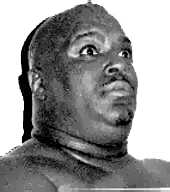 |
Haamid is a brutish mixed-blood zharzhanjah (with a touch of muerrin and a hint of djann) freed-man eunuch, rather huge and hulking, as well as fat and nearly hairless, and on the gaping stupidity side of intelligence. He is devoted to Majiid and is a fine traveling cook in addition to being uncannily quick with his great Khopesh, to the dismay of his brief opponents. He is surprisingly cunning where protecting Majiid is concerned, but is otherwise a gullible country hayseed. Years ago, Majiid had bought him from a gladiator pen to be a bodyguard. Once Haamid proved his conscientiousness and loyalty, Majiid freed him and now pays for his upkeep. Shahruuk's nickname for Haamid is Al-Abdmah'qal, or The Slave of Food, for food is Haamid's greatest pleasure in life. Class: Fighter (Gladiator) |
|
|
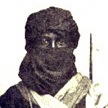 |
Shahruuk is a slight, clever-faced muerrin (his mother was a kiresh slave-and he favors her side) boy thief who attached himself to Majiid a few moons ago. He was working to be a barber in Muerrinstan to supplement his rogueish endeavors until Majiid came along to examinine some old ruins. The boy took it upon himself to take care of Majiid in the hopes of being taken on as an apprentice, and it worked! Sort of. Majiid trains the boy, but has yet to formally take him as his famulus, a fact Shahruuk gripes about, but one that also motivates him to superior service. What he does not know is that Majiid is training his character to prepare him for the rigours of mystical training. Class: Rogue (Barber/Thief). |  |
|
|