 |
|
|
|
|
 |
 |
|
||
 |
|
|||
 |
|
|||
 |
|
|||
 |
 |
|
||
 |
|
|||
 |
 |
|
||
|
||||
|
||||
 |
|
|||
 |
 |
|
||
|
||||
|
||||
 |
|
|||
 |
|
|||
 |
|
|||
 |
|
|||
Asthma-Glaucoma-Tumors- Nausea Relieve (Aids, Cancer, Sea Sickness, Chemotherapy) -Epilepsy-M.S. -Back Pain - Muscle Spasms - Cystic Fibrosis -Anti-biotic CBD disinfectants -Arthritis -Herpes - Gonorrhea -Rheumatism -Emphysema -Lung Cleaner & Expectorant -Sleep -Relaxation -Stress -Migraines -Increase Appetite -Reduce Salvia
Medical Marijuana has been used for thousands of years (records in China exist from 5000 B.C). Medical Marijuana is now legally recognised in Australia, Switzerland, Holland,United States of America, India and France.It's unfortunate that thousands of law abiding citizens have to suffer the side effects and addiction of sub optimal treatments. The 'herb' mention in the bible and administered for thousands of years and formerly avaliable on the NHS was abolished in 1973 due to 'over prescription' (inter-government pressure / big business interests).
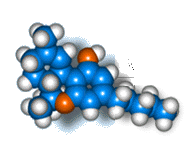 Tetrahydrocannabinol
- THC (left)
Tetrahydrocannabinol
- THC (left)
1 of 60 powerful marijuana compounds. The world's most useful plant?
Industry sources have claimed that pharmaceutical companies would loose as much as 20% of total revenue (How much would the NHS save? ). Effective for over 100 aliments, marijuana has always been recognised through written history, (the oldest books are made of Cannabis Hemp, the 1st Bible & final Draft of the US Constitution). Only in the last 26 years of UK prohibition have numerous vested interests attempted to distort science and history.
The 'Hemp For Victory' affair highlights how past industrialists, publishers, paranoid bureaucratic FREAKS have built whole bureaucracies based on false premises. Their attempts to suppress information with the doctoring of the U.S. National Archives, National Library of Congress as documented by Anita Roderick's new movie 'The Hemperor'(see www.emperorofhemp.com ).
'Marijuana is the most versatile of drugs.'
Hemp Oil, some facts.
Why Hemp Seed Oil?
Hemp Seed Oil simply tastes good. Also, it offers a number of nutritional advantages over other edible oils. Hemp Seed Oil has a very high content of polyunsaturated fats, perfect for a healthy lifestyle and also for the treatment of a variety of diseases.
Hemp Seed Oil as Food
Cold pressed Hemp Seed Oil has a light green color and a mild nutty flavor, a tasteful compliment to a variety of foods. It is a delicious alternative wherever olive oil, walnut oil, or butter are used. It can for example be used as a high quality salad oil in dressings. Or simply seasoned and poured over a bowl of popcorn.Other uses include baking, grilling, stir frying, marinades, or used in sauces.
Composition of Edible Oils
Fats and oils have the same chemical structure but a different melting point: fats are solid at room temperature, oils are liquid. Chemically they are composed of a glycerol backbone with three fatty acids attached. The composition of these fatty acids varies from oil to oil. Most important is the distinction of saturated fatty acids and unsaturated fatty acids. Saturated fatty acids are found in varying amounts in all fats and oils. The human body uses saturated fatty acids to generate energy or construct membranes. Up until a few years ago fats and oils with a high content of saturated fatty acids (for example lard and coconut oil) had been preferred because they keep well, can be used for frying, and are inexpensive. Increasing concerns about their negative effects on health and new nutritional research have lead to changes in eating habits and the consumer's shift (to fats and oils containing less saturated and more unsaturated fatty acids). Unsaturated fatty acids contain one or more double bonds. Our body uses them to make membranes more flexible and to make hormone like substances. Two unsaturated fatty acids, Linoleic Acid and Alpha-Linolenic acid, are essential to the human diet, because the human body cannot produce them. Our body transforms these Essential Fatty Acids into other long chain unsaturated fatty acids, which have important functions in all cells, particularly in brain cells and nerve cells. Some of these long chain unsaturated fatty acids are further used to make prostaglandins, which have important regulating functions in the body.
Oil Production and Quality
Many plant oils naturally contain unsaturated fatty acids. Unfortunately, a high content in unsaturated fatty acids increases the tendency of an oil to become rancid, especially when exposed to oxygen, light, and elevated temperatures. Rancidity results from the breakdown of fatty acids causing formation of rancid tasting and unhealthy compounds, such as aldehydes. Most edible oils on supermarket shelves were treated by mechanical and chemical refining processes to increase their shelf-life or enhance clarity. Commercial oil making may include any or all of the following steps: solvent extraction, degumming, alkali refining, bleaching deodorizing, hydrogenation, and others. Margarines, shortenings, and shortening oils for example are hydrogenated -- or hardened -- which removes unsaturated fatty acids, including the Essential Fatty Acids. During the refining processes aroma and flavor as well as valuable compounds, for example vitamin E, lecithines, and minerals, are removed. Trace amounts of solvents can be found, preservatives are added, and some of the processes may even result in the formation of unhealthy byproducts, for example trans-fatty acids(from hydrogenation). Only few oils available in our supermarkets are not solvent extracted but most are fully refined. Manufacturers are not required to declare any of these processes on the label, so they don't! Mechanically cold-pressed (not solvent extracted), unrefined oils have the characteristic aroma and flavor of the seeds from which they were pressed. Hemp Seed Oil for example has a very light, nutty flavor. Unrefined oils still contain all the natural vitamins, minerals, antioxidants, and proteins. These oils generally also have a high content of unsaturated fatty acids which increases their tendency to become rancid and thus reduces their shelf-life. To make the most of the natural and healthy ingredients of these oils, they should be consumed fresh. Unrefined, cold-pressed oils -- such as Hemp Seed Oil -- are best sold in tinted or dark bottles to protect them from light. After opening- they should be stored in the refrigerator and consumed within six to eight weeks.Health and Nutrition
A variety of health problems including heart disease, obesity, and certain cancers have been blamed on fats and oils. Most of these conditions can be attributed to an unhealthy lifestyle with excess dietary intake of fats. Health specialists recommend that fat consumption be limited to no more than 30 percent of the total calorie intake. However, fats are are not only a source of energy, but also the source of two unsaturated, deemed the Essential Fatty Acids. They need to be included in the diet because they cannot be produced by the human body.Essential Fatty Acids
Linoleic Acid and Alpha-Linolenic Acid are the two Essential Fatty Acids necessary for growth, maintenance of cell membranes, and as precursors to a variety of physiologically active regulators, such as prostaglandins. Linoleic acid is a double unsaturated fatty acid common in plants: Evening primrose oil contains up to 80% of its total fatty acid content as linoleic acid. Unrefined sun flower oil contains up to 65%, hemp oil up to 60%, soybean oil up to 55%, and flax oil up to 26% linoleic acid. The human body synthesizes another important fatty acid from linoleic acid: gamma-linolenic acid (GLA). The optimum uptake of linoleic acid is between 3 and 6% of daily calories (or 9 to 18 grams). Alpha-linolenic acid, a triple unsaturated fatty acid, is found in algae, crustaceans, and in fish oil. Only a few seeds of higher plants have substantial contents of this essential fatty acid: flax (up to 58%), hemp (up to 25%), canola and soybean (up to 15%). The daily requirement for alpha-linolenic is assumed to be 2-2.5% of the daily calorie intake (6-7.5 grams). A nutritionally balanced diet contains these Essential Fatty Acids is in a ratio of roughly 3:1 (linoleic acid:alpha-linolenic acid). The distribution of Essential Fatty Acids in Hemp Seed Oil is close to this favorable ratio ( 3:1), more so than flax oil which despite its higher total content of Essential Fatty Acids has a less favorable opposite ratio (1:5). The requirement for these Essential Fatty Acids can be satisfied by two to four teaspoons of Hemp Seed Oil per day.Gamma-Linolenic Acid (GLA)
In addition to the two Essential Fatty Acids, Hemp Seed Oil is a rich source of Gamma-Linolenic Acid (GLA) and it is the only edible oil with a considerable content (2-4%). Other sources are evening primrose (6-14%) and borage (25-40%), which, because of their unpleasant taste, are only offered as dietary supplements in the form of capsules. While our diet generally contains sufficient Linoleic acid, which is then enzymatically converted to GLA in the body, the process converting Linoleic Acid into GLA is too slow, in some individuals thus leading to GLA deficiency. Supplementation of GLA in the diet can alleviate the resulting health problems.
Therapeutic Uses of Hemp Seed Oil
Several clinical studies have shown that a variety of diseases can be successfully treated with GLA and linoleic acid. The following table shows the GLA and Linoleic Acid content in Hemp Seed Oil in grams and teaspoons.GLA and linoleic acid content in Hemp Seed Oil
Neurodermitis
Patients with neurodermitis suffer from agonizing itching, especially at night. The skin feels very dry and the activity of perspiratory and sebaceous glands is very low. Neurodermitis - as is psoriasis - is characterized by a high water loss through the skin. Deficiency in essential fatty acids can be one of the main causes. Essential fatty acids have a strong influence on the barrier function of the skin, because they regulate water loss through the epidermis (outer layer of the skin). Patients with neurodermitis show a deficiency of Essential Fatty Acids which affects the whole body. It is assumed that inhibition of the enzymatic transformation of linoleic acid leads to GLA deficiency and subsequently to prostaglandin deficiency. Hemp Seed Oil, due to its high content in both, linoleic and gamma-linolenic acid, thus can assist in the treatment of this disease. The daily oral dose found to improve skin condition over a twelve week period corresponds to 18 grams or about four teaspoons of Hemp Seed Oil. Another study showed improving skin conditions through external application of an ointment containing gamma-linolenic acid.
Cardiovascular Diseases
Most of the cardiovascular diseases threatening the health of people around the world are caused by the formation of arterial plaque, i.e. the deposition of blood components on the interior walls of our blood vessels. This process may eventually block blood flow and cause arteriosclerosis and strokes. LDL cholesterol, a sticky substance present in the blood, has been identified as one of the main contributors to arterial plaque formation. Among other factors, such as smoking and stress, the intake of the saturated fatty acids present in animal fat is known to contribute to a high LDL level in the blood. Reversly, dietary treatment of patients with daily doses of linoleic acid and GLA which correspond roughly to two tablespoons of Hemp Seed Oil, has shown to rapidly decrease elevated blood levels of both, LDL cholesterol and total cholesterol. Thus, the regular intake of Hemp Seed Oil may help reduce the risk of arteriosclerosis and other cardiovascular diseases.
PMS
PMS, or premenstrual syndrome, can include varying intensities of painful muscular tension, swelling of the breast, nervosity and irritability as well as aggression and depression. Investigations indicate that women with PMS suffer from a fatty acid metabolism disorder. The ability to convert linoleic acid into gamma-linolenic acid and subsequently into prostaglandins is disturbed. A daily dose of 1.37 grams linoleic acid and 156 milligrams GLA over a period of twelve weeks has been shown to significantly improve the PMS related symptoms in clinical studies. This dose corresponds to only one teaspoon of Hemp Seed Oil a day.
Rheumatoid Arthritis
Some fatty acids, including gamma-linolenic acid, are indicated as effective anti-inflammatory and immune system stimulating factors. Daily oral administration of 1.2-1.4 grams of GLA (corresponding to eight teaspoons of Hemp Seed Oil) over a period of twelve weeks has been clinically proven to significantly alleviate the symptoms of rheumatoid arthritis.
Other Diseases
A number of clinical studies suggest administration of GLA as preventive measure and as a treatment for multiple sclerosis, schizophrenic psychosis, and cancer. Multiple sclerosis occurs more frequently in geographical regions where the diet includes high amounts of saturated fats. Dietary supplementation of unsaturated fatty acids may have a positive effect on the course of the disease. In patients with schizophrenic psychosis disturbances are found in the fatty acid metabolism which might be treated through administration of essential fatty acids. Cancer treatment may be assisted by administration of linoleic acid and GLA. Cancer tissue and cells have lower contents of GLA and other related metabolites compared to healthy tissue. Linoleic acid enhances die-off of cancer cells, an administration of this Essential Fatty Acid might therefore prove to have positive effects.
Further Reading
Udo Erasmus: Fats that heal, fats that kill. Alive Books, 1994.
Jean-Luc Deferne, David W. Pate: Hemp Seed Oil: A source of valuable Essential Fatty Acids. Journal of the International Hemp Association, Volume 3, Number 1, Pages 1-7, 1996.
Helga Mölleken, Roland R. Theimer: Survey of minor fatty acids in Cannabis sativa L. fruits of various origins. Journal of the International Hemp Association, Volume 4, Number 1, Pages 13-17, 1997.
Yung-Sheng Huang, David E. Mills: g-linolenic acid: Metabolism and its role in nutrition and medicine. AOCS Press, 1996.
References
1. Steinberg D. (1997) Low density Iipoprotein oxydation and its pathobiological significance, Minireview Compendium J.Biol. Chem. 272, 20963-20966
2. Hajjar D. P. and M. E. Haberland (1997) Lipoprotein trafficking in vascular cells Minireview Compendium, J.Biol. Chem. 272, 22975-22978
3. Schneider Z. (1998) Molecular aspects of arteriosclerosis (in Polish). Postepy Biologii Komorki 25, suppl. 10, 156-194
4. Gardner C.D., Fortmann S.P., Krauss R.M. (1996). Association of small low-density lipoprotein particles with the incidence of coronary artery disease in men and women. JAMA Sep., 18; 276(11), 875-881.
5. Castelli W.P., (1996). Lipids, riskfactors and ischaemic heart disease. Atherosclerosis 124 Suppl. S1-S9.
6. Wilson P.W., Evans J.C., (1993). Coronary artery disease prediction. Am. J. Hypertens. Nov.,6(11 Pt 2):309S-313S.
7. Stampfer M.J., Krauss R.M., Ma J., Blanche P.J., Holl L.G., Sacks F.M., Hennekens C.H. (1996). prospective study of triglyceride level, low-density lipoprotein particle diameter, and risk of myocardial infarction. JAMA Sep., 18;276(11),882-888
8. Coresh J., Kwiterovich P.O., Smith H.H., Bachorik P.S. (1993). Association of plasma triglyceride concentration and LDL particle diameter, density, andchemical composition with premature coronary artery disease in men and women. J Lipid Res Oct., 34(10), 1687-1697.
9. Richards E.G., Grundy S.M., Cooper K. (1989). Influence of plasma triglycerides on lipoprotein patterns in normal subjects and in patients with coronary artery disease. Am. J. Cardiol. May 15; 63(17):1214-1220.
10.Van den Berg M., Franken D.G., Boers G.H. i wsp. (1994). Combined vitamin B6 plus folic acid therapy in young patients with arteriosclerosis and hiperhomocysteinemia.J. Vasc. Surg., 20, 933.
11. Kontusz A., Finckh B., Karten B., Kohlschutter A., Beisiegel U., (1996). Antioxidant and prooxidant activity of alfa-tocopherol in human plasma and low density lipoprotein.Journal of Lipid Research Volume 37, p1436-1448.
12. Bowry V.W., Stocker R., (1993). Tocopherol-mediated peroxidation. The prooxidant effect of vitamin E on the radical-initiated oxidation of human Iow-density lipoprotein.J. Am. Chem. Soc., 115: 6029-6044.
13. Stocker R., Frei B., (1991). Endogenous antioxidant defences in human blood plasma. In Oxidative Stress Oxidants and Antioxidants. H. Sies. editor: Academic Press, Harcourt Brace Jovanovich, Publishers. London, San Diego, New York, Boston, Sydney, Tokyo., 213-243.
14. Packer L., Kagan V.E., (1993). Vitamin E: the antioxidant harvesting center of membranes and lipoproteins. L. Packer and J. Fuchs editors. Marcel Dekker; Inc:, New York, Basal, Hong Kong, 131-139.
15. Bisby R.H., Packer A.W., (1995). Reaction of ascorbate with the a-tocopheroxyl radical in micellar and bilayer membrane systems. Arch. Biochem. Bophys., 317:170-178
16. Grundy S.M., (1993). Oxidized LDL and atherogenesis: relation to risk factors for coronary heart disease. Clin. Cardiol. Apr.,16(4 Suppl 1):13-15.
17. Mackness MI, Abbott C., Arrol S., Durrington P.N. (1993). The role of high-density Iipoprotein and lipid-soluble antioxidant vitamins in inhibiting low-density lipoprotein oxidation. Biochem. J. Sep., 15;294( Pt 3):829-834.
18. Jialal I., Devaraj S., (1996). Low-density lipoprotein oxidation, antioxidants, and atherosclerosis: a clinical biochemistry perspective. Clin. Chem. Apr.,42(4):498-506.
19. Gerrity R.G., (1981). The role of the monocyte in atherogenesis. Am. J.Pathoi;103:181.
20. Navab M., Imes S.S., Hama S.Y., Hough G.P., Ross L.A., Bork R.W., Valente A.J., Berliner J.A., Drinkwater D.C., Laks H., Fogelman A.M., (1991). Monocyte transmigration induced by modification of low density lipoprotein in cocultures of human aortic wall cells is due to induction of monocyte chemotactic protein I synthesis and is abolished by high density lipoprotein.J. Clin. Invest., 88:2039.21. Gordon D.J., (1990). Role of circulating high-density lipoprotein and triglycerides in coronary artery disease: risk and prevention. Endocrinol. Metab. Clin. North. Am. Jun., 19(2), 299-309.
22. Grundy S.M., (1997). Management of high serum cholesterol and related disorders in patients at risk for coronary heart disease. Am. J. Med. Feb., 17;102(2A):15
Acknowledgment
The support of Hemperor & Condolidated Growers and Processors, USA, in preparation of this article is acknowledged.

