


















| |
|

|
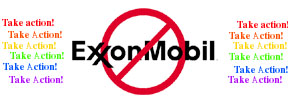
| WASHINGTON (June 13) The Human Rights Campaign
called today for a nationwide boycott of Exxon/Mobil because of the
company's continued discrimination policy covering sexual
orientation and to open its domestic partner benefits program to all
gay and lesbian employees. "ExxonMobil has stubbornly refused
to treat its gay and lesbian employees fairly and has exhibited
unusually antagonistic behavior toward those who have asked the
corporation to make reasonable changes," said HRC Executive
Director Elizabeth Birch. "A boycott may be a drastic action, but it
is commensurate with the company's actions, which are unique in U.S.
business. Our efforts to work this out with company officials have been
met with resistance. As the largest corporation in the world, ExxonMobil
should be a leader in fairness. Instead, it has become the leading
proponent of stonewalling gay and lesbian employees, consumers and
shareholders." |
|
| HRC is asking all fair-minded Americans to: |
 | Stop patronizing Exxon or Mobil gas stations and their On the Run
convenience stores |
|
| Cut up their ExxonMobil gasoline credit
cards and send half to
ExxonMobil and half to the Human Rights Campaign and deactivate
their Mobil "Speedpasses" and send them to the Human Rights
Campaign. |
|
| Write or e-mail ExxonMobil, with a copy to HRC (addressed to
Exxon@hrc.org),
expressing their displeasure with the company's treatment of gay
and lesbian employees, customers and shareholders; |
|
| Send to HRC one month's worth of receipts for gasoline purchased
from companies with policies aimed at treating gay and lesbian
employees more equally. |
|
| HRC is also asking people who already have ExxonMobil stock to keep
it and pledge to vote next year in favor of an anticipated shareholder
resolution asking the company to add the words "sexual
orientation" to its written non-discrimination policy. |
|
|


|
The Human Rights Campaign launched a website today, www.equalityatexxon.org,
where consumers can get information on the boycott and obtain addresses
for ExxonMobil executives. |
| In December 1999 when Exxon merged with Mobil,
it became the first U.S. employer ever to rescind a non-discrimination
policy covering sexual orientation. At the same time, executives closed
Mobil's domestic partner benefits program to any additional employees.
Since then, HRC and its coalition partners have worked to reverse these
actions, to no avail. In 2001, HRC co-filed a shareholder resolution with
the New York City Employees Retirement System, The Equality Project and
several others asking ExxonMobil to reinstate a sexual orientation.
HRC Education Director Kim I. Mills attended the meeting May 30 and spoke
in support of the resolution. The measure garnered 13 percent of the vote,
a 75 percent increase over 2000 and the highest percentage of any
shareholder resolution on the ballot. At a news conference after
ExxonMobil's the shareholder, Chief Executive Officer Lee R. Raymond was
asked by a Dallas Voice reporter why the company doesn't actively reach
out to gays and lesbians as it does to other minorities. "We don't
want to know [who they are]," he replied. "That's the whole
point of the policy." "ExxonMobil is out of step with most other
corporations, including many of its competitors," said Birch.
"We are at a loss to explain why this company wants to risk losing
valuable employees who want only access to equal benefits and a written
assurance that they are valued and protected from unfair treatment."
ExxonMobil competitors Chevron, Sunoco, Atlantic Richfield, BP Amoco,
Shell and Texaco explicitly prohibit discrimination based on sexual
orientation; BP Amoco, Chevron and Shell also offer domestic partner
benefits. A total of 76 of the Fortune 100 have written non-discrimination
policies covering sexual orientation; more than 50 percent of the Fortune
500 258 as of today already have such policies. More than 3,700 U.S.
employers offer domestic partner benefits, including 127 of the Fortune
500. The Human Rights Campaign is the largest national lesbian and gay
political organization with members throughout the country. It effectively
lobbies Congress, provides campaign support and educates the public to
ensure that lesbian, gay, bisexual and transgender Americans can be open,
honest and safe at home, at work and in the community. |
|
|
|


