|
|
|
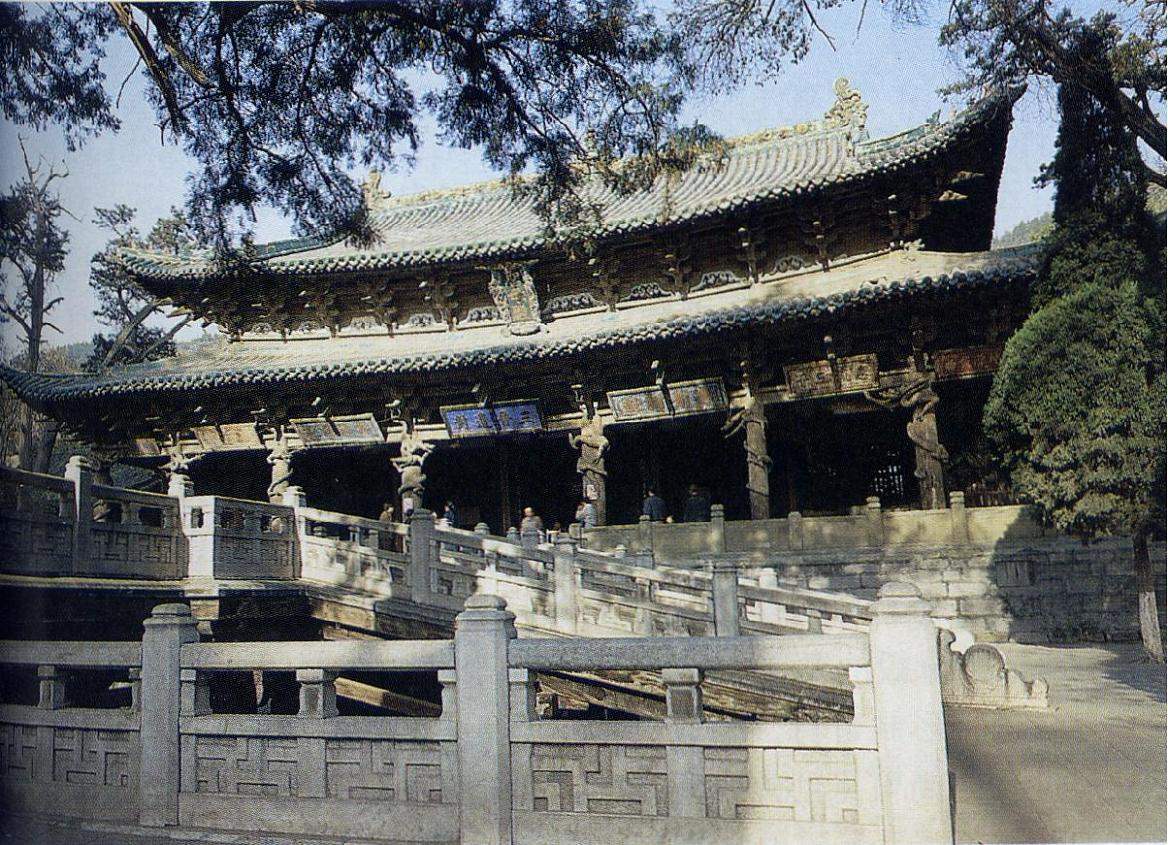
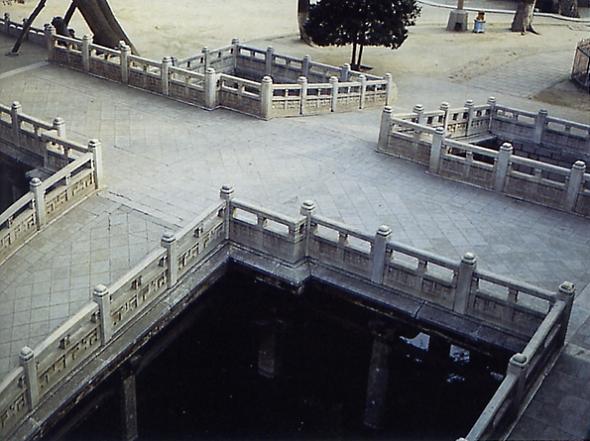
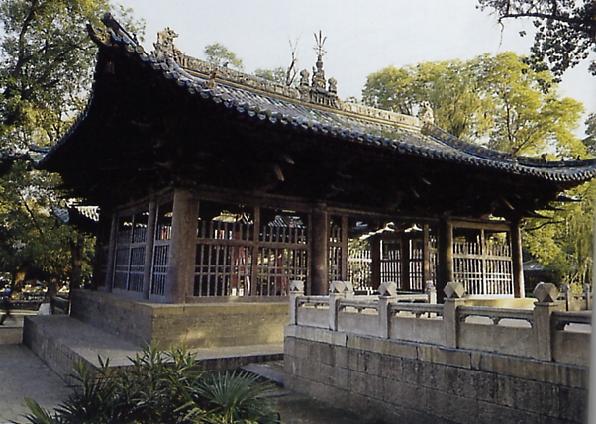
晉祠 晉祠素有山西小江南之美譽,它具有江南園林的特色。總體靈活多變,建築空間和自然景色融為一體,給人以開闊疏朗、清新別緻的感覺。 晉祠的園林由中部、北部、南部三份的建築群組成。 中部有大門、水鏡台、會仙橋、金人台、對越坊、鐘鼓二樓、獻殿、魚沼飛梁、聖母殿組成。聖母殿是全祠的主體,也是晉祠最古老的建築。這組建築靈活多變、佈局緊湊而有序。雄偉古樸的聖母殿,後擁懸瓮山;前臨魚沼和漢白玉的十字架形橋樑,一起一伏構成了晉祠最美的景色。金代建築的獻殿在設計上很巧妙,一座涼亭四周瞭望,視野廣闊,利用借景的方法,達到景中有景的境界。 北部從文昌宮起,有東岳祠、關帝廟、三清宮、唐叔虞祠、朝陽洞、待鳳軒、三台閣、讀書台和呂祖閣。這組建築隨自然山勢層層疊疊、錯落有緻,以崇樓高閣取勝。各景之間相互貫通,以增加景觀的聯繫感和層次感。 南部從勝瀛樓起,有白鶴亭、三聖祠、王瓊祠、真趣亭、難老泉、水母樓、公輸子祠、台駘廟。這組建築既有高台崇祠,又有亭橋點綴,泉流環繞,水聲潺潺,松風水月映出了古典園林的風格。 唐代詩人李白曾寫下了讚美晉祠的詩句:〝行來北京歲月深,感君貴義輕黃金。瓊懷綺食青玉案,使我醉飽無心歸。時時出向城西曲,晉祠流水如碧玉。浮舟弄水簫鼓鳴,微波龍鱗莎草綠。興來攜妓恣經過,其若楊花似雪何。紅妝欲醉宜斜日,百尺清潭寫翠娥。翠娥嬋娟初月輝,美人更唱舞羅衣。清風吹歌入空去,歌曲自繞行雲飛。〞美景與名詩可以說是相得益彰。 古樹名木是晉祠的一大特色,著名的有周柏、隋槐和銀杏樹。這些古樹雖然年代久遠,但至今仍生機勃勃,蒼勁挺拔,濃蔭四佈,使文昌宮、關帝廟、叔虞祠獨成一體。 以水取景是晉祠的另一大特色。它採取聽和觀的手法,把水貫注景中。 難老泉滾滾急流,匯聚成池,聲景俱全,突出一個〝聽〞字。正如清代楊二酉窯的晉祠內八景之一的《難老泉聲》詩中:〝潺潺作遠波,湍激知下就。源源去又來,滾滾夜復晝。〞 清潭觀景水清草綠,魚兒川流不息,急流與靜水相呼應,突出一個〝觀〞字。 晉祠雖處黃土高原,但水草茂盛,泉流環繞,溪水潺潺,頗有江南情調。正如建築造園學家林徽音教授說:〝晉祠佈置既像廟觀的院落,又像華麗的宮苑,全部兼有開敞堂皇的局面和曲折深邃的雅趣。大殿樓閣在古樹婆裟池流映帶之間,實像個放大的私家園亭。〞 晉祠歷史悠久,是紀念晉國開國諸侯唐叔虞的祠堂。相傳西周初年,周成王姬誦封其胞弟姬虞為唐國諸侯。因為姬虞是次子,所以稱為唐叔虞。晉祠就是奉祀他的祠堂。叔虞在唐國勵精圖治,領導人民興修水利,發展農業生產,使人民安居樂業。後人為了紀念唐叔虞的超卓政績,便在晉水源頭建祠造像,稱唐叔虞祠。唐叔虞的兒子燮父因境內有晉水便改國號為晉。唐叔虞是為晉國第一代諸侯,而叔虞祠也被稱為晉祠。 山西素有〝古代建築寶庫〞之稱,而晉祠又是山西古代建築最集中的地方。晉祠有百多座巧奪天工的建築物馳名中外。其中獻殿、魚沼飛梁、聖母殿更被稱為〝三大國寶建築〞。 聖母殿
聖母殿是晉祠最古老的建築。它建於北宋天聖年間(1023-1032),重建於崇寧元年。聖母殿重檐歇山頂,殿高19米,面寬7間,深進6間,殿內極為寬敞。殿頂為黃綠色琉璃相間,琉璃與脊飾的形狀和色澤很精緻,遠看飛閣流丹,構成整個殿宇富麗莊重的氣勢,且富於北宋的建築特色。 魚沼飛梁
魚沼飛梁是一座不可分割的整體建築。它位於聖母殿之東。關於魚沼,古人稱圓形為池;方形為沼。沼上有十字形橋樑,古人稱架虛為橋,若飛也,故名。魚沼為晉祠第二泉,流量很大,游魚眾多,橋邊綴以勾欄,遊人憑欄賞景,益增詩情畫意。 獻殿
獻殿在魚沼飛梁之東,是供奉聖母殿祭品的享堂。創建於金大定八年(1168年)。明萬曆廿三年(1594年)修葺,1955年照原貌翻新,基本上保持了宋代的風格。面寬3間、進深2間,單檐歇山頂,琉璃雕花,脊斗拱簡潔,前後明間敞門,四周寬厚的檻墻上安直欞柵欄。四櫞木放在一職平梁,巴簡單省料,又輕巧堅固。 對越坊
對越坊位於獻殿之東,明萬曆四年修建(1576年),為祠廟的屏障。「對」是報達的意思,「越」為宣揚。此建築造型優美,結構精巧。鐘鼓二樓,分峙左右。鐘鼓二樓建於明萬曆三十四年(1606年),好像對越坊的兩翼,構造富麗堂皇。1955年和1980年照原貌加上彩繪。 金人台 金人台在對越坊之東,是一座方形磚台,亦稱「蓮花台」。中央設琉璃小閣,高4米,明代燒製。台上四角各立2米多的鐵人一尊,稱鐵太尉,用作鎮水護祠。台高1.7米,寬1.3米。鐵人體型健美,威武雄壯,是我國北宋時期鑄造的傑作。 會仙橋與智伯渠
會仙橋在金人台之東,水鏡台之西。橫跨智伯渠上,為通往聖母殿的要道。橋長3.85米,寬3.32米,創建年代不詳。相傳每年四月十四日有仙人在橋上相會,另一說是翰林院羅洪先與仙女相會的地方。當年晉國世卿智伯瑤為了奪取趙家采,地而決晉水灌晉陽而開鑿的後人利用這條渠灌溉農田,踪其遺跡,名曰智伯渠。智伯決晉水灌晉陽的歷史故事在民間廣泛流傳。 水鏡台 水鏡台位於晉祠中軸線上的最前端,始建於明代,清道光廿四年(1844年)重修,是晉祠的演戲台。坐西向東,面寬五間,進深五間,東面為重檐歇山頂,四周圍廊,與聖母殿遙遙相對。 難老泉 難老泉是晉水的主要源頭,《漢書.地理誌》記載; 懸瓮之山,晉水出焉。泉水從山底斷層岩中湧出,水溫常年保持在17℃左右。泉流如玉,常年奔騰不息,猶如青春永駐,故北齊時擷取詩經《魯頌》中「永鍚難老」的佳句命名為難老泉。 水母樓 水母樓位於難老泉的西側,建於明嘉靖四十二年(1563年),於道光廿四年重修。四周圍廊,重檐歇山頂,上下層有圍廊,樓下有磚砌洞窟3孔,中間內莊有銅像一尊,像高1.6米,端坐於水瓮上,束髮未境,神態自然。樓中神龕內有水母娘娘泥塑雕像,莊嚴肅穆,兩邊還有八尊風格有別的魚美人塑像。
Brief IntroductionIn Jin Temple (Jinci), the famous scenic place in Shanxi, the green trees and bright water are very colourful, the temples and halls here are reflecting the acient history and culture of China, the famous taclets are recording all the changes in the history, the flowing stream and the small lanes are reserving the tradition and custom of people here, Jinci with its long history and the nature scienic spots and cultural tradition, is attracting the visitors both from the country and abroad. Situated at the foot of Xuanwengshan, 25kilometers to the southwest of City Taiyuan, Jinci is the source of the water in the Shanxi Province. Behind Jinci, there is Xuanwengshan with pine trees and cypress trees covering on the mountain. In front of Jinci, there are field growing most famous rice in Shanxi. The spring water is flowing in the Temple and there are so many ancient trees growing in. There are also hundred of temples, halls, pavilions((公園、花園中的)亭子,涼亭;閣),bridges, pagodas, scattering in Jinci. It is a historical place with a historical and cultural scenic spots as well as natural resources. It was listed as major historical preserved unit by the State Council in 1961. Jinci, former known as the Temple to Tangshuyu because the Temple was built as ancestral temple to the first prince of emperor of Jin Kingdom during the early Western Zhou Dynasty. Shuyu was the son of the emperor Zhouwuwang and the younger brother of Zhouchengwang. His given name was ‘Yu’. In ancient time, elder brother was called as ‘Bo’ and younger brother as ‘Shu’, since he was designated as the local king of tang, he was also called as Tangshuyu. According to the hidtorical record, this ancient Tang Kingdom was in Shanxi. In long period of history, Jinci has gradually become a temple of memorial cecremony for the ancestors and it has combined the traditions of Taoism, Confucianism and Buddhism together. Though it has experienced many damages and dangers in the long period of its history, it has still preserved the unique style of its own with the well preserved historical and cultural relics (遺跡)there. The cultural relics it has still preserved the unique style of it own with the well preserved include the architecture, sculpture, tablet, ancient antithetical(對立的) couplet (對句;雙韻)and horizontal inscribed (題寫;印、刻;雕、題獻,題贈)board, famous tree of old ages and the relics in the museum. The Museum of Jin covers an area of more than 133 thousand square meters and there are more than 100 buildings including the halls, pavilion, pagoda, bridge, stage and house built in Song Dynasty to the time before the founding of the People’s Republic of China. The earliest is the Flying Beam(樑;桁;(船等的)橫樑) over the Fish Pond built in the Northern Wei Dynastry., the largest and the most typical is the Hall to the Holy Mother and Xian hall (the hall to hold the ceremony of sacrifice), these three buildings have been honoured as the three national treasures of architecture including the clay sculpture (雕像), stone carving, wood carving and iron statues(雕像,塑像)made before the Qing Dynasty, among these, 43 sculptures of maids of Song standing in the Hall of Holy Mother are the most famous because of their livly and lifelike style and highly praised by artists from the country and abroad. These are the unique masterpieces from the ancient sculpture in the country.
米俐相片藝廊:  


|