|
|||||||||||||
|
Sun 11 May. 2008 It was good to be in a bush camp again, and although we were only about 300 yards from the road the bush screened us, and there was only one vehicle went through after dark, a good sleep was had by all, the insects weren’t as bad as they have been, although I always use liberal amounts of insect repellent. Ivor doesn’t use much and then complains about being itchy. Twenty-two kilometres past the Telegraph Station between two tall wooden posts beside an airstrip we turned right, to cut across to meet the Peninsula Development road that ends up at “Weipa”. The road was pretty rough in most, with some good sections. There was several bad washouts and two very challenging creek crossings one of them had the deepest water that I have gone through and was bumper high in the middle of the crossing, also the water was murky and the fear of crocodilians kept us from walking through before crossing.
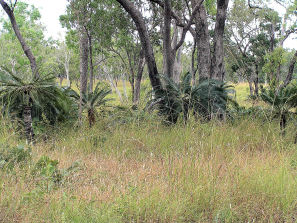
We saw a lot of “Zamia Palms”, which according to Ivor, is an almost prehistoric plant. Once we reached the Peninsular
Development Road, which is 100 kilometre As we reached the outskirts of the town we came upon a set of boom gates and Flashing red lights , and on stopping it soon became apparent why they were there- A gigantic truck came hurtling alone the hall road carting what was obviously Bauxite After booking into
the “Weipa Caravan Park” for two nights at the cost of $48. We had a drive around Weipa not much going on here but fishing and bauxite. Two out of three campers hear have a boat of one kind or another. From the Early 1800’s bauxite was known to exist, but the technology was not available to exploit it till the Queensland Government and Comalco built the town in 1960s. Now it has become the world’s largest bauxite mine Sked night and I set up the Antenna in the nature strip between the camping area and the beach. Without much hope of a good contact but I was wrong, only Ralph and Dave were on but I had a 100 percent copy from them, and better, the repeaters at home are all working. |
Took short cut to Weipa and needed 4WD. basically good roads. Zamia
palms, then into the town itself. Company town, expensive although the
washing machines were the cheapest we have met. Booked to go on tour. Tripped
around town, did some shopping, I had a swim. Paul set up for sked. Good
views over the water. Two ships loading at harbour. All units at the mines
work 24 hours a day. Big wages but housing very expensive. Millions. |
||||||||||||
|
Mon. May 12, 2008. Lay-day today, still waiting for the tour. Ivor did some washing and I caught up with some writing in here, and down loaded Videos from the Handy cam via the laptop to the USB hard drive. It took the whole day. I set up the solar panel and I hope that will be sufficient to keep the batteries charged. We did a bit of shopping and will do more before we leave here to morrow. Later, in the after noon we went for a drive around the district. We had two reasons one to get a bit of charge into the batteries and two to see if we could find anything of interest in “Weipa” we followed some tracks that seemed to follow the river but they led nowhere and came out near a school, then we headed out of the town over a very long one lane bridge over “Mission River” and turned down a small track to the right to Red Beach. It would appear that “Calmalco” now Rio Tinto is getting ready to open up a another large site. We drove along towards Red Beach we came across a large haul road being constructed and evidence of a large clearing, done not so long ago. When we got to red
beach we found a badly rundown heritage site dedicated to the local
indigenous people and preservation of some of the old honey tree trunks where
the people had cut holes into the trees to get the honey from the native
bees. There was a notice to the affect that when the land was restored they
would return these monuments. It looked a bit like Comalco had done this to
appease the locals and then never went anywhere near the place again. There
were We had a bit of a look around and followed a few bush tracks that looked like they might go somewhere but didn’t and then headed back to camp. Our camp is facing the beach with a nature strip between, and it was great to sit out side the tent and watch the sun going down with the reflections of the sunset being mirrored in the sea. |
Camp day. Repacking, washing, reading and driving around town. Phoned
Archer River about card. Very tropical, blue water and sky. Spent time
medicating my ears and eyes. We seem to have lost another day but it was spent as yesterday, did
go out and look at some further out places. |
||||||||||||
|
14 May 2008 Up at 6.30 we had to be as much packed up as we could before we turned up at the caravan park office for the mine tour at 7.45 am. The gardener around there was a strange fellow a self imposed policeman, who went around making sure that every body was within there allocated sections, pity help you if you were intruding a few centimetres into next doors block. Just before we went up to the tour bus he came over and reminded me that we had to pay for the night before as we had only booked in for two nights, but we did say that we would stay another night so we could go on the tour. We duly started out. It was a 22-seater bus belonging to the caravan park (They seem to have most of the tourist camper business tied up.) They seem to be the only place you can hire a boat or get a permit to visit aboriginal settlements, though talking around nobody seem to get permits. The tour commenced by the lass who was driving, showed us the town, and then we went out and saw the mining itself.
Also I asked about whether the local people got any royalties from the Bauxite and was told that they got very generous royalties. Whatever that meant wasn’t clear at all. On the whole it was very interesting and well worth the extra stay. Once on the road again and heading for Laura, we decided to use the air conditioner in the Cruiser as the heat and humidity is not doing neither of us any good. The roads have all been graded since we were going north and consequently the travelling is much faster and easier. We called into the Archer River Road house and retrieved Ivor’s credit card, and topped up with petrol on Ivor’s card, and will continue to do so until we are square again. We got as far as the “Mungkan Kandju National Park”. There was a track freshly graded going off to the left just after entering the park we followed it to its end at about 3 or 4 kilometres – there was a very nice area with lots of deferent trees and plants around a large and deep Billabong. So we decided to camp there for the night.
Being ever vigilant for Crocs we got some water from the lagoon and I set up the bush shower and had a shower it felt cold to start with but after I got used to it, I enjoyed it immensely. Ivor refused my offer to set it up again preferring to use his share of the water to have a sponge bath. |
Pack up early for tour and then going south. Tour was interesting but was a bit of a
whitewash for the mine. They are certainly keeping the work going. Bauxite
going around the world but most to Gladstone. Delicate balance of ship
loading. Topped up supplies and off towards Archer River. Got card and camped
further down the road. Cooler night, heavy dew and Paul’s sked went well. |
||||||||||||
|
Thur. 15 may 2008 The night was quite cool, and for the first time for some weeks I slept under the blankets and had reasonable nights sleep. Before we left camp we had a good look around, still haven’t seen any crocodiles. It was such a nice place that I was sorry when it was time to go. Ivor was anxious to get to Laura, but I saw a track on the map going to Birthday Mountain, but the issue was resolved when on starting up the track there was a notice stating that no vehicles were allowed so we continued on along mostly new graded roads and camped about 10 kilometres before Laura. We had just got set up when a Ute pulled in and a fellow got out who was the manager of “Fairlight Station” Danny Bird and said “What are you doing on my property”. After we explained to him that we were just camping for the night and that we though that where we were was part of the road easement. He said that was ok, He said he thought we might have been pig hunters. Evidently he has a lot of trouble with them because the shoot his cattle to feed to there dogs and I guess them selves. I asked him how big the station was and he said 500 square miles. Not big by some standards but not small either. It ended up all friendly and he said we were welcome to camp there tonight and wished us a good trip before he drove off. |
Good days trip after trying to follow billabong. Still no Crocks. Camped off road near Laura, fellow came up to us and said he was the property manager but was happy with what we were doing and wished us a good trip. Rained a bit in night. |
||||||||||||
|
Fri. 16 May 2008. Last night was cool but very muggy there were a lot of flying foxes feeding on the blossoms above us flying from tree to tree and making chirping noises, This went on most of the night and although the moon is only half full, there was enough light to see the eerie silhouette of them on the tent roof, as they passed between the moon and the tent. But I soon got used to them and had a good night sleep. Ivor was on the whole oblivious of this as he was asleep about 7.00 pm though he did say he heard them during the night. Up 6.00 o’clock, and after having breakfast and packing up we noticed that a couple of clamps that held the luggage cage in place were off and another one had one nut out of two missing, but after securing it with extra rope to the luggage bars and the intention of fixing it later we started off on the last twelve kilometres to “Laura”.
Unfortunately working out what we had it would have cost we reckoned it could not have been more than $160.00 at the most we were charged $208.00 We both Hope it was an honest mistake as we are not in the position now to return, After getting what we wanted from “Laura” we headed out to the Cultural Centre, which is only a couple kilometres south of the town. The people were very friendly and although the charge was $5.00 per person they let us have a look for free as the power was out and we spent about an hour there, most of the information was to do with early European settlement although they did have aboriginal art but every thing was much to expensive and designed for the tourist trade.
We then returned to “Laura” and Ivor took some photos again that I had accidentally deleted from the camera and went to the pub and got four cans of beer. Having done this we went north for seventeen kilometres and turned left towards “Parmaville Station” where despite of the manger’s reputation and locked gates we hope to be able to get to the Palmer River Goldfield Resource Reserve We proceeded about fifty kilometres south and set up camp at a gravel pit site, which although close to the road was level and free of grass. Only one vehicle went along the road before dark and that looked like a Council I tonne Toyota truck. He waved as he passed. Set up the bush shower and this time Ivor had a shower as well... |
Wet camp, off to Laura, lovely expensive town. Checked maps, got
bolts for roof basket, gas for cooking, fuel, posted letters, phoned Dee.
Went to the Quinken cultural centre, no power and so no charge. Good
displays, then south to Split Rock, mind blowing art. Back to Laura and then
back to split rock for Paul’s belt. At Laura took more photos and then on
back road to Chilligo. Quarry camp and shower. |
||||||||||||
|
Sat. 17 May 2008 I had a good sleep the days are still hot but the nights are cooler here now, Ivor was up before me, it was nearly 7.00 am when I woke up. Ivor got sand in the hose to the stove from the gas bottle and one burner would not work, so after we had breakfast and before packing up we had to pull the stove to peaces and change the jet of the defective burner. There were two supplied with the stove so at least we had spares. The same truck that gave us a wave yesterday came back from Laura direction and beeped as he went past. We got away a bit later that usual and continued on our way towards “Palmerville Station”. It wasn’t very long at a fairly substantial creek crossing that we came upon three men a truck and a loader having a cup of tea beside the creek crossing, that they were working on. Ivor went over and had a bit of a chat and on his return he said that they had said that we should have little trouble getting through to “The Burke Development Road”, but that there boss Ivan was up ahead taking photos of crossing and wash out that they had to repair and that he was using Channel 39 on the CB. They also said that the fellow that ran “Palmervill Station” was a madman and to keep well clear of him. Ivor had planned to try and talk to him but upon receiving this information he changed his mind. After about Half an hour we caught up with Ivan and I gave him a call on the CB. He stopped and got out of his truck and walked back to see what we wanted. We introduced ourselves and asked him about road conditions. He proved a very amiably character with mutton chop moustache he told us that they were Council workers and also described in detail the various Creek crossing, and how to approach each one. He also described the fellow from “Palmerville Station” as a Wanker and said a couple of years they had to do some work on the road and that this fellow had locked that gate so they took the police with them and he gave them no trouble, but the road in question is a gazetted road and he has no legal right to stop people from using it. As we left he said go on ahead and I will be coming along if you get into any trouble I have a winch and can pull you out. He caught up to us after one of the worse crossing as we were pulling off after stopping to fill our washing water container, and called me on the CB and said, “How would you have been if you had gone straight through the middle”, he had told us to go around above the edge of the main track. That was the last time we heard from him. After about another
hour we crossed the Palmer River there was only a small amount of water in it
and winding our way across the bed was quite something You could tell what a
force was applied by the water in the wet session by the trees that grew in
and around most were at a forty five angle because the force of the water had
partly uprooted them, Not far from the river on the south site there was a homestead and fences and gates. We thought this was “Palmerville Station” but as it turned out the house used to be the post office when it was a town and the elderly fellow that came out when we pulled up who said he had lived there all his life, he only had the house I guess he may have worked for the station because when I asked him was he retired he gave a definite NO! I asked him about the road through to the Maytime Ruins and he said you can’t get through, I said is the road to wet? He said no, He won’t let you, pointing to where the gate was locked and a notice said Private Property Guard Dogs on Patrol. At this pointy we said good by and proceeded through the unlocked gate that indicated it was the road to that we could get to Chillagoe. Disappointed that we could not get to were the old Palmer River cold digging were, that we had both read so much about it in the book “The River of Gold”. What I gleaned from all these bits of information was that the station owner of the “Palmerville Station” and the council have been having a running battle for years about the closure of the road between his place and “The Palmer River Goldfield Resource Reserve”.
Another twenty kilometres and we passed the magnificent “Mount Mulgrave” a series of peaks ending at the south end in a sharp bluff. And then onto the Burke Developmental Road heading South East to Chillagoe, about twenty kilometres from our destination we saw a freshly graded track into the bush, upon following it for seven hundred yards it ended at a lagoon were it was obvious that one of the road gangs that are prevalent all through this part of Queensland at this time of the year was drawing water for roadwork’s It was a nice spot the water in the lagoon was covered with a pink flowering type of water lily, so we set up camp. More trouble with the Gas stove but this time it wasn’t Ivor’s fault but mine, when I was cleaning the connections this morning some lint from the cotton bud I was using found it way to one of the jets and upon removing it the stove worked OK again. |
Followed road south, men working on creek crossing, told us their
boss had gone ahead and was taking photos of creek crossings to make out work
schedule. We caught up with Iven and he talked of the road ahead, warned us
of `Madman ahead'. Had to have police guard when they did roadwork. Scenic
drive on to Palmer River. Evidence of big water flows, up to house. Old Post
Office. Locked gate and guard dogs on next property, On to Burke development
road. Swam in upper Palmer River. |
||||||||||||
|
Sun 18 May 2008. We went to see some aboriginal paintings and some caves called the arches on the way into Chillagoe the Aboriginal painting were good there was one on the over hang the subject was mainly to do with snakes. The arches were something else the walk went between these massive formations of limestone jutting skyward in all sorts of angles. Where the erosion and natural shapes formed natural court yards trees had taken root in the sediment and were reaching for the sky many meters high were the were caves with a roof the were formations hanging from the roof and flow stone as well. On the whole it was a very special place. On the way out we followed a track that ended up at an old cemetery there were only three graves marked amid half a dozen not marked, it would appear that the burials took place in the very early 1900s. Once back on the main track and upon reaching the main road we went across to the other side where the original old mining town site adjacent to the present Cattle yards was. Not much to see a few rain tanks, a few stumps marked the site of a couple of houses and not much else, there was one surprise The GPS (“Motormouth”) showed every street so we got a very good idea of the lay out of the town. There are mines still being worked adjacent to the old town. After leaving the old town and back on the main road we noticed a large Marble mine on the left and further on a smaller on the left we drove into the site but only had a quick look and then drove into town and booked into the local caravan park. I would have rather went out of town a bit so I could put up the 80 meter antenna, but Ivor was keen to use the park, but I managed to ring Dave and he will get on the radio and let Ralph know that I will in devour to contact them on Wednesday next. |
Followed road to Chillagoe, stopped at Mungana cemetery and walked in
Nat Park, good caves. Abo art in cathedrals and arches. Found old town site,
house footings and tanks. Evidence of prospecting. In to Chillagoe, past
large work camps and marble quarry. Booked in at Caravan park and checked out
town. |
||||||||||||
|
Mon. 19 May 2008 Woke on sun up as usual No Hurry to day as the first thing we did was to visit The Hub The Chillagoe Information Centre, it turned out to be a really good visit. The centre is only a couple of years old and has a wealth of information on the district and geology in general, the part aboriginal girl behind the counter was very friendly as was her boss and tried to answer all the questions that we asked. We spent at least an hour there and before we left we purchased tickets for the 11.30 “Trezkinn Cave” and the 1.30 pm Royal Arch cave tours. We arrived at the appointed time at the “Trezkinn Caves” car park where there were a few people already waiting we new a couple from the caravan park. They had a state of the art trailer camper $45,000 worth and we all waited for the Guide to turn up- which in about five minuets he did ridding a small motorbike His name was Brett a young man around thirty after introducing himself we went up a very steep path with lots of stairs till about a 75 meters we were all assembled on a platform. Brett recited the rules, no smoking keep to the marked paths, not to touch any of the formations Etc This particular cave was the last one to be discovered and just recently been open to the public so was in pristine condition it was fully lighted, with sturdy walkways and steps although the first few stairs were as steep as a stepladder all of us managed them all right, and what a sight awaited us. There were a number of caravans and most of them had magnificent formations there were stalactites, stalagmites, flowstones curtains of all shapes and sizes the lighting was not coloured so the natural beauty of the formations was evident because there was no vandalism every thing was as nature had made it.
After we got back to
the car park we went on to see what is known as the Balancing Rock. This
monolith must be several hundreds tons and sits on a very fragile base of a
few meters in diameter on top of the main formation and is shaped more ore
less like a tear drop upside-down. I would think that say another before
another hundred years have passed it will have fallen off We had a bite to eat and then went to have a look at the old State Smelter, there are only ruins there now the three chimney stacks are mostly still intact although the top of the main stack was beginning to collapse at the top the was two big holes were the bricks had fallen out and only the iron hoops at the top was holding it from collapsing. The whole thing must have been a big concern when the area was the main mineral area of Queensland. There were hundreds of men working there and the slagheap bears evidence of the quantity of copper, silver, lead gold. The blast furnace during its lifetime produced 60,000 tones of copper 50,000 tones of lead, 6.5 million of ounces of silver and five tons of gold. At the height of its production it employed around 1,000 men. The slag heap alone from my estimate would cover an era of a couple of foot ball fields and on two sides would have been at least 20 meters above the natural ground. Both Ivor found it interesting and sobering at the same time.
That evening back at the caravan park I had my shower earlier and unlike last night where by the time I had a shower the water was just warmer that cold. Ivor had an unlucky accident as he was coming back to the tent after his shower. Although he was using a torch he walked head first into a low branch and hit his forehead so violently that it knocked him off his feet. When returned to camp he did not look all that good, but once he removed the blood on his forehead there was not much bleeding and after he recovered no headache, so tomorrow we are hoping that its only his pride that will be hurting. |
Two tours of caves and drive to art sites. Great scenery, balancing
rock. Went over old mine and smelter works, marble quarry not open (Public Risk).
Once a large town with big population of workers, many deaths of young
people. Gave my head a bang on a tree branch walking ti the caravan park in
the dark. |
||||||||||||
|
Tue 20 May 2008. We actually got out of town about 11 am after shopping and going to see the local museum which was closed also went to the hardware to see if we could get a U bolt to replace the one we lost of the luggage carrier but no luck the rope that we have tying it seems to be holding alright so far. The road is now bitumen a single strip mostly, going into two on occasion. The country is good for cattle and the ones we saw mostly Brahma all looked in good condition. We stopped at “Rocky Tate River” the water was a light blue colour suggesting that we were still in limestone country although the startling formation were no longer present. The river although 50 meters wide was down to a trickle and was running through a 450 mm pipe under the causeway there was plenty of life in the pools each site of the causeway hundreds of little fish from a couple centimetres to 10 centimetres were playing catch me if you can at the upstream end of the pipe. I did not see any get caught and sucked through to the other side- we went through Mount Surprise and camped on the banks of a white sandy bank of a “Einasleigh River” about 15 kilometres east of Georgetown. I was a little nervous about the long grass but Ivor I think prefers it because he has a very thin mattress as I sleep on an air bed- so I don’t have to worry about the hard ground – but I do worry about grass fires. Anyway nothing happened another car pulled in after we did with camper tent trailer and set up where there was less grass and had a roaring fire going. |
On to Georgetown after trying to see museum and talk at visitor
centre. Country getting better, cattle look good and properties substantial,
the cattle (Zebus) look in great shape. Shopped at Georgetown and then on
good roads to a nice bush camp on creek bank. Nights are getting cooler. |
||||||||||||
|
Wednesday 21 May. The night was quite chilly and I was grateful for the track pants that Ivor has lent me for sleeping- Ivor also has put his full swag back together and zippered his sleeping bag. Full moon so no need for a torch when nature called during the night. We were still packing up when our neighbours left but they stopped and said hello on the way out, it was a young family with three small kids. We were on our way soon after, through fairly mountainous country plenty of grass, I don’t know how nutritious it is for the cattle though still Brahma cross no sheep. As we got closer to Georgetown the country flattened out somewhat we only stopped at Georgetown long enough for phone calls to Deirdre and Maria got a few things at the local shop, and then onto Croydon. Where we spent the rest of the afternoon. We went on to see Lake Belmore and on the way had a look at The Chinese temple site There were a couple of council men on lawnmowers cleaning up the weeds alongside the walking track. I spoke to one and said to him” I see by the sign that they won’t let you camp at Lake Belmore”. He said “I won’t let you camp there because I do the gardens”. (Lesson learn to be careful whom you ask.) He indicated that the only place we could camp was the local camping ground. This did not suit because I wanted put up my 80 Meter antenna but learning my lesson I dropped the subject.
After leaving the Chinese temple site we went on to the lake stopping half way were there was a lookout over looking the whole area great few of the town, when we got to the lake there were manicured lawns, picnic tables, gas barbecues, toilets and showers. An area at the edge of the lake had been netted for swimming, and Ivor in no time had striped to his underpants and had a swim. I didn’t but had a cool shower soap and all, and we both felt a lot better and ready to look for some where to camp, with the knowledge that the town did not welcome bush camping in there area. On leaving the lake we noticed a track going up a stony hill above the lake. So we followed this track, after a few hundred yards we came on a man and woman wandering through the old mine shafts that were every were. I asked the man what they were doing and he said that they were from the mines department and were mapping the mines with the view of a waking track being constructed in the area. If the walking tracks were to proceed then the ones that could be fenced would be and the ones that couldn’t be would be filled in. he also said that the state owned the land, but not finding any place we could camp we proceeded along the track, finally coming out on a gravel road we were looking around for a place to camp when a Ute drove past the driver was the manager of the station a adjacent to the road and he turned around and asked us what we were doing when we said we were looking for a camping spot- he warned us off and said we could not camp anywhere there. Feeling very unloved we drove back towards town. Just before getting there we found a fenced of area with a lot of old machinery and an restored corrugated house, stamping machine etc The grass was mown, we later learned that this was the mining museum, we knew it was something like this but it was out of site of the main town and very suitable for our needs so we decided to risk bit and set up camp. While Ivor set up the camp I set up my antenna this took a bit more time than it had been as until now due to the availability of large trees. These to a greater extent have disappeared to be replaced with much smaller Varity. The Sked was marginal I could hear Ralph and Dave, Dave could not hear me so dropped out after about twenty minuets. After the Sked, I listened to the last half an hour of the state of origin, NSW won. I put the gear in the car before turning in my self. |
On to Croydon, good roads, road trains, gas at Georgetown and then on
to Croydon. Neat tidy proud town, great displays and helpful information. Saw
railway and spare carriage but no train for a few days. Swam in lake and
camped in grounds of mining display. |
||||||||||||
|
Thursday 22 May 2008 We did not waste to much time but after
breakfast got going as quick as possible, we first went back to the lake as I
had left my towel there after using the shower, much to my relief it was
still hanging on the back of the shower cubical door, were I had left it the
day before. Before heading Then we went and had a look at the Gulf Lander, this is a series of three small vintage diesels motors over torque converter drive chain, and at least the one that was at the station was. The line was originally built for mining industry and now is a tourist attraction running twice a week to Normandy. The train we saw was very well presented looked like new, the two carriages were upholstered in a blue vinyl or some other material and whole thing looked like it had just been delivered. It was after midday when we got on the road again and headed for Normanton. We did not stop long at Normanton as Ivor found out the form from Deirdre had arrived at Cloncurry for him to sign and return to her, and he wanted to take delivery and get it back in the post to Deirdre before the week end. We found a delightful bush camp just before the bridge on the Flinders River the turnoff was a few hundred yards north of the bridge, it looked like there had been a diversion of the highway from an old causeway to accommodate a high level bridge, and between the was a hefty chunk of land which made an ideal camping area, when we arrived there were another four campers besides us and there was enough room for a dozen more the whole area was clean and tidy and it was very pleasant. We enjoyed our over night stay. |
Really checked out Croydon then westward towards Normanton. Rail
station at Blackbull has a good cam site. On to Normanton. Phoned Cloncurry
regarding letter from Dee. Chemist only an agency so no ear drops. Heading
towards Cloncurry and found a beaut campsite about 60 kms south on the
Flinders River. |
||||||||||||
|
Friday 23 May 2003 We got away smartly this morning because we had nearly 400 kilometres to go before the post office at Cloncurry closes so that Ivor can sign the papers and post it back to his wife.
The only other stop we made was at “Quamby”, which consisted of a pub and nothing else. The country went from flat with long dry grass to stony outcrops and grass and small timbered to red soil with sparse grass. The road kill of kangaroos and wallabies has increased dramatically since we have been on bitumen and the kite and hawks as well as the crows are faring very well indeed- unlike the wedgies in other places that are getting killed off my the traffic because they are to slow at take off and get hit themselves by the traffic. We got into Cloncurry
at 12.30 pm and found the post office were Ivor conducted his business and
came back to the car looking very pleased. We found a chemist after running
around for a bit and Ivor finally got his eardrops. He has been having
trouble with his ears since day one. We got some LPG $1.00 per Litre. The most I have paid ever for LPG, when I complained the girl at the service station said it had to come all the way from Brisbane and that they only made 1 cent per Litre themselves. We then went around to the information centre where we ended buying a book Camping Australia Wide. We should have had something like this at the start of the trip.
|
Got away early, Flinders River looks crook. Pigs on road, saw a Bustards, kites and eagles. Fast
road, past roadhouse and on to Cloncurry. Lots of Curley trucks. Bigger town.
Got letter from Dee, signed it and posted it back. Shopped and got ear drops.
Camping at `Wol’s’ place. Rudimentary but cheap and quite a few caravaners to
talk to. |
||||||||||||
|
Sat 24 May 2008. I had a good sleep despite being woken by a diesel locomotive with what sounded like a very heavy and long train starting out at 2.30 in the morning, it must be noted that some times being fairly deaf has its advantages, as Ivor did not hear a thing. We did not intend to go anywhere except look around Cloncurry, so at around 10.00 we left the camp still erected and went up town. First had a look through the mineral museum, which had quite a lot of interest for us both but to tell the truth much of the minerals were not to our understanding. They had a fair bit of aboriginal artefacts that were of great interest. After this we went to see the “Flynn Memorial Centre” I think we both found this much more to our interest, we must have spent an hour and a half there, there was the history of John Flynn and the “Flying Doctor Service”, as well as peddle radios, and a model of the first aircraft that was used for then “Flying Doctor Service”. They had a very good examples of local paintings and a few pottery pieces, we had spent so much time there that we felt we needed to go back to camp and have some lunch, which we did. After we sorted out a few more of the hundreds of photos that Ivor has taken. We have eight other caravans in here to night and quite a few people have come across to say hello. We had limited success with the photos, having only sorted to the point when we reached the Cape York. Wally (The owner of the camp) called in again this evening and stayed for a chat. We found a bit more about him during the day. His last name is Roberson and he and his wife used to work at the “Mary Katharine Mine”. He is very involved in local affairs as well as running his own small cattle station. He used to do mine and district tours but gave it away when the insurance companies raised the premiums, he has done prospecting and had started and sold a few mines. His wife works and also we saw her manning the Information Centre so she also seems involved in the community here at Cloncurry. We will be headed south tomorrow after having a quick look around the town here. |
Visited Tourist centre and John Flynn Memorial. Really good art and pottery.
Couldn’t find a laundry in town and spent afternoon sorting photos and
talking to people. Trucks, tyres, cattle, Gideon bible pushers, flies,
caravans and bullshit. |
||||||||||||
|
Sun 25 May 2008. After packing up we were just about to leave when Wally turned up with some cut rocks that his wife had made up with pictures and sealed, after complaining to him yesterday about the lack of locally made souvenirs we felt obliged to buy one each which cost us $8.00 a piece. We then headed off to the Combo “Water Holes” at “Kynuna”, the drive was through mainly pastoral country, not much timber of any kind, the ground was covered with mainly Mitchell Grass and very dry. When we arrived at the “Combo Water Holes” at about 2 pm after connecting the fridge and sorting a few thins out I realized that I had not seen Ivor for about half an hour, the last time I had seen him he was taking photos down near the water hole. I had not read the notice board at this time but a couple that hat just drove told me that there was a two and a half Kilometre walk around the various water holes and Chinese made causeways. So at least I knew where Ivor had gone. After getting a water bottle I set out to have a look my self. The fist causeway was only a few meters from where we had decided to camp.
It was after crossing the first of the walls that I met Ivor on the way back and after a few words Ivor continued back to camp and I continued to explore the walk, only one of the walls had been damaged by the considerable amount of water that must go over them at times but at least it allowed the construction of them to be seen, there was no mortar used to hold the stones but by being placed on edge would allow the gravel to be continually filling the gaps an holding them in place. At the end of the walk there was a monument to Banjo Patterson and Waltzing Matilda The song was written on a local station. “Dagworth Station” and the music was taken from a piece that the station owners Daughter was playing on the piano, this particular water hole at the end of the walk was the one that the Shearer Swagman was caught by the troupers with his stolen sheep the troupers came upon him accidentally while looking for another man who had killed a black boy. After I got back to camp Ivor had already set up the tent. I had a Sked that night and also had to repair my antenna, for which I needed my soldering Iron which I found had disintegrated into its various parts due to the vibration of the cruiser over the last couple and were scattered throughout the container that I keep all the other electrical bit and pieces in. It took quite a while to find every thing and to reassemble the soldering iron before I could even start on the repairs. That finally done when I went to erect the antenna the pegs to hold the masts, (There are three of them) ether would not go in because of rocks or when they did the ground was so dry that twice with the help of Ivor and the fellow from the other caravan parked near us, collapsed. On the third attempt it held. Just. The Sked went well the signals my end were good the noise level was low and the same the other end. Ralph and Dave came on and the hour went well, I only signed off because I had told the other caravan people I would only be transmitting for an hour, and be finished by 8.30 pm. There were three caravans parked near by, and I noticed that they all had their lights out by that time. Ivor decided to sleep under the stars and he was well asleep by the time I got to bed. In the tent I might add. |
Pack up and talk to `Wol', bought pieces of `art’ made by his wife
and then on the road towards Winton. Stopped at Kynuna, town seems to have
grown since I was last there, more petrol bowsers. Drove to the Combo Waterhole and was not disappointed. Walked around
the dams and constructions. The only damage to the stonework has been by 4WDs
driving up the spillways. I don’t understand what turns some people on. Paul
set up for sked with help from a neighbour. I slept in swag for the first
time, beautiful. |
||||||||||||
|
Mon 26 May 2008. Ivor survived the night, said he loved it; obviously he wasn’t consumed by the night beasties After eating and packing up we noticed that one section of the barricades pacifically but in place by the authorities to keep the four wheel drives from driving over the Chinese causeways, had and been deliberately run over and you could see tire marks going towards the first wall or causeway. Before we left we cleaned out the postholes as best we could and stood up the downed section temporally. There was a telephone number on the locked gate asking anybody that noticed the gate unlocked or open, to phone National parks on the number provided. Ivor took note of the number and phoned later and told them of the broken panel. Our good deed over for the year! Soon after leaving we noticed another dirt road going off to the right and after consulting the map decided it would be a good idea to follow it across country and once we got going along it “Motormouth” (Our GPS) accepted it and marked the new route, we were confident that it would bring us back onto the bitumen about half way to Winton. It was a lovely diversion it took us past several cattle and sheep stations. The country and creeks were bone dry, but there were some surprisingly healthy looking cattle as far as we could tell they were all cows, so we could only assume that the owners must be supplementing the diet by hand feeding we also assumed that they must be breeding stock, the water it seemed was being supplied by windmills
We also stopped and had a look at a couple of graves. It would seem that this could have been part of a much larger cemetery. There was a fence around the two graves and a monument stating the there were an unknown number of people buried here and then went on and listed seven or eight that were known, and also said that this cemetery was from the “Dagsworth Pub” and that the Cob and Co coaches used to stop here to change teams which they did every thirty miles depending on water supplies. The passengers would have a break here as well. Sometimes on these journeys a passenger may fall ill and die and be buried as soon as possible. Sometimes the records weren’t all that good-At this point I realised that this road we were taking was close to the original route of the Cob and Co coaches and it made the drive that much more interesting, We would have had no idea if we had stayed on the Matilda way.
When we finally arrived Winton about 1.00 pm we drove around town it was immediately obvious that the whole town had adopted the Waltzing Matilda thing- the names that ether included Matilda or Banjo and similar word in there names. After we circled the town we called into the first service station that we had passed on the way in and inquired were we could get “Auto Gas”, the man behind the counter told us where we could get some, In the meantime I had noticed that there was a caravan park at the rear of the garage so I asked him how much for the night and he said 12 dollars so we set up camp straight away and put our washing on, there was more than a full load but it all went in. The cost for the machine was two dollar this is a lot cheaper than on the coast and the top of Queensland, were the same thing would have cost double for both the washing machine and the camping fees. Once we had the washing on the line we went and had a closer look at the town. Ivor wanted to see if he could find out were a particular bush poet (Milton Taylor) an acquaintance of his who was performing in town. After a few inquiries we found that it he was performing at another caravan park, so we went around and Ivor went in to inquire. When he came back He said that he had booked us in for a dinner and the show at 6.30 that night. We went around to the information and had a bit of a look around town before heading back to camp to get ready for the big advent.
Other than this his reciting was good and the food also was nice Roast Beef and vegetables. Ivor got to bed late for him around 9.30 pm instead of 8.00 pm. |
Slow departure. Stood posts in a temporary manner to stop vehicles
using the historic road. Got phone number for maintenance gang and I will
report the problem. Headed to Winton via station roads. Past Dagworth
Cemetery with old graves and wooden grave markers. Historical society has
just spent time on renovations. They have put up markers and a plaque. Stock
look very well along the road. Got to Winton oneish and set up camp. Found
plenty of interest and booked into Milton Taylor’s poetry evening. (Included
Dinner.) |
||||||||||||
|
|
|||||||||||||
 On the plus side it was obvious
that a lot of traffic was using this short cut from the Telegraph Rd to the
Peninsula Rd. The Cruiser did not let us down, hardly got over an idle with
the centre differential locked. Down the bank through the water and up the
wet and slippery other side.
On the plus side it was obvious
that a lot of traffic was using this short cut from the Telegraph Rd to the
Peninsula Rd. The Cruiser did not let us down, hardly got over an idle with
the centre differential locked. Down the bank through the water and up the
wet and slippery other side.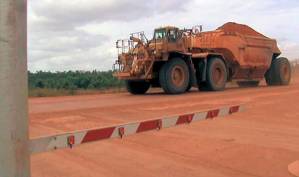 of fully formed all weather
gravel, all the way to Weipa.
of fully formed all weather
gravel, all the way to Weipa. 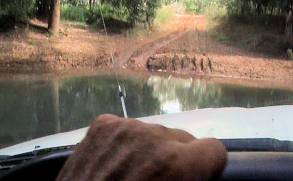 We inquired at the office about
mine tours and were told that unless we had four more people there would not
be one until Wednesday. I asked them to let us know if there was enough
interest to get another one up before then, but put our names down for
Wednesday.
We inquired at the office about
mine tours and were told that unless we had four more people there would not
be one until Wednesday. I asked them to let us know if there was enough
interest to get another one up before then, but put our names down for
Wednesday. 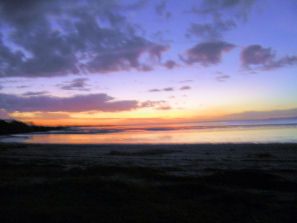 tins over flowing with rubbish;
the whole place was overgrown and neglected.
tins over flowing with rubbish;
the whole place was overgrown and neglected.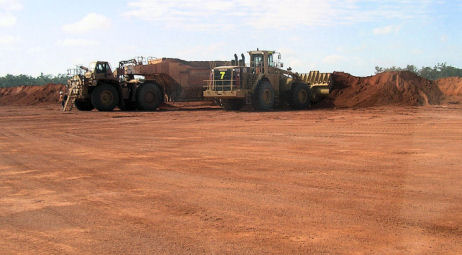
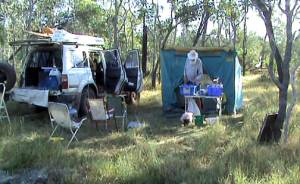 Being Wednesday I set up the 80
Meter antenna and at the appointed hour I contacted Ralph, the signal was
good and the noise level was low although there were static crashes but I got
99 percent of the information.
Being Wednesday I set up the 80
Meter antenna and at the appointed hour I contacted Ralph, the signal was
good and the noise level was low although there were static crashes but I got
99 percent of the information.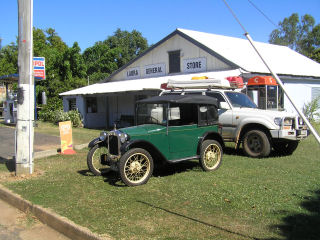 Upon arriving there we pulled
into the local garage store post office tyre repair shop and filled up with
petrol and drinking water, which he got for us from his own rainwater tank.
His name was Harold or Big H as he told us. He had a fully restored Austin 7.
He saw it advertised in Brisbane and went down and brought it back. He and
his wife have been running the shop for the last two years, before that he
was an earthmoving contractor both in Australia and overseas. They seemed a
really nice couple and very helpful both on History and road conditions.
Upon arriving there we pulled
into the local garage store post office tyre repair shop and filled up with
petrol and drinking water, which he got for us from his own rainwater tank.
His name was Harold or Big H as he told us. He had a fully restored Austin 7.
He saw it advertised in Brisbane and went down and brought it back. He and
his wife have been running the shop for the last two years, before that he
was an earthmoving contractor both in Australia and overseas. They seemed a
really nice couple and very helpful both on History and road conditions.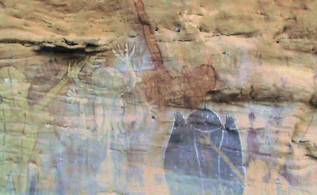 From there we went south around
another ten kilometres where after an a exhausting climb we were rewarded at
a place called Split Rock with some very fine Aboriginal Rock Paintings-
there were more but we would have had to climb again and over a lot rougher
terrain and both of us felt that it would be to much.
From there we went south around
another ten kilometres where after an a exhausting climb we were rewarded at
a place called Split Rock with some very fine Aboriginal Rock Paintings-
there were more but we would have had to climb again and over a lot rougher
terrain and both of us felt that it would be to much.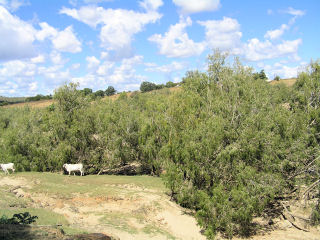 but the river was docile and
friendly and the local cattle were grazing on the rich grasses the were in
the valley the river had made for its self over the ages.
but the river was docile and
friendly and the local cattle were grazing on the rich grasses the were in
the valley the river had made for its self over the ages.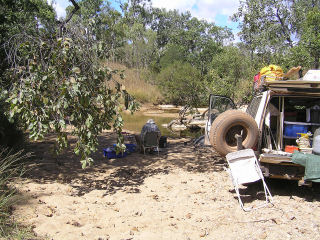 After we had left we soon came on
a junction of two creeks, where we stopped and had lunch. I don’t know the
names but from what I could see from the map they ended up empting into the
“Palmer River” which joins “The Mitchell River” which ends its journey at
“The Gulf of Serpentaria.”
After we had left we soon came on
a junction of two creeks, where we stopped and had lunch. I don’t know the
names but from what I could see from the map they ended up empting into the
“Palmer River” which joins “The Mitchell River” which ends its journey at
“The Gulf of Serpentaria.”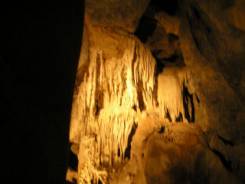
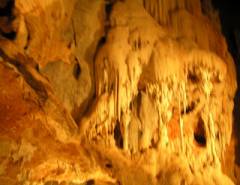
 And all the formations were
intact. The tour lasted only about an hour. There was another cave which is
named “Donner Cave” but because of the amount of rain this year it still had
too much water to be visited.
And all the formations were
intact. The tour lasted only about an hour. There was another cave which is
named “Donner Cave” but because of the amount of rain this year it still had
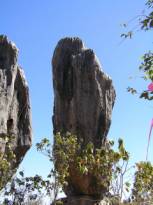
too much water to be visited.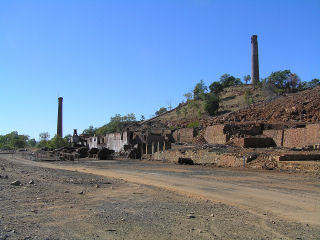 it perch but that is just what I
felt when standing next to it.
it perch but that is just what I
felt when standing next to it.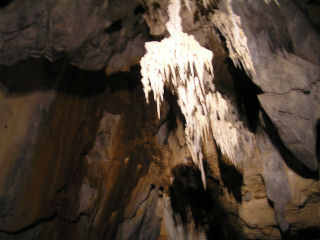 The second cave we went through
in the afternoon was the Royal Arch Cave and because people had been
wandering through from the early 1900s there was a lot of damage done and a
lot of the formations were broken of and used for souvenirs. The caves them
selves were a lot more diverse, and the formations that had escaped damage especially
deeper inside were magnificent. Another thing that destroys the lower
formations are the bats which there are quite a few but the fact of them and
that the caves were not artificially lit, and the only light was through
natural openings. Where there wasn’t we had been all equipped all 18 of us-
with batteries lights. All this made the experience very rewarding. This tour
took just on two hours and the same guide took us through and he did it in
the same informative and good-natured way of the previous tour.
The second cave we went through
in the afternoon was the Royal Arch Cave and because people had been
wandering through from the early 1900s there was a lot of damage done and a
lot of the formations were broken of and used for souvenirs. The caves them
selves were a lot more diverse, and the formations that had escaped damage especially
deeper inside were magnificent. Another thing that destroys the lower
formations are the bats which there are quite a few but the fact of them and
that the caves were not artificially lit, and the only light was through
natural openings. Where there wasn’t we had been all equipped all 18 of us-
with batteries lights. All this made the experience very rewarding. This tour
took just on two hours and the same guide took us through and he did it in
the same informative and good-natured way of the previous tour. 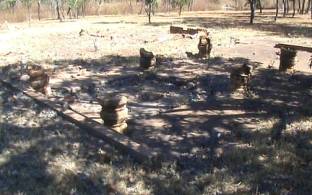 We continued to look around the
site, there was the foundations and floor plus a six ornamental rock
pedestals about 450 mm high on each side that looked like it led to what may
have been some sort of shrine, at the back of the temple was the foundations
of a house were the person that looked after the shrine resided. Near by
there were the remains of stone oven for roasting pigs
We continued to look around the
site, there was the foundations and floor plus a six ornamental rock
pedestals about 450 mm high on each side that looked like it led to what may
have been some sort of shrine, at the back of the temple was the foundations
of a house were the person that looked after the shrine resided. Near by
there were the remains of stone oven for roasting pigs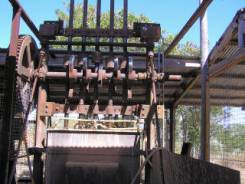 for Normanton we went back to
where we were camped at the mine museum, and had a closer look at the old
machinery. The old Ore Stamper was in working order, but instead of steam it
was being driven by middle sized single cylinder Southern Cross diesel motor.
We did not actually see it in operation, but there was evidence of work being
done on it. I believe because the town was getting ready for an engineering
conference in
for Normanton we went back to
where we were camped at the mine museum, and had a closer look at the old
machinery. The old Ore Stamper was in working order, but instead of steam it
was being driven by middle sized single cylinder Southern Cross diesel motor.
We did not actually see it in operation, but there was evidence of work being
done on it. I believe because the town was getting ready for an engineering
conference in 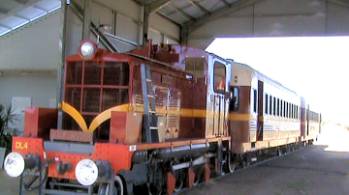 the next few days and they were
getting it ready to demonstrate it to the engineers.
the next few days and they were
getting it ready to demonstrate it to the engineers. 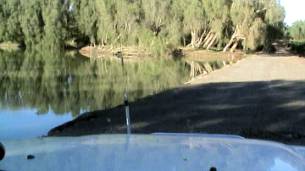 We had a quick look at the old
weir there was absolutely no water running and although the water was not far
below on the upstream of the weir it looked very unhealthy very much as the
bloom was blue green algae.
We had a quick look at the old
weir there was absolutely no water running and although the water was not far
below on the upstream of the weir it looked very unhealthy very much as the
bloom was blue green algae.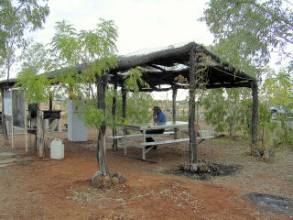 On the out skirts of town there
is a place called Wally’s Camp, it’s run by a bloke called Wally who has a
1500 head of cattle “Brahma Droughtmaster Cross”. The facilities are very
rudimentary on mostly road base which is fine for caravans but not much good
for tents but we did manage to find a spot near were he has a rough kitchen
set up. There are hot showers and flushing toilets with lights but no
electricity for campers and no garbage tins, you use the place on a take your
rubbish with you basis. The good thing it only costs 8 dollars per night for
the both of us and the place is clean, so we are quite pleased.
On the out skirts of town there
is a place called Wally’s Camp, it’s run by a bloke called Wally who has a
1500 head of cattle “Brahma Droughtmaster Cross”. The facilities are very
rudimentary on mostly road base which is fine for caravans but not much good
for tents but we did manage to find a spot near were he has a rough kitchen
set up. There are hot showers and flushing toilets with lights but no
electricity for campers and no garbage tins, you use the place on a take your
rubbish with you basis. The good thing it only costs 8 dollars per night for
the both of us and the place is clean, so we are quite pleased. 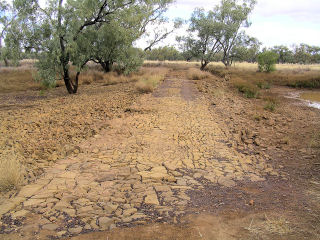 The workman ship was amazing
considering that the constructions were well over one hundreds years old,
they were constructed with an earth core and stones hand placed on edge both
side and on top, the down site had the greater length to brake up the
turbulence of the water coming over the weir in the wet season before this
constructions took place there would be no water in the area a few week after
the rains stopped, though when we were there, there had been no wet session
and very little rain for twelve months, but there was still a lot of water
trapped behind these walls of which there were five or six at different parts
of the creek, all of them held a considerable amount of water.
The workman ship was amazing
considering that the constructions were well over one hundreds years old,
they were constructed with an earth core and stones hand placed on edge both
side and on top, the down site had the greater length to brake up the
turbulence of the water coming over the weir in the wet season before this
constructions took place there would be no water in the area a few week after
the rains stopped, though when we were there, there had been no wet session
and very little rain for twelve months, but there was still a lot of water
trapped behind these walls of which there were five or six at different parts
of the creek, all of them held a considerable amount of water.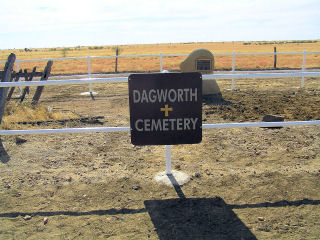 We also saw quite a few Brolgas
and a lot of small birds with very bright green undersides they flew like a
shoal of fish in the air, beating there wings in unison and every time they
turned there was the flash of green, over head the kites were circling, but
because the flock must have consisted of a hundred of these very small birds
all flying wing tip to wing tip the kites seemed to ignore them.
We also saw quite a few Brolgas
and a lot of small birds with very bright green undersides they flew like a
shoal of fish in the air, beating there wings in unison and every time they
turned there was the flash of green, over head the kites were circling, but
because the flock must have consisted of a hundred of these very small birds
all flying wing tip to wing tip the kites seemed to ignore them.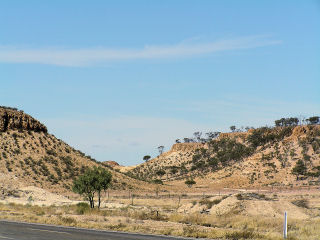 As we drew close to the junction
of the road we were on and the Matilda Highway the land changed from flat
grassy (if not Sparse) to undulating, then a few kilometres from the junction
of the road we were on and the rejoining of the Matilda highway, We went past
a group of formations with the tops all following a imaginary line, as though
there had been a great mound and over countless centuries the wind and rain
had caused erosion, cutting away the softer sections leaving these heaps with
steep sites and the tops at there original height – Very spectacular after
the flat plains we had been travelling through for maybe the last sixty
kilometres
As we drew close to the junction
of the road we were on and the Matilda Highway the land changed from flat
grassy (if not Sparse) to undulating, then a few kilometres from the junction
of the road we were on and the rejoining of the Matilda highway, We went past
a group of formations with the tops all following a imaginary line, as though
there had been a great mound and over countless centuries the wind and rain
had caused erosion, cutting away the softer sections leaving these heaps with
steep sites and the tops at there original height – Very spectacular after
the flat plains we had been travelling through for maybe the last sixty
kilometres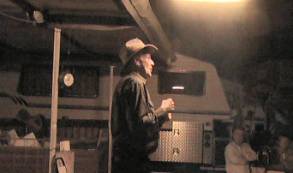 We arrived at the other Caravan
Park just before 6.30 pm, Milton Taylor recognized Ivor before he did. Milton
gave Ivor a warm welcome and we had a short chat with him, he said he would
get Ivor up towards the end of the show, and we thought that he meant to get
Ivor to recite something as he knew Ivor does reciting, but all that happened
was that he got Ivor up as well as some other people, to act out The man from
Ironbark, and mostly made them look like fools in a put me down kind of
comedy sketch.
We arrived at the other Caravan
Park just before 6.30 pm, Milton Taylor recognized Ivor before he did. Milton
gave Ivor a warm welcome and we had a short chat with him, he said he would
get Ivor up towards the end of the show, and we thought that he meant to get
Ivor to recite something as he knew Ivor does reciting, but all that happened
was that he got Ivor up as well as some other people, to act out The man from
Ironbark, and mostly made them look like fools in a put me down kind of
comedy sketch.