179th
Meeting of the Transvaal Meccano Guild
(Saturday
23th August 2003: Fuschia Room, Jabula Center, Sandringham)
Model report (Write-up by
Stuart Marr, Pics by Chris Els)
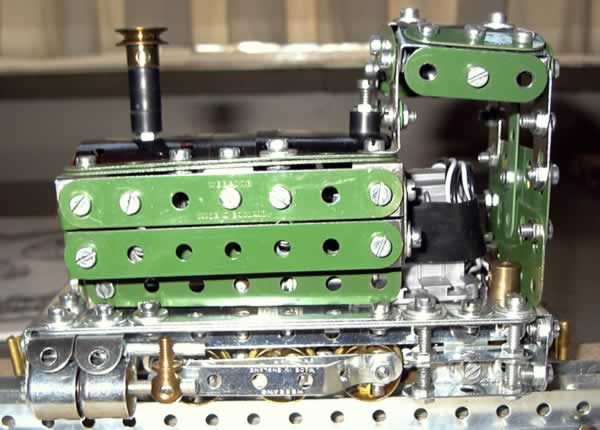
Peter Mathews
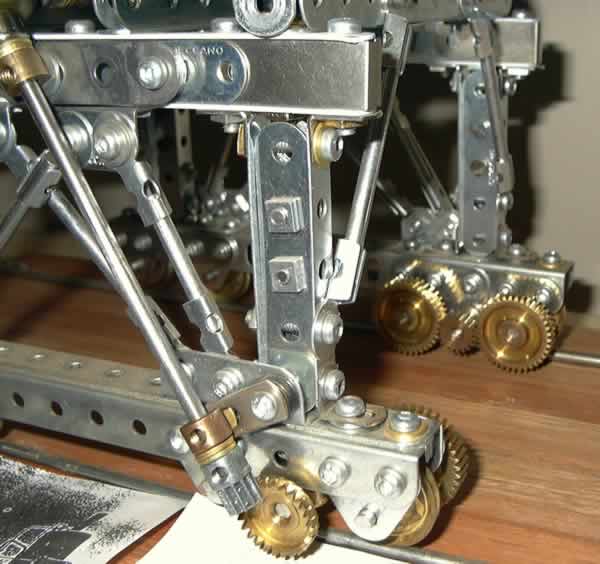
Narrow
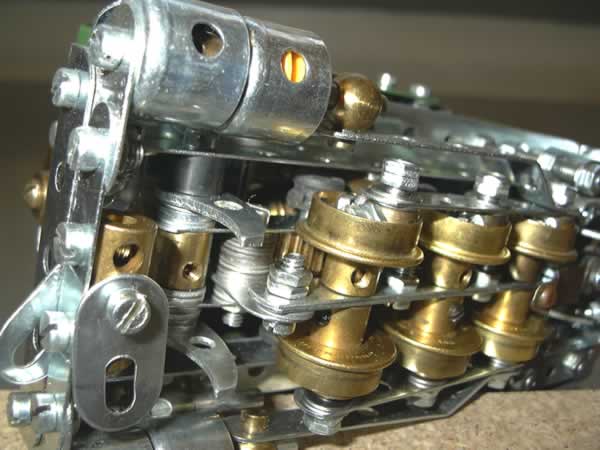
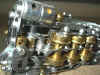
Gauge 0-6-0 Tank Locomotive
Peter
Matthews demonstrated an extremely compact tank engine, built according to a
design by Mike Etkinds.
The
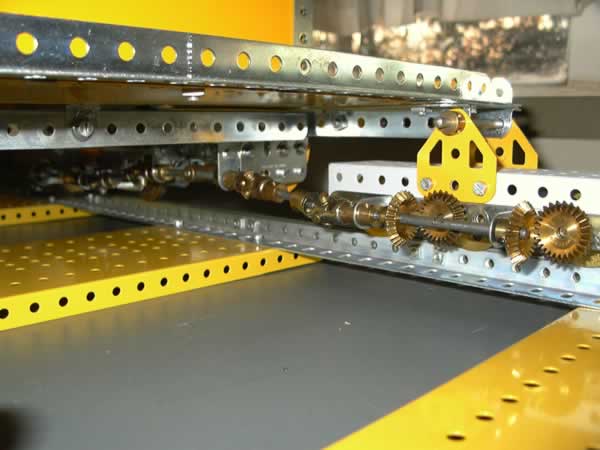
only connection between the gearbox and the driving wheels is by means of rubber
grommets. The model uses a standard MO Meccano motor.
The
vehicles that will accompany the locomotive use small bevel gears for wheels,
the bosses resting on the rails.
|
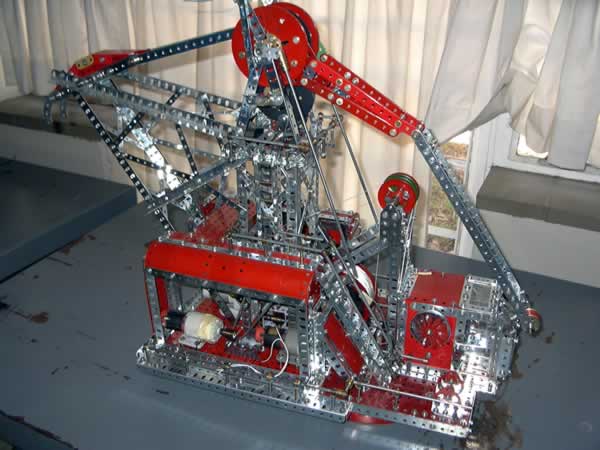
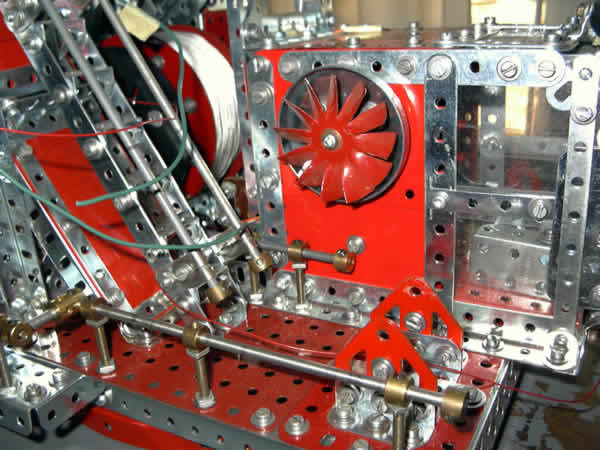
Bill Steele
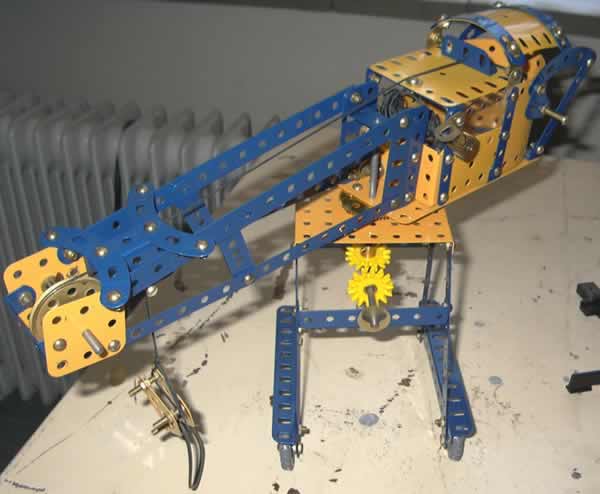
Giant Gantry Crane
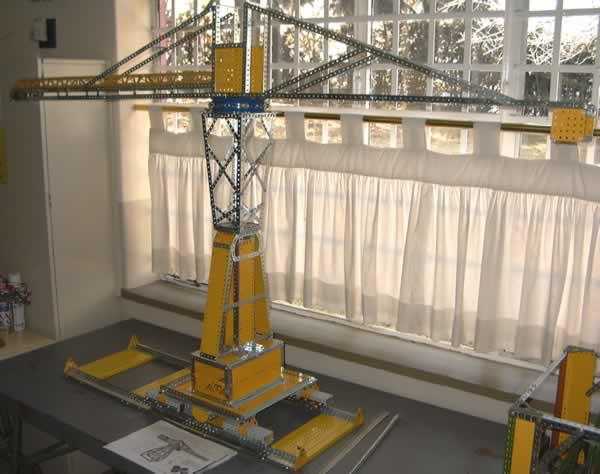
Bill
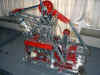
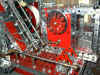
Steele showed off the latest development in the three-year saga of the Giant
Gantry Crane, which is the upper part that will rest on top of a gantry.
It is
based on a prototype that was used by Bow-waters Paper Dealers in Manchester.
The
model features an Adcock and Wilcock patented level luffing mechanism and
tracking geometry. The 1920s design was promoted as requiring
less
power to operate because of the short, balanced jib, but it required more
maintenance than normal cranes.
Examples
of this crane were thought to have all disappeared in the 1940s, but there are
three still working in Cape Town Harbor.
The
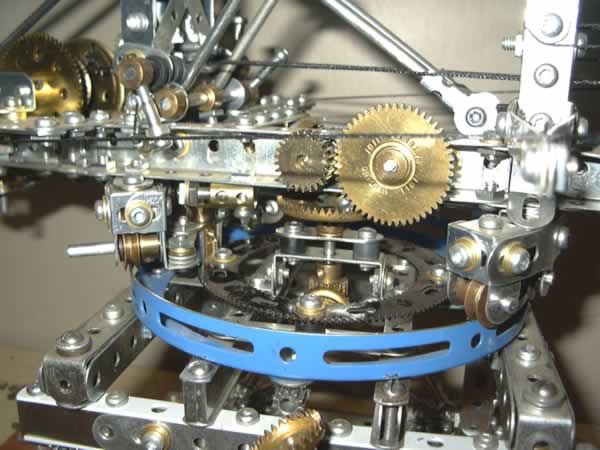
model will feature two jibs and two hoists. The superstructure will rest on one
of Bert Love’s bearings (using slide pieces).
Dave Heathcote
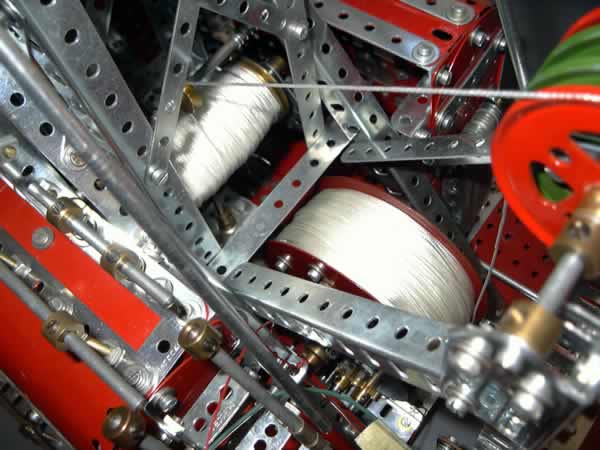
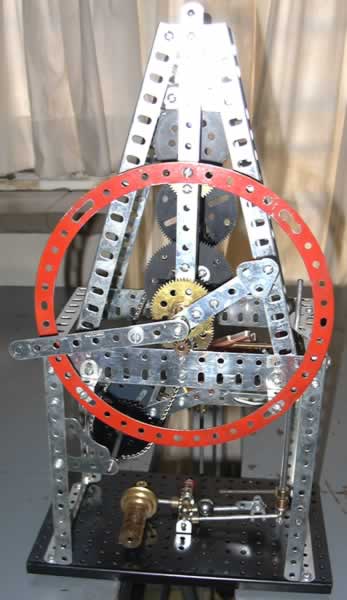
Ball Clock
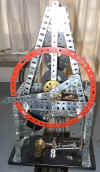
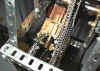
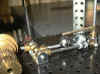
Dave Heathcote’s
clock is based on a design by John Wilding, and includes Pat Briggs’s recoil
escapement.
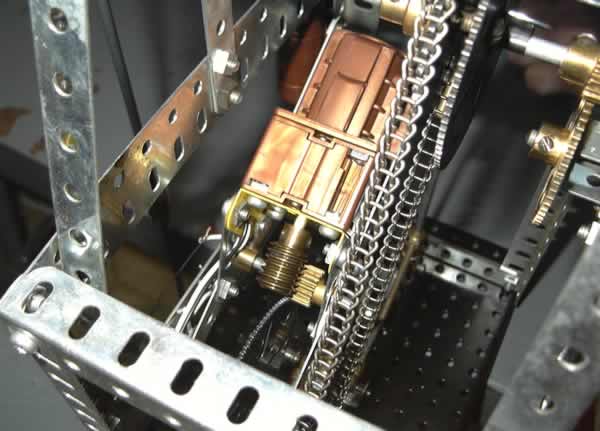
The motor which is used
to automatically rewind the clock is also the weight that drives it.
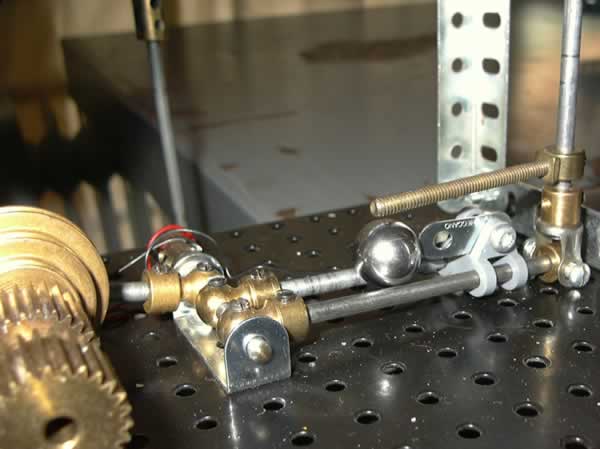
As the motor sinks down
it actuates a lever which causes the ball bearing to roll to the right and close
the circuit.
As the motor rises it
actuates another lever which lifts the ball roller up and the ball rolls to the
left, breaking the circuit.
|
Patrick 'O Shea
Caroller
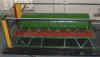
Patrick has built a
Caroller, using the same frame that was used for his gantry crane, and then for
his workshop.
The prototype consisted
of a row of partially-filled wine buckets tuned to different octaves. The
buckets were struck by hammers, triggered by a large rotating drum.
The rotating drum is
made of three paint tins carefully drilled. Pop rivets will be placed in the
holes to lift the hammers. It will play 38 notes before the pattern is repeated.
Clifford Brown
Radial Traveling Crane
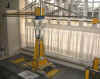
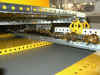
Clifford
Brown’s crane is mounted on a base similar to that of a blocksetter. The model
still needs to be motorized and balanced.
It
makes use of part 160d (the Channel Bearing).
Clifford
also showed some badly bent angle girders to illustrate the kind of damage that
can be expected when a large crane falls over.
|
Anthony Els
Miniature Blocksetter
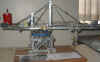
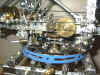
Anthony
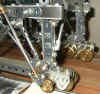
Els demonstrated the working of a Hollard and Pitt crane, based on a design by
John Sinton. The prototype was used in South Spain in the late 19th
Century.
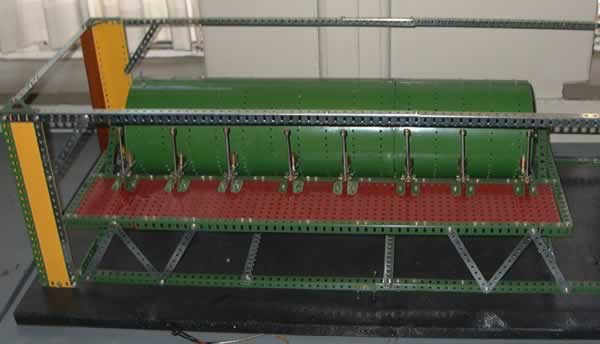
The
compact model has neat pistons and lattice-work, and a small electric motor
(running quietly on 1.5 Volts) hidden in the boiler.
ElectriKit
Magnet Holders (Part no. 525) are used to close off the I-beams, giving the
model a solid, finished appearance.
The
Sinton design includes clamped parts, to accommodate non-standard spacing, and
to hold the rails in place, but these parts are easily knocked out of alignment.
Also
the rubber grommets that hold the gears in place tend to vibrate out of
position, causing the gears to disengage.
Argentinean (EXACTO) Gears
Anthony
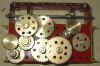
Els also demonstrated a non-Meccano gear-train, using Exacto gears from
Argentina.
The
use of helicals reduces play and makes the gear-train particularly quiet and
smooth-running.
Exacto make some very useful parts, that could
have been incorporated into the Meccano system, including 10, 55, 60-tooth
gears, and helicals that mesh across 1.5 inches
Chris Els
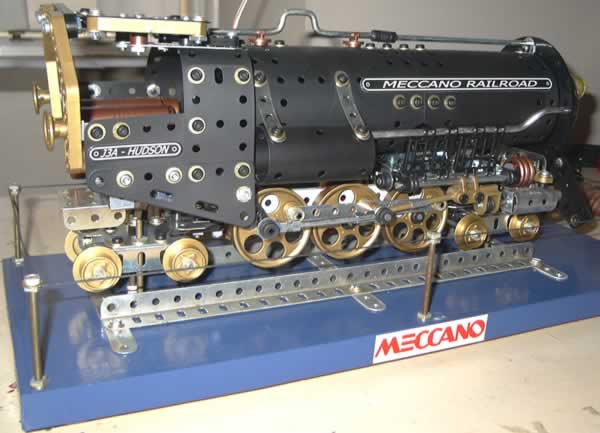
Special Edition Locomotive
Chris
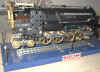
Els presented his model of the Centenary Locomotive, and expressed some doubts
about its reliability. It includes a small plastic pinion engaging a plastic
contrate, held in place by a rubber grommet.
The
model runs noisily and can’t be oiled because of the rubber parts.
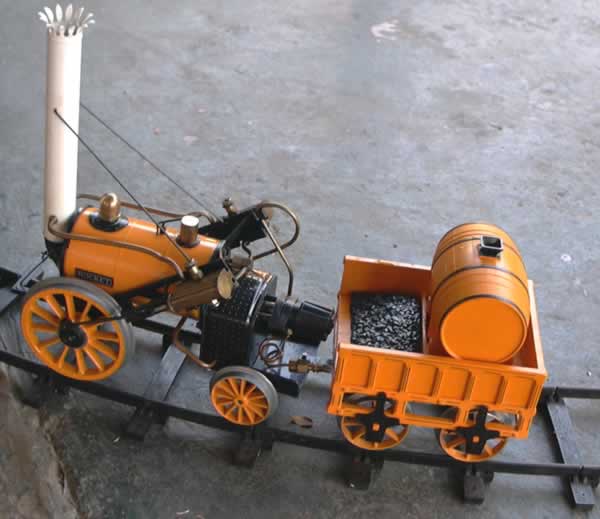
Hornby Hobbies Stephensons Rocket
Chris
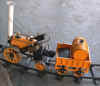
Els also showed his nicely restored model of a Hornby Hobbies Stephenson’s
Rocket. The model runs on tough plastic tracks, that can be joined together to
make either curves or straights (depending on which way they are connected).
Chris
ran the engine on the patio outside to the delight of many of the members.
|
Andries Botha
Multikit Crane
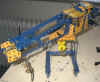
Andries Botha
demonstrated a small crane built by his 10-year-old daughter.
Dick Anstee
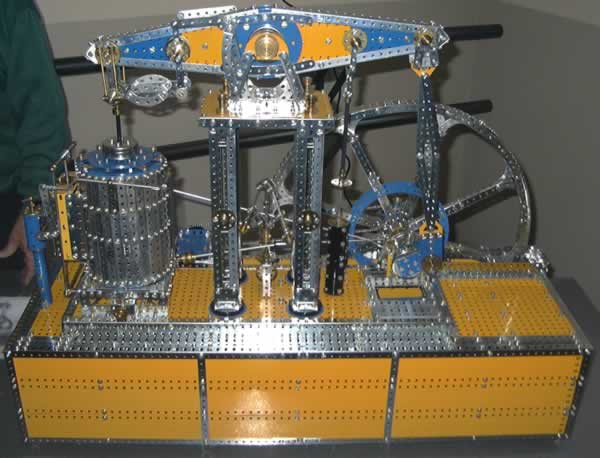
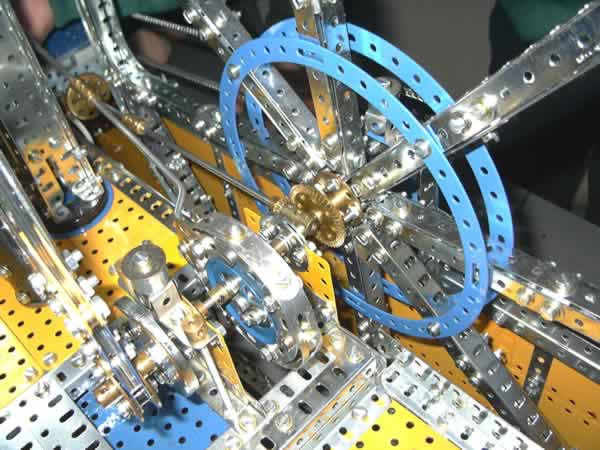
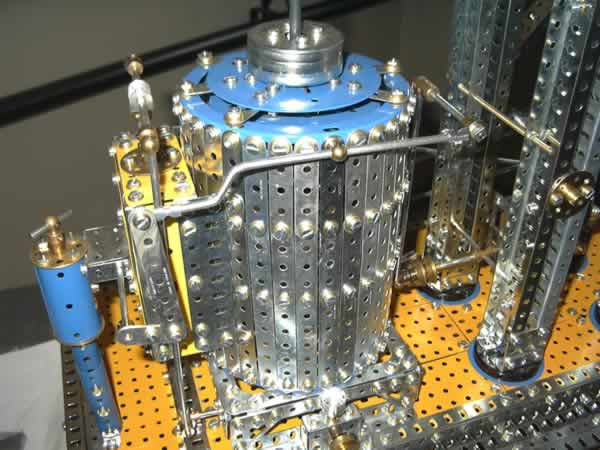
Beam Engine
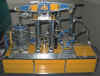
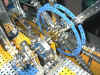
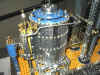
Dick
Anstee’s latest creation is a giant beam engine, that drives a small water
pump, such as may have been used in Cornish tin mines in the 1880s.
The
model is based on plans by Brian Rail, and was easily assembled apart from the
parallel motion above the cylinder. A large, solid and impressive model.
|