| Ancient Greece |
|
Location |
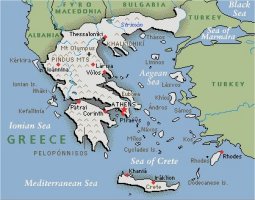
Greece
is situated in Southern Europe, bordering the Aegean Sea, Ionian Sea,
and the Mediterranean Sea. it is between Albania and Turkey.
|
|
| Trojan War |
The Trojan War began about, or shortly after, 1200 BC and was probably one of a series of wars waged during the 13th and 12th centuries BC.
|
Land |
Greece
has many mountains especially in the North. The land extends into the
sea as peninsulas and there are chains of islands. In fact there are
about 2,000 islands in all.
It suffers from severe earthquakes frequently. Land is used mostly for permanent pastures. |
|
| Alexander the Great |
|
Environment |
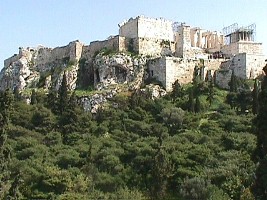
Unfortunately
there is air pollution which not only damages the people's health, but
also is damaging historical places like the Acropolis.
|
|
| Greek War of Independence | Between
1821 and 1829 the Greek people rebelled against the Turks because they
wanted their independence and because many people were suffering from
hunger.
The war ended with the Treaty of Adrianople between Russia and Turkey, signed on September 14, 1829. Turkey now agreed to the total independence of Greece. |
Area |
As a total area there is 131,940 sq km. This is divided in land area which is 130,800 sq km and in water area which is 1,140 sq km. The coastline is 13,676 km. | |
| Modern Greece | Since World War II, Greece became more industrial and the people live mostly in urban areas. Nowadays Greece is a republic and no longer has a king. |
Natural resources |
Natural resources in Greece consist of - bauxite, petroleum, marble, hydropower, magnesite and lignite. |