| HOME |
BLOOD
|
||||
| RBC |
INTRODUCTION
Blood, vital fluid found in humans and other animals that provides important nourishment to all body organs and tissues and carries away waste materials. Sometimes referred to as "the river of life," blood is pumped from the heart through a network of blood vessels collectively known as the circulatory system. An adult human has about 5 to 6 liters (1 to 2 gal) of blood, which is roughly 7 to 8 percent of total body weight. Infants and children have comparably lower volumes of blood, roughly proportionate to their smaller size. The volume of blood in an individual fluctuates. During dehydration, for example while running a marathon, blood volume decreases. Blood volume increases in circumstances such as pregnancy, when the mother’s blood needs to carry extra oxygen and nutrients to the baby. |
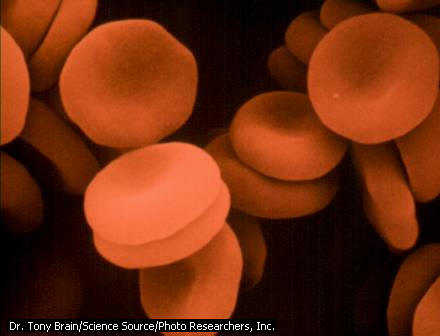
Erythrocytes , or red blood cells, are the primary carriers of oxygen to the cells and tissues of the body. The biconcave shape of the erythrocyte is an adaptation for maximizing the surface area across which oxygen is exchanged for carbon dioxide. Its shape and flexible plasma membrane allow the erythrocyte to penetrate the smallest of capillaries.
|
|||
| WBC | |||||
| PLATELETS | |||||
| PLASMA | |||||