|
NEWS ROUND-UP |
|
SEAPAVAA conducts Training Seminar on the Preservation and Restoration of Video and Audio Tape Materials |
||||
|
The first phase of the Training
Seminar on the Preservation and Restoration of Video and Audio Tape Materials
was held consecutively in Jakarta, Indonesia and Manila, Philippines from February
7-14, 2000. This seminar was conducted by SEAPAVAA in cooperation with UNESCO
(United Nations Educational, Scientific and Cultural Organization) and the
host institutions: Sinematek Indonesia and the PIA. This project is
part of a regional training program being undertaken by SEAPAVAA to address
the problems and concerns in video and audio tape collections in the Asia-Pacific
region. The training programme aims to provide participants with an
understanding of the technological and physical problems facing the magnetic
collections and recommend directions for development; and to recommend
practical workable solutions to video and audio tape preservation and
restoration problems as well as methods and techniques to deal with current
issues. The
resource persons for the first phase of the training seminar were two experts
in video and audio tape materials namely: Dietrich Schueller and Ken Rowland.
Dietrich Schueller is the head of the Austrian Phonogrammarchiv in Vienna and
currently is chairman of the IASA Technical Committee, member of the SEAPAVAA
Technical Committee and the Audio Engineering Society. Ken Rowland, on the
other hand, heads the Film Printing and Processing Laboratory at the National
Film and Sound Archive/ ScreenSound Australia and has a long career as a
technician and manager in various aspects of film and video technology. In
Jakarta, there were 23 participants from the National Library, National
Archive, both government |
|
|
||
|
|
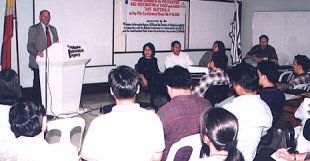
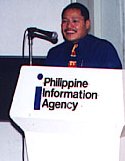
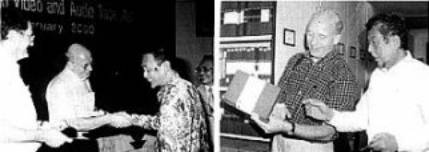
The training
seminars were held in Manila (top) and Jakarta (below) |
|||
|
|
|
|||
|
|
and private television and radio stations, and the
enthomusicology society. Sinematek Indonesia hosted the project with support from
the Directorate Jenderal for Cultural Affairs of the Ministry of Education
and the National Archive. In the
Philippines, the seminar was participated in by 61 representatives from
audiovisual archiving institutions, both government and private, as well as
universities, museums, music libraries and broadcasting networks in the
country. The project was implemented by the Philippine Information Agency as
host institution in cooperation with the Society of Film Archivists (SOFIA)
and the National Commission for Culture and the Arts. Among the
topics that were covered in the training seminar were: preservation issues
such as cleaning and treating physical and mechanical deterioration, storage |
|
and handling; ethics, guidelines and current preservation
practices; and the digital future and format obsolescence. During the
course of their stay in both countries, the resource persons conducted visits
to video and audio archiving institutions in order to provide on-site consultations
of problems and concerns on their collections. The participants were encouraged
to bring sample video and audio tape materials with significant or indicative
problems from their collection for possible consultation with resource
persons so that specific preservation strategies or treatments can be
discussed and developed. The
training seminars in both countries were highly successful and effective due
to the generous support of the participating institutions, the enthusiasm of
the participants and the expertise of the resource persons. The outcome
further affirmed SEAPAVAA's belief that this Continued on page 3 |
|
Page 2 – AV Archives Bulletin |
January-June
2000
|