
Spinning can be very deceiving, because it looks so easy. It requires hand, eye, and foot coordination. All the "trials and tribulations" are worth it once you have finally gotten the hang of it.
Before you can spin, you need a fiber and something to spin it on. There are many types of spinning wheels, but most people initially learned to spin on a drop spindle. A drop spindle can be taken anywhere because it is so small. A drop spindle gets you used to handling and drafting of the fiber. It also gives you the opportunity to decide whether this is something that you really want to do without making a big investment.
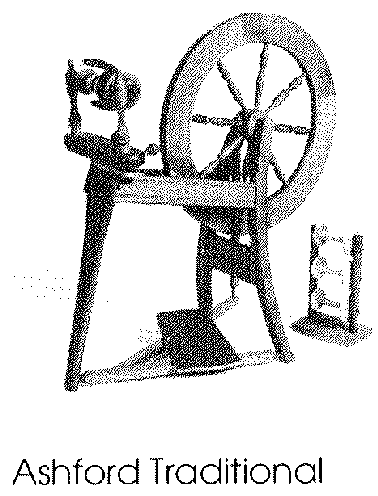
Before going out to buy a wheel, I strongly suggest that you search out a class and try out several different types of wheels before investing in one. You need to be comfortable with the wheel and make sure your legs and feet have enough room. I have an Ashford Traditional wheel, which I thoroughly enjoy. Since I am tall, it gives me enough legroom, and it is also very flexible with regard to ratio and expansion of capabilities. It has proven to be a good, all-around wheel for me. However, there are many other very well-made wheels that may be more suitable for you. I also have two antique wheels. One is a "Great Wheel" which was hand made by indentured servants around 1830 for a family in Onslow County, North Carolina. The other is a saxony wheel that was used before the civil war by a lady in Guilford County, North Carolina. Both wheels are operational, but I do not use them very often because I do not want to damage them. All my wheels have names: Annabelle is my Ashford, Bertha is the Great Wheel, and Suzanna is the Saxony. I consider each a friend, as I spend many hours with them, and they give me much comfort and enjoyment.
Wool is probably the most durable fiber and easiest to acquire. There are many places where you can purchase a quality fleece, and the internet is a great place to find wool from all different varieties of sheep and other animals, such as, angora goats and rabbits. One can virtually spin anything from wool to dog or cat hair. I have done a little of everything so far. Naturally, I have my own resource for angora fiber from my bunnies. Angora is heaven to spin, and makes beautiful garments.
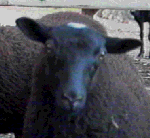

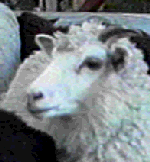
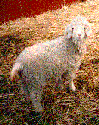
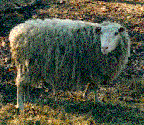
I highly encourage anyone who is starting out to try a nice variety of sheep wool. When purchasing a fleece, I always try to acquire a "covered" fleece. This means the animal wore a coat all year, which keeps the wool much cleaner. You will not have to "scour" your fleece before you spin it, and my personal preference is to spin "in the grease." Scour means to wash the wool before spinning, and in the grease means that the lanolin and other oils from the sheep are still on the wool, making the spinning a much smoother experience.
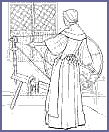
Spinning is a lot of work, especially if you purchase raw wool. This means you also must prepare the wool for spinning by "carding" it. Carding is the method of opening and spreading out the fiber for spinning. Not all fibers require carding; however, most do. This is probably the most important part of spinning. If the wool or other fiber is not properly prepared, you will have difficulty drafting the fiber and getting an even thread. As with all other tools for spinning, there is a variety to choose from. There are small hand-held carders and larger drum carders. There are even electric ones, if you want to pay the prices. They can be very expensive. If you absolutely hate carding, you can always purchase your fiber "ready to spin."
When you have finished a skein of wool or have knitted a sweater or other item from your hand-spun fiber, you will have a feeling of great accomplishment. You can truly say that you "did it all." There is no greater satisfaction for any artisan.


|
Thisfiberart ring site |