 THE IMPORTANCE OF BEING EARNEST:
The Word of God is NOT a Book.

2 January 2000
But before I get to Paul, "let me make one thing perfectly clear," as Mr. Nixon used to say. I am not trying to make the case that the writings (Epistles) of the Apostles Paul, as well as those of Peter, John, Jude and James are worthless. However, they are the writings of mortal men. As such, they cannot and should not be viewed as infallible. They should be treated approximately the same way one would treat the writings of Dr. Martin Luther King Jr., or Rev. Billy Graham, or the late Bishop Fulton Sheen, or any other minister. I add the tentative word "approximately," because after all, the Apostles were contemporaries of Jesus Christ, whereas the other ministers I named lived, as we know, some two thousand years later. (While not precisely a contemporary of Jesus in that Paul never saw Him face to face as did the other men, Paul's vision on the road to Damascus may entitle him to a somewhat stronger claim.) In any event, these early Apostolic letters -- and that is the meaning of the word "Epistle" -- a "letter" -- are similar to the writings of any other human minister in this respect: While they are sincere, earnest attempts to convey God's message written by men guided by the Spirit who truly believed in Jesus Christ as Lord, they are not without some human influence and occasional failings. Furthermore, there are areas where the Apostles contradicted each other on some not inconsequential points. I will show specific examples of such mistakes and contradictions later in this essay.
IS THE BIBLE
In the strictest sense, no. In the Gospel of John, Jesus's beloved Apostle gives an awe inspiring explanation of exactly what is "The Word of God." Or I should say, exactly "Who" is "The Word of God:"
Here is the single most important key to unlocking this problematic question: Look to the books of the Bible themselves for the answer.
(Incidentally, when I use the term "books," plural, in referring to the Bible, I am taking it as a given that the reader understands the Bible is not a single book, but rather a collection of over sixty separate books written by more than forty different authors over a span of approximately 1,500 years. For a brief but clear explanation of this, take a timeout now and visit this link: www.mustardseed.net.)
Each individual Biblical book contains a statement of its own meaning and purpose. For example, in the book of Ezekiel, the author says without equivocation that God essentially showed him certain revelations and commanded him to spread the word about them. Ezekiel 1:1 says: "The sky opened, and I saw a vision of God." Similarly, chapter two opens with, "I am sending you [Ezekiel] to tell them what I, the Sovereign Lord, am saying to them." The prophet Isaiah makes similar claims in Isaiah 1:1: "This book contains the messages about Judah and Jerusalem which God revealed to Isaiah." And in chapter two, first verse, he writes, "Here is the message which God gave to Isaiah son of Amoz about Judah and Jerusalem."
Should we believe those claims? Well, "The proof of the pudding is in the eating," as the old saying goes. Consider Isaiah 48:5: "And so I predicted your future long ago, announcing events before they took place, to keep you from claiming that your idols and images made them happen." Because wiser minds than mine have already written volumes demonstrating how each of the prophesies of the Old Testament came to pass exactly as written, I will not deal at length with that component here, other than to offer one of the most compelling examples I know of such "proof of the pudding." Look at the following excerpts from Isaiah 53:3-8. This particular Old Testament book was written approximately six hundred years prior to the birth of Jesus Christ -- yet can there be the slightest question of whom the words foretell?
That is markedly different from proclaiming, "God told me to write this." The Epistle writers do not claim to be setting down words at God's behest in the same way Isaiah or Ezekiel did. On what basis, then, can we assume the Epistles are literally "The Words of God?" I submit it is completely illogical to make such an assumption.
While I understand this flies in the face of what many people have been taught, the notion that every single word in the collection of books which we today call the Bible is "the literal, unerring Word of God" is a false teaching. And that false teaching has had consequences ranging from comical to dangerous. More on that later. Now, on to the Apostle Paul.
THE IMPORTANCE
Er, excuse me. I should have said, "The importance of being Paul."
We are Christians. Who is the centerpiece of our faith?
Paul himself gives us the single most important lesson in that regard when he writes these rhetorical questions in 1st Corinthians:
Now wait a minute -- if I'm building a case for the human failings of the Disciples, what impact does this have on the Gospels? After all, aren't we "at the mercy," so to speak, of the same type of mortal men? Well, that's not where I'm going. We can rest easy on that score, thanks to a very powerful promise.
First of all, the Gospels are the testimonies of four separate witnesses, and they consistently describe the ministry of Jesus with unanimous, at times identical, accounts on the key points. That is extremely powerful testimony -- much more so than the testimony of any single individual. Furthermore, while the four Gospels do contain some minor discrepancies, they are indeed so very minor they can be dismissed as simple human errors that in no way detract from the overall message. Some are merely errors of omission on the part of one author vs. another. For example, precisely who took Jesus down from the cross? You will find minor disagreement among the four on that point. But faith in Jesus Christ should not be contingent upon whether Matthew had a better memory than Mark; whether Luke was a more skillful observer of minute detail than John. Furthermore, it would be an error to assume that each of the four Gospel authors was standing in the very same space at the very same time. You've probably heard the comparison to four people standing at opposite corners of an intersection at the time of a traffic accident. Each person will have a slightly different view from his own perspective, even though all witnessed the same event. Yet on the most salient points, if the witnesses are being truthful, there will be general agreement. So it is with the four Gospels. Despite their minor inconsistencies, I am confident in them for precisely that reason.
The words of Jesus Himself are what is most important, and I believe Matthew, Mark, Luke and John conveyed them to the very best of their abilities. Furthermore, Jesus Himself gave us His solemn promise: "Heaven and earth may pass away, but My words will never pass away." For someone who can tell the wind and seas to stop in their tracks, heal blindness, turn water into wine, and raise Himself from the dead, to make certain His words are correctly handed down seems like a piece of cake by comparison, doesn't it? But let's be entirely clear on that: Jesus said "My" words -- "HIS" words. He made no such statements about the words of Paul, James, or anyone else.
Continued....
[Author's note: This essay is based on a compilation of several that I posted on the message board for the "ex-EX-gay" Internet club to which I belong. Though I do not fit their definition of "ex-EX-gay," the topic is one I find interesting, and the other members have welcomed me to the club.]
Here are some excerpts from an email which initiated this discussion. "Nojam," also known as Norm, founder of the "ex-EX-gay" club received this email questioning my assertions about Jesus Christ as well as the alleged inerrancy of the Bible:
Norm, thanks for posting that email. It would appear we are seeing some people at least begin to examine for themselves the rigid dogma which they have, in the past, accepted so readily without question. The Apostle Paul is an excellent place to start, in that your email correspondent mentioned Paul "being commissioned by Jesus to teach the church." That, of course, is an allusion to the story written by Luke in the Acts of the Apostles detailing Paul's conversion from being Saul of Tarsus, one of the most vicious persecutors of early Christians, into Paul the Apostle, one of the most prolific writers of testimony to the Lordship of Jesus Christ.
"THE WORD OF GOD"
OR NOT?
And there we have the definitive answer to our question. "The Word of God" is not a book at all, it is Jesus Christ. In a broader sense, therefore, let us rephrase: Does the Bible contain "The Word of God?" Without question, the answer is, "Sometimes yes, somtimes no." But how dare I make such a claim? And how can I presume to know which portions are, and which are not?
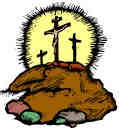
To summarize this point, the prophets of the Old Testament clearly stated at the beginning of each book (and frequently each chapter) that God Himself revealed His knowledge and commanded them to relay it to human beings. But show me one Epistle that makes such a claim. (Hint: You won't be able to -- there aren't any.) Instead, the Epistles all begin with statements along the lines of, "From Paul, an Apostle of Christ Jesus.... May God our Father and the Lord Jesus Christ give you grace and peace;" or "From James, a servant of God and of the Lord Jesus Christ, greetings...."
OF BEING EARNEST
"No," and "no," to answer in that order. If one is a Christian, he understands Jesus died for us, and we are disciples of Jesus, not Paul.

CLICK HERE TO READ NEXT SEGMENT

Return to menu of essays

Return to "V.E.'s" home page.
