Fernando Sor
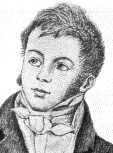
"Sor,...who is known to be the most perfect guitarist in the world.." - Ebers (Journalist)
Sor is probably the most famous guitarist to come out of the first golden age of the guitar. In Spain, he is considered the Beethoven of the guitar, and everywhere he played, the guitar's popularity spread. Although he wrote many works including piano solos, opera, and ballet, Sor is best remembered for his classical guitar studies and works, which are still played today by students and professional performers alike.
Sor wrote for the music and not the instrument. Although contemporaries Aguado and Carulli wrote many pieces for the guitar, they were mainly exercises to build technical ability, and were not particularly artistically interesting.
Sor's first musical experiences were provided by his father - Italian operas and the simple popular tunes his father played to him on the guitar at an early age. His military family expected him to follow a military career, but by eight, Sor was already an accomplished guitarist and musician. Once his talent was recognised he was accepted into the Montserrat monastery near Barcelona, where he was a chorister and was taught music theory and composition. In 1796, his father died and his mother could no longer afford to pay for his studies at the monastery. When he was 17, Sor wrote a successful opera. Soon after this he received a commission in the Spanish army where his musical skills, which the army encouraged, quickly helped him become a lieutenant. After spending four years at the military school, he left and moved to Madrid.
Sor's first patron, the Duchess of Alba, was different from many of the other people who hired musicians at that time. Instead of pressuring him to write music solely for her, she gave him the use a of study in her house and let him work on his own pieces at his own pace.
In 1808 the French army invaded Spain. Sor's music, which was increasingly for voice or solo guitar, became very patriotic in nature, intended to support the Spanish army and to boost morale of the general public. After the Spanish armies were defeated, Sor got an administrative post with the new French government. During this period Sor wrote very few pieces, mainly because he was loyal to Spain and felt uncomfortable serving under a French government. In 1813, the Spanish army defeated the French and regained control of Spain, and Sor left the country forever. Perhaps he, like many artists who had been working for the French, felt obliged to follow them back to Paris, where he lived on and off for the rest of his life. Or maybe he was suspected of collaborating with the army of Napoleon and exiled from Spain.
In 1809 Sor travelled to England, where he gave many concerts, accompanying himself on the guitar or piano. He was something of a novelty there, as it was the first time a guitar was used as a concert instrument. He was very well recieved, and he became known throughout all of Europe and Asia as an excellent composer and a performer of the highest technical ability. He lived in London from 1815 to 1823 where he had had four of his ballets and operas produced, after which he lived in Russia for two years.
1827 saw Sor stop travelling around the world for a productive retirement in Paris. As well as many compositions, Sor published what is even today considered one of the most complete and practical method books for the classical guitar.
During the last few years of his life, Sor was in great demand as a tutor and had many students. Sor's daughter died in the summer of 1837, which left him in a state of deep depression. The last piece he wrote before his death was a Mass in honour of his daughter. Two years later, at the age of sixty, Sor died.
After his death the guitar fell into obscurity for almost eighty years.
See one of Sor's pieces
Time Line of Sor's Life
Back to Index
"Sor,...who is known to be the most perfect guitarist in the world.." - Ebers (Journalist)
Sor is probably the most famous guitarist to come out of the first golden age of the guitar. In Spain, he is considered the Beethoven of the guitar, and everywhere he played, the guitar's popularity spread. Although he wrote many works including piano solos, opera, and ballet, Sor is best remembered for his classical guitar studies and works, which are still played today by students and professional performers alike.
Sor wrote for the music and not the instrument. Although contemporaries Aguado and Carulli wrote many pieces for the guitar, they were mainly exercises to build technical ability, and were not particularly artistically interesting.
Sor's first musical experiences were provided by his father - Italian operas and the simple popular tunes his father played to him on the guitar at an early age. His military family expected him to follow a military career, but by eight, Sor was already an accomplished guitarist and musician. Once his talent was recognised he was accepted into the Montserrat monastery near Barcelona, where he was a chorister and was taught music theory and composition. In 1796, his father died and his mother could no longer afford to pay for his studies at the monastery. When he was 17, Sor wrote a successful opera. Soon after this he received a commission in the Spanish army where his musical skills, which the army encouraged, quickly helped him become a lieutenant. After spending four years at the military school, he left and moved to Madrid.
Sor's first patron, the Duchess of Alba, was different from many of the other people who hired musicians at that time. Instead of pressuring him to write music solely for her, she gave him the use a of study in her house and let him work on his own pieces at his own pace.
In 1808 the French army invaded Spain. Sor's music, which was increasingly for voice or solo guitar, became very patriotic in nature, intended to support the Spanish army and to boost morale of the general public. After the Spanish armies were defeated, Sor got an administrative post with the new French government. During this period Sor wrote very few pieces, mainly because he was loyal to Spain and felt uncomfortable serving under a French government. In 1813, the Spanish army defeated the French and regained control of Spain, and Sor left the country forever. Perhaps he, like many artists who had been working for the French, felt obliged to follow them back to Paris, where he lived on and off for the rest of his life. Or maybe he was suspected of collaborating with the army of Napoleon and exiled from Spain.
In 1809 Sor travelled to England, where he gave many concerts, accompanying himself on the guitar or piano. He was something of a novelty there, as it was the first time a guitar was used as a concert instrument. He was very well recieved, and he became known throughout all of Europe and Asia as an excellent composer and a performer of the highest technical ability. He lived in London from 1815 to 1823 where he had had four of his ballets and operas produced, after which he lived in Russia for two years.
1827 saw Sor stop travelling around the world for a productive retirement in Paris. As well as many compositions, Sor published what is even today considered one of the most complete and practical method books for the classical guitar.
During the last few years of his life, Sor was in great demand as a tutor and had many students. Sor's daughter died in the summer of 1837, which left him in a state of deep depression. The last piece he wrote before his death was a Mass in honour of his daughter. Two years later, at the age of sixty, Sor died.
After his death the guitar fell into obscurity for almost eighty years.
See one of Sor's pieces
Time Line of Sor's Life
Back to Index