






|
|
|
|
| Home < Featured Article |
| March 9, 2002 | |
| Carved deeply into the
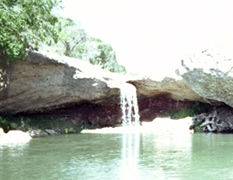
limestone bluffs of Central Texas, lie the seven hundred springs that feed
the South Llano river. These headwaters are known across the state not
only for their beauty, but also offer a step back in time when water
wheels were a source of power.
Seven Hundred Springs, the eleventh largest springs in Texas, is four miles south of Telegraph in Edwards County (at 30°16' N, 99°56' W). The springs burst from numerous cavities in Edwards limestones at the base of a bluff on the northwest side of the South Llano River. The average discharge from 1939 to 1978 was two gallons per second. Today however, the springs are not as visible as in |
 |
| previous years. A
man-made damn was created so that the ranch owner could better manage
irrigation and water flow. Although the view may not be as impressive in
years past, the lively springs offer a glimpse of what was created
centuries ago.
You can still visit these headwaters at the annual "spring" road trip in March. During my visit I was inspired by the small chain of ponds created by the springs. One such pond is filled with crystal clear water, tinted with | |
| vibrant hues of green
and blue. At its edge, rests an old pump house that was once used to
provide water to the ranch house. Inside the old wooden structure is a
maze of wood and metal machinery that has seen the test of time. Although
it no longer supplies fresh water, it still gives one a sense of life
before electric power.
For thousands of years Tonkawa and Lipan Indians lived at the hard-water springs, where they left many artifacts. If you keep your eyes close to ground, you can still find the occasional arrowhead or stone tool. But if you look deep into the emerald spring water, you will find much more. |
 |
|
| |