|
|
  
The Principality of Asturias is one of 16 autonomous
regions in Spain. It is located in the North of the Iberian Peninsula.
The region's capital is Oviedo (approx. 230.000 inhabitants) is some 30 km inland,
but many activities also go on in Gijón (approx. 260.000 inhabitants), at
the coast. Between the two cities, there is a "love and hate" -relation,
which among other relates from the different sides taken during the Civil
War in the 1930s. The "cultural" city Oviedo chose to support Franco,
while Gijón, which has large and important industry and a maritime port (one
of the most important in Spain) supported the republicans. You can still
sense this special relationship, especially during soccer games ...
To the West it borders with Galicia, to the East with
Cantabria and to the South with Castilla y León. Washed by the Cantabrian
Sea, Asturias enjoys a temperate - humid climate that allows visitors to
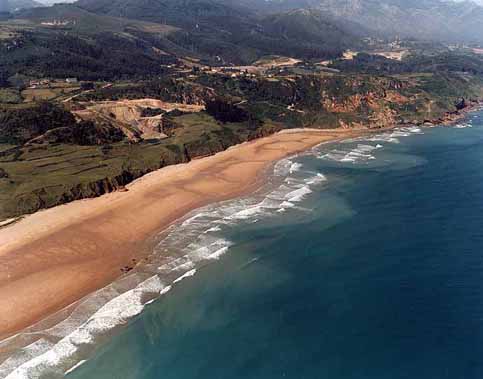
benefit from both the sea and the mountains. Fine sandy beaches are close
to the contrast-full "Picos de Europa" - a national park which is one of Spain's
best walking areas. The mountains also serve effectively as protection against
enemies, which has served Asturias many times. The Asturians are specially
proud of Pelayo, leader of the only people in Spain that resisted the "moros" (Arabs). The Spanish Prince is named Principe de Asturias and the actual
Prince Felipe is marrying a woman from Oviedo on the very same
day as our wedding. Asturias has a large concentration of industry; mines,
shipyards, steel industry and ports. During the last decades, this kind of
industry has declined, though, and many people are emigrating, mainly to Madrid. Specially worth visiting in Asturias are the following
places - Picos de Europa; a huge national park in the eastern parts
of Asturias which gives many possibilities for walking.
- Covadonga; here the "national heroe" Pelayo stood strong
against the Arabs in 722. - Oviedo; big parts of the city are on the UNESCO:s
World Heritage List. - Gijón; most beautiful are the old parts and the beach.
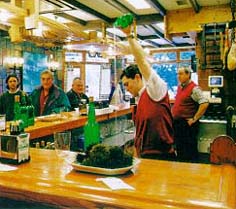
Take the chance to try the Asturian "national beverage" sidra (cider) in
these parts in the "sidererías" . Cider is so important in Asturias that it really deserves more than just a few lines, but that has to be some other time. You can find more information under www.infoasturias.com - Gastronomy - Cider - Natural cider.
For those who arrive a couple of days before the wedding,
we will arrange activities, including visits to some of the above-mentioned
places. In general Asturias is a good place for having a good time - the food is both very good and kind to your purse (quite a lot cheaper than
in Madrid) and there are always plenty of cultural activities going on.
You can also go shopping - there are many nice shops. Talk to the bride if
that's what you are looking for during your stay ;) There are some nice home pages about Asturias (most
of them in Spanish). But at least the above mentioned InfoAsturias is in English and Oriente Asturias is
quite nice as well (takes long time to download, many photos), even though
it's just for the eastern parts of Asturias and in mixed English/Spanish. For
those who know Spanish Asturias digital is very interesting, both
regarding layout and content. The ceremony will take place at the city hall in Langreo - the part where José grew up. It's a valley, where industry
can be seen everywhere (and therefore not so beautiful as it could be).
The city where the city hall is located is called Sama.
|