Colonial Mexico
(Day 8 & 9) Angangueo - Monarch Butterfly Sanctuary
Note: The Monarch butterfly
migration takes place during the winter months. If you plan to
visit the butterflies it must be during November through no later
then mid March. Once the weather warms up the Monarchs begin
their migration back north to the United States. This author
recommends you read up on the migration and plan your trip accordingly.
The "Lonely Planet" travel book on Mexico has all the
details you will need to plan your trip. Also, try to plan your
arrival at Angangueo during the week as hotel rooms are limited
and the weekends find great numbers of visitors from Mexico City.
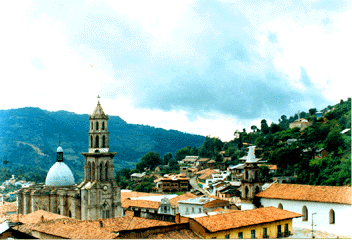 As you approach Angangueo you
will enter the only paved main street into town. About four blocks
into the built up town area you will see the Hotel Don Bruno
on your right. This is a very nice (reasonably priced) hotel
with a restaurant and pleasant grounds. Parking is down the street
a block. You will immediately be surrounded with van and truck
drivers wanting to take you to see the butterflies. Negotiate
a price (about $25.00) for the truck and remember, the price
is for the whole truck or van. Often you can find others at the
hotel who will be glad to share the cost with you and your group.
The best time to see the butterflies is about mid morning to
mid afternoon. The temperature will be warm enough for the butterflies
to begin swarming while they look for food and water.
As you approach Angangueo you
will enter the only paved main street into town. About four blocks
into the built up town area you will see the Hotel Don Bruno
on your right. This is a very nice (reasonably priced) hotel
with a restaurant and pleasant grounds. Parking is down the street
a block. You will immediately be surrounded with van and truck
drivers wanting to take you to see the butterflies. Negotiate
a price (about $25.00) for the truck and remember, the price
is for the whole truck or van. Often you can find others at the
hotel who will be glad to share the cost with you and your group.
The best time to see the butterflies is about mid morning to
mid afternoon. The temperature will be warm enough for the butterflies
to begin swarming while they look for food and water.
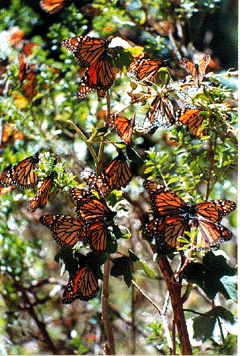 Santuario
de las Mariposas Monarca El Rosario (El Rosario Monarch Butterfly
Sanctuary) is about 6 kilometers (4 miles) northeast of Angangueo,
near the small village of El Rosario. The steep and rough dirt
road to the sanctuary should be negotiated only in a truck or
four-wheel-drive vehicle. An alternate entry can be made via
a dirt road from the village of Ocampo, a few miles southwest
of Angangueo; this route is longer but can be made adequately
in a small car or dual sport motorcycle.
Santuario
de las Mariposas Monarca El Rosario (El Rosario Monarch Butterfly
Sanctuary) is about 6 kilometers (4 miles) northeast of Angangueo,
near the small village of El Rosario. The steep and rough dirt
road to the sanctuary should be negotiated only in a truck or
four-wheel-drive vehicle. An alternate entry can be made via
a dirt road from the village of Ocampo, a few miles southwest
of Angangueo; this route is longer but can be made adequately
in a small car or dual sport motorcycle.
This is one of perhaps a dozen butterfly refuges in the highlands
of Michoacán and México, some 100 miles west of
Mexico City. Every winter an estimated 100 million monarchs--the
last generation of butterflies that have spent the spring and
summer in Canada and the United States--arrive as part of their
remarkable migratory cycle. Scientists do not know for sure what
inner navigational system guides the insects into making this
2,500-mile journey, although one possible explanation is that
more than half of North America's species of milkweed--the caterpillars'
food source--are native to Mexico, indicating that the urge to
migrate is passed along genetically.
After reaching their wintering grounds the monarchs hibernate,
forming enormous colonies in the sanctuary's tall pines and firs.
In a semi-dormant state they burn almost no energy, which prepares
them for the northward migration in the spring. Several generations
hatch along the way, thus continuing the monarch's life cycle
for another year.
Scientists did not discover the El Rosario refuge until 1974;
it is now a designated nature preserve. Mexican government officials
also impress upon residents and visitors the importance of maintaining
the natural setting that the insects require for their annual
stay. Those willing to make the effort will be rewarded by the
spectacular sight of millions of monarchs at rest in the trees,
some of which literally bend under their weight. Binoculars make
it easier to observe them hanging from the tree branches.
Wear sturdy, comfortable walking shoes and bring a jacket or sweater in case the weather is chilly. Also, keep in mind the altitude here approaches 10,000 feet! Do not over exert yourself, rest along the path if you feel ill or out of breath!
We visited the butterflies
mid morning and arrived back at the hotel around 11:00 am. We
changed into our riding gear and headed out for our next destination
- Tula. Just head out of town to the north, crossing about 20
miles of twisty mountain roads and follow the signs to El Oro.
From El Oro, east to Atacomulco, Jilotepec, south east to Tepeji
De Ocamp and then north into Tula. The AAA Auto Club map enlarged
portion around Mexico City has this route clearly defined and
the roads are well marked with signs. The ride takes about two
to three hours at most.