You Push the Button, We Do the Rest

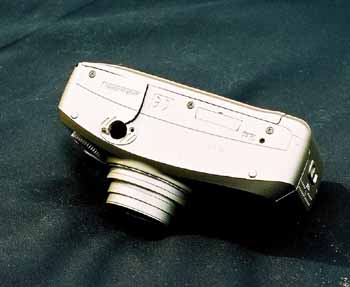
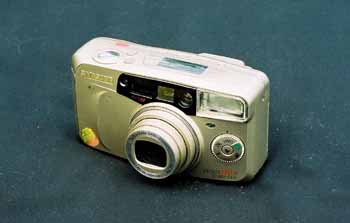
To date, all photography has been with a Samsung Evoca 140s. This model cameral has several major features which make it especially suitable for KAP:
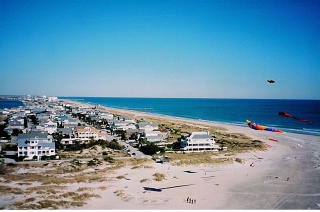
  1. It's not my Nikon. I don't let my Nikons fly as checked baggage. I'm certainly not going to let them dangle beneath 20 odd square feet of ripstop nylon several hundred feet above the roaring surf or the shining parking lot like some grotesque parody of Jonathon Edwards' Sinners in the Hands of An Angry God . I try to be realistic about my skills in building and flying a kite. Crashes happen with more frequency than I care to admit and equipment gets roughed up a bit. Not my Nikons. Nuh-uh. No way.

  2. Schneider-Kreuznach Some cameras in Samsung's Evoca line come equipped with optics built by Germany's famed Jos. Schneider Optische Werke GmbH. This is a HUGE step up from the usual plastic lenses found on most compact Point & Shoot (P&S) cameras. The result, when properly focused, is a level of sharpness far above that of most P&S cameras and on a level with that achieved with most Advanced Amateur/Entry Level Professional SLRs. No kidding. Good lens. I don't know exactly what Kreuznach means in German but I suspect it's something along the lines of "If your pictures are less than crystal clear it's your own verdammt fault."

  3. Intervalometer This feature allows the user to burn a lot of film. By fiddling with the intervalometer a photographer can set the camera to fire off one shot every 10, 20, 30, 40, 50 or 60 seconds or every 10, 20, 30, 40, 50 or 60 minutes. I usually set the intervalometer to 10 minutes, giving me plenty of time to get the camera up and into position before the first shot, and then having sufficient time to walk the line down, adjust the aim of the cradle, and move into a new position before the next shot 10 minutes later. Having an intervalometer equipped camera has allowed me to avoid the expense, weight and complexity of Radio Control systems.

  4. Weight 8.1 oz. Could be better (the Evoca 70 is only 7 oz.) but not much. Doesn't need excessive kite or wind to get aloft.

  5. Other Features The Evoca has numerous other features which, while not absolutely necessary for KAP, certainly come in handy:

    • "Sports" Setting This forces the camera to use its widest aperture and fastest possible shutter speed. I suppose this feature was intended to allow people to freeze the action of their tykes' soccer games, but it is very handy when the camera is swaying in the wind.

    • Infinite Focus Another override, this little button on the front forces the lens to focus at infinity, ignoring any other advice from the normally fairly accurate passive autofocus sensors. This feature was probably added to allow users to shoot landscapes through windows or to focus on aforest in background rather than a tree in the foreground but I've found it convenient in that I don't have to worry too much about obscuring the autofocus sensors when I tuck the camera in the Marvin Box. A doubled rubber band and a button made from a pencil top eraser keep the infinite focus button depressed throughout a flight.
Drawbacks Or course it's not the PERFECT camera. The perfect camera is usually that one in the window that you can't quite yet afford/justify. But still, there are a few shortcomings:

  • Vignetting Like all P&S cameras of which I am aware, the Evoca lacks a Focal Plane shutter. The Iris in the lens does double duty as the camera's shutter. With a wide open aperture and a short exposure, the edges of the frame receive significantly. This effect is not so pronounced at smaller apertures/slower shutter speeds, but then you'd be more susceptible to blur from camera shake. Focal plane shutters are one great advantage of SLRs over P&S cameras.
  • Strength It's not a tank. It's clad in plastic, not Titanium. If you drop it from a great height onto a hard surface . . . it will break. If you drop it from a moderate height onto a moderately hard surface . . . it will moderately break.

    I dropped the camera in an earlier rig (doule "U" configuration constructed from 3" lath) from about 75' onto a grass field and then whacked the whole thing into a scrub oak. (See Bad Day at Battery Buchanan" for the whole sad story) The lath-built rig was reduced to kindling and the 1/4" bolt attaching the frame to the tripod mount pulled out of the camera. The camera was left without a tripod mount insert, two stripped screws where the tripod mount was, and a 1" crack in the camera body leading from the tripod mount to the film door. Ouch.

    Amazingly, the camera remained not only light tight but operational. The lens cover is stuck open, the camera can't be mounted on a tripod, and the autofocus is shot (stuck on infinity, fortunately) but for KAP purposes, it still works fairly well.

    • Intervalometer Accuracy You might expect a certain amount of accuracy with an electronic timer driving the intervalometer. You might be wrong. See "lessons learned" for more details.
    • Battery Strength On balmy summer days the battery lasts fine - more rolls than I bother to count - but in the winter when the camera is flying and operating 200' off the deck and 300' away from my warm pocket there is a significant loss of battery strenth/life. It starts to get sluggish after 1 roll and stops functioning halfway through the third. It would be a simple annoyance except that 1) there's no battery indicator to give you any warning and 2) the Evoca runs on a CR123 and I haven't seen any rechargeable NiMH CR123s on the shelves at Radio Shack.

    HOME KITES GALLERY
    ACCESSORIES RIG LINKS
    CONTACT HANGERS HARD LESSONS