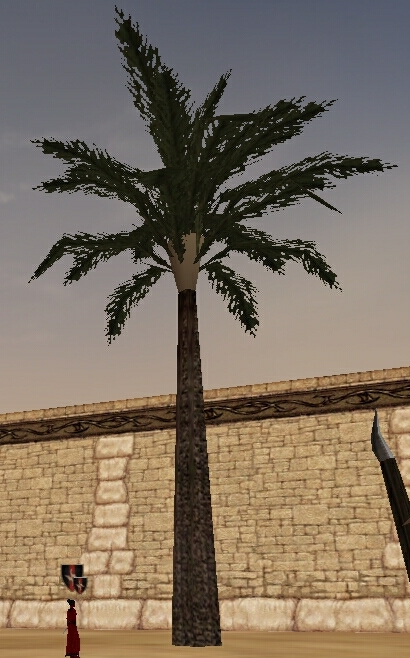
The coconuts for sale in the markets of Khar Th'Sekt, or exported to strange lands are only part of the coconut! When first collected from the tree, coconuts still possess their outer layers: a smooth skin ranging in colour from green to brown around a fibrous layer of coir. These layers surround the hard dark-brown shell, which encases the coconut seed. The outer layer of the seed, the testa, is the brown papery material that adheres to the white flesh when it is removed from the shell. Coconut water fills the cavity in the centre of the coconut and is a refreshing drink.
Almost every part of the tree is used in some way. The trunk may be used as a tent pole. The coir is used to make ropes, nets, twine, mats and brushes. Whole or half shells are often polished and decorated for use as utensils or ornaments. Coconut oil is extracted from the dried white flesh (copra) and is a valuable as food, fuel and as a base for soap and cosmetics. The flesh is both eaten fresh and is also shredded and dried for consumption as a trail food. Coconut milk and cream, often required for cooking curries, are prepared by soaking either the fresh or dried flesh in warm water and then filtering away the solid material; the cream rises to the surface of the milk if it is left to stand. The sugary sap from a budding coconut may be tapped and drunk as it is, or fermented and then distilled to produce the fiery spirit, arrak.
Naturally, such precious trees are guarded fiercely, and granted the protection of enclosing walls and watchful eyes whenever possible.
| Previous | Next | |||
| Home | Image 5 of 30 |

