
Coastal
Petaltail
Dragonfly - Petalura
litorea
The Largest Dragonfly
FAMILY PETALURIDAE - Petaltails
This page contains pictures and information about Coastal Petaltail Dragonflies that we found in the Brisbane area, Queensland, Australia.
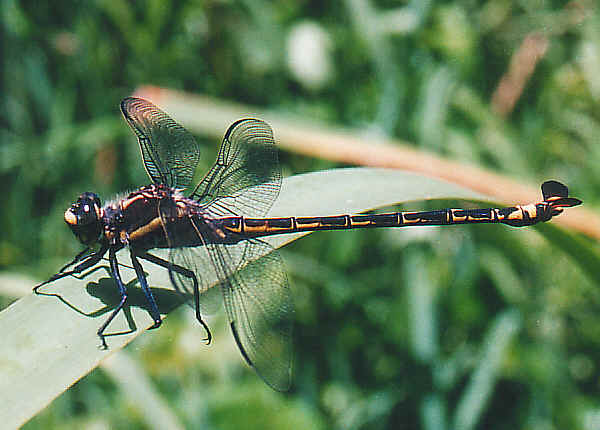
- Body length 100mm, Wingspan 120 mm, Male
The Coastal
Petaltail Dragonflies are vary large in size, the largest dragonfly that
we found. They
are one of the very rare species and only found in Southeast Queensland.
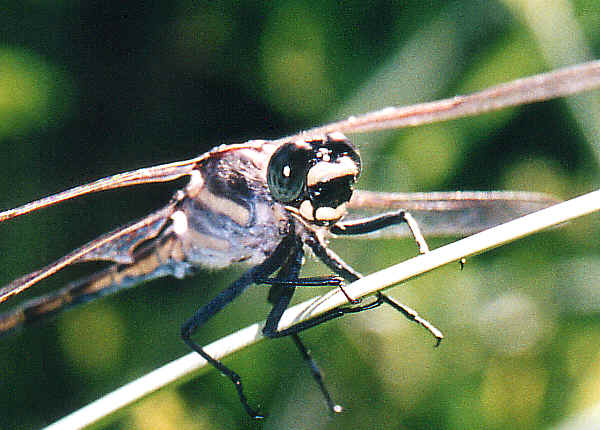
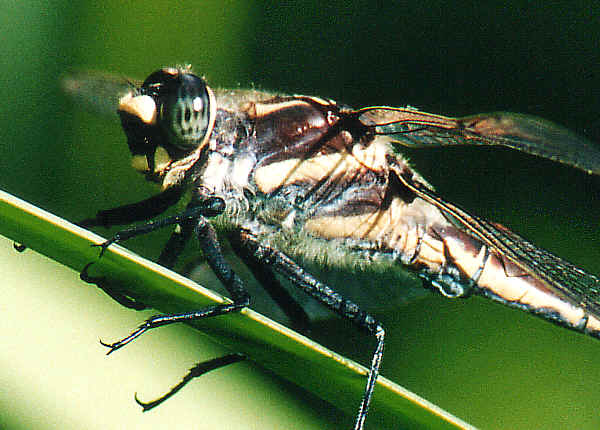
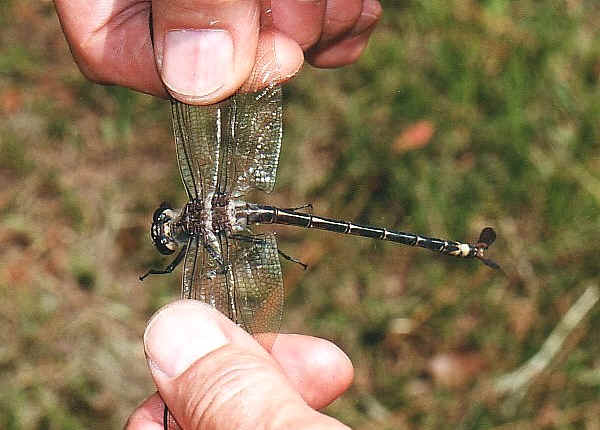
Their eyes are well separated. They have the black thorax with yellow spots. Their abdomen are yellow with black pattern.
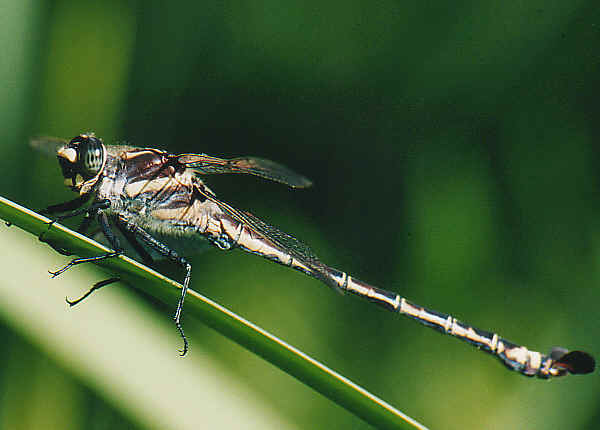
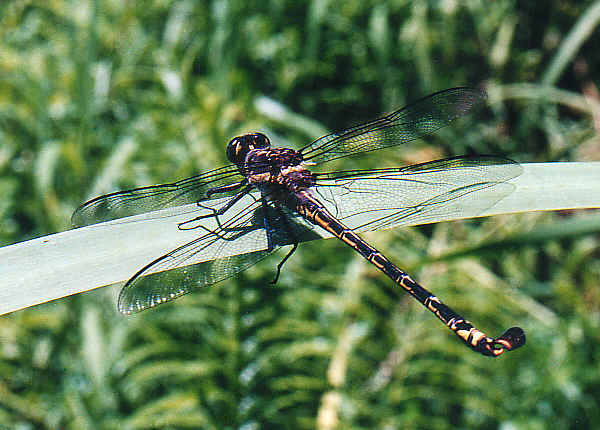
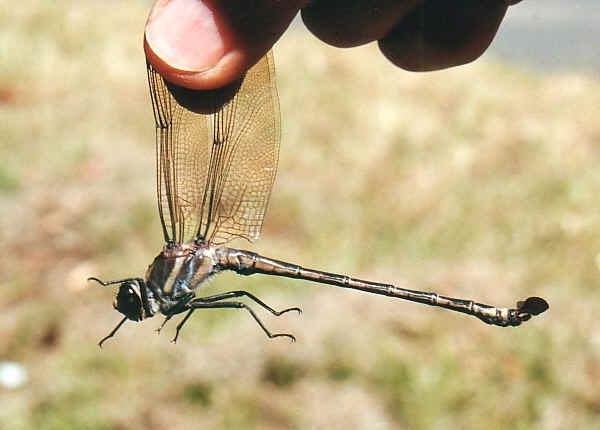
The pterostigma (darkened cell at the leading edge of each wing near the tip) are very long compared to those of other dragonflies. Their males have the anal appendages enlarged like the petal, and this is why they are called.
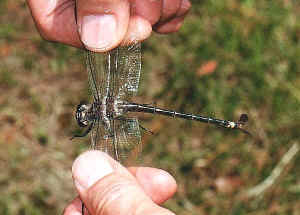

- On the 2001-02 summer, I joined the Australian Dragonfly Society hunting team, leaded by Deniss Reeves and Ric Nattrass, to search for the Coastal Petaltail Dragonfly in Yugarapul Park. Yugarapul Park is a boggy seepage, a rather unique habitat in Brisbane suburbia. We were very lucky to have captured one male, so that we can let the council know that the area is an important breeding place for a rare and vulnerable species (Reeves, Grimshaw and Chew in prep.). May be we can get the park declared as Australia's first dragonfly reserve/preserve. The above pictures show the captured dragonfly held in Deniss's hand.
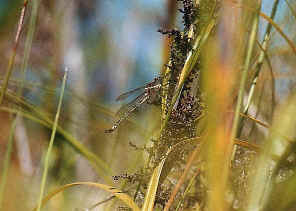

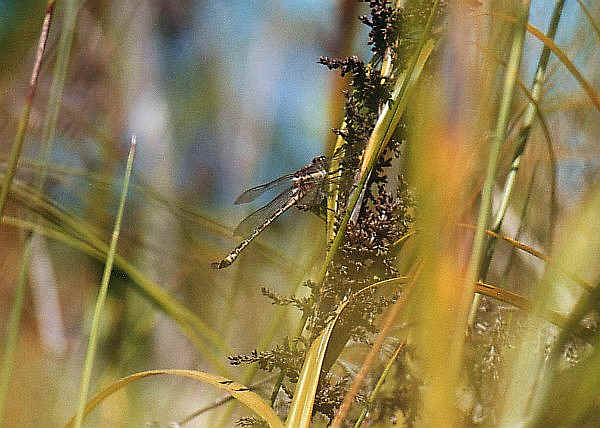
- The Coastal Petaltail Dragonfly was hiding among the thick vegetations and camouflage well, hardly be seen a few meters away. In the above pictures, the dragonfly was resting on Sword Grass (also known as Saw Sedge or Saw-leaf, Gahnia aspera, family Cyperaceae). The grass is about one to two meters tall, with skins-cutting edges. We had been cut many times before we saw the dragonflies.
- The Coastal Petaltail Dragonflies only breed in swamp and boggy seepage. They seldom fly far away from their breeding ground. They rest most of the time, with their body hanging 45 degree from a branch among the thick vegetations. While searching for them in the thick vegetations, you may suddenly see a small aeroplane-like insect fly away from two meters in front of you. Then you know that you just miss another rare chance to look at them. They may not have the very good eye-sight as other dragonflies. If you state motionless ( and you are lucky enough), they may land and perch near you.
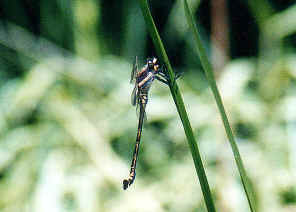
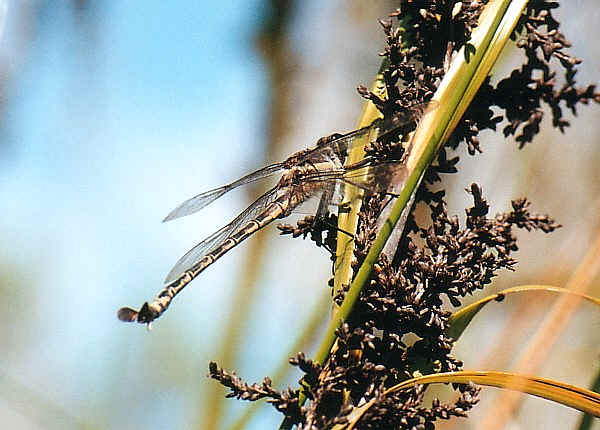
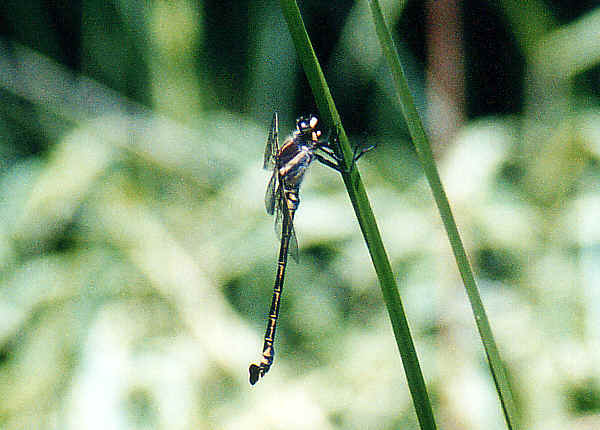
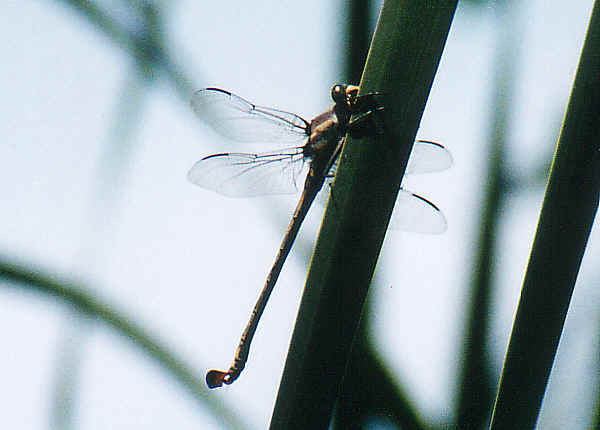
On the 2002-03 summer we visited Yugarapul Park again. We found there were a few small pools covered with dance water plants and surrounded by very tall grass. We think this could be the breeding ground of the dragonflies. We saw the male Coastal Petaltail Dragonflies perch on plants near those pool waiting for the female. The male dragonflies defend for their territory when another male fly nearby. We saw the male and female Petaltail Dragonflies fly in tandem over those pools and mating in wheel position. We also saw those huge dragonflies captured other smaller dragonflies in the mid-air.
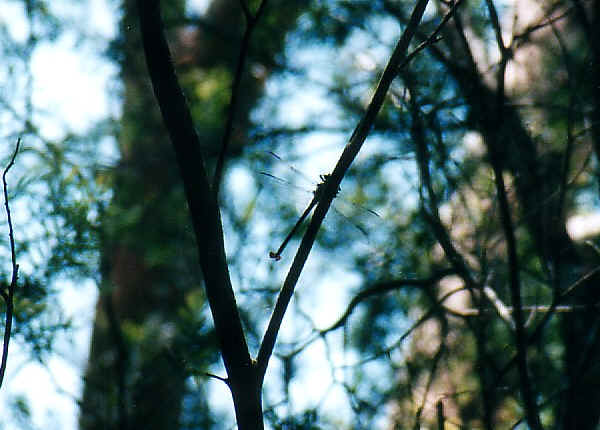
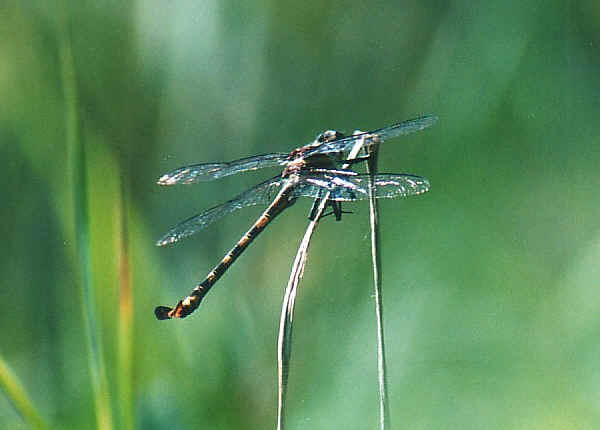
In Yugarapul Park, we sometimes found the Petaltail Dragonflies resting very high up on the trees. It is believed that they roost in trees at the swamp edge during night time. During the day they rest on the swamp where they perch on top of low vegetation or hang 45 degree from a branch. The dragonflies do not fly as good as the smaller species dragonflies. Usually they fly for a few meters and rest. We never found them outside the site.
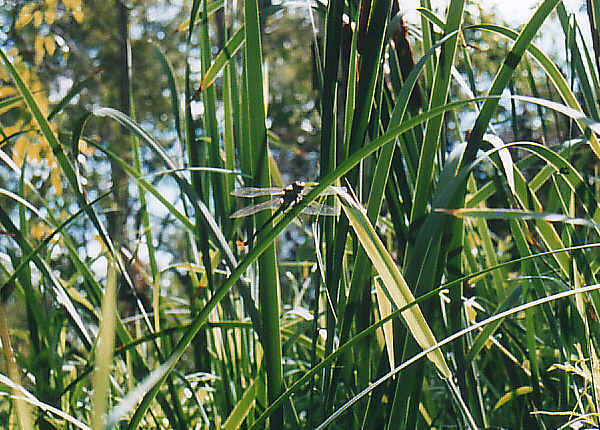

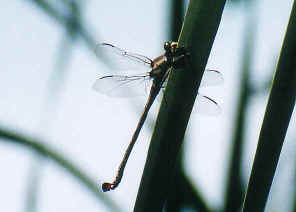
The about pictures show the Petaltail Dragonflies perched on plants waiting for the female. Notice that the male's petaltails were bright orange in colour under the sun light. It was easy noticeable even far away (in the first picture). We believed the bright colour petaltails were the sexual advertisement to the female.
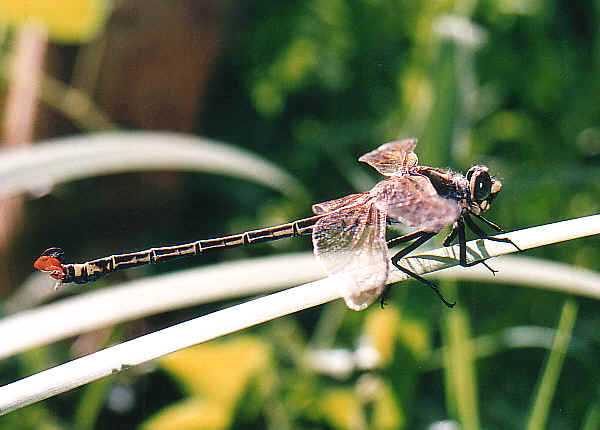
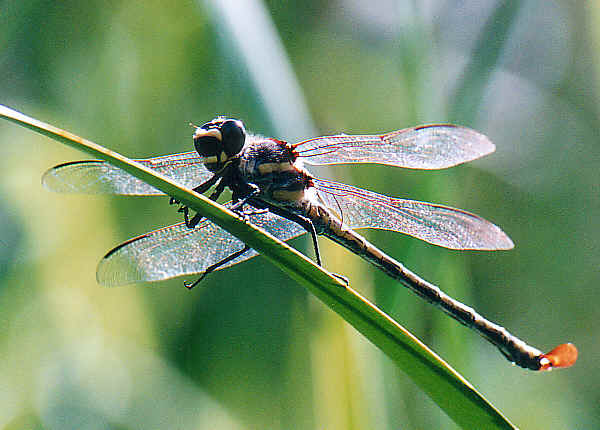
We noticed that usually the Petaltail Dragonflies rest with their body hanging 45 degree from a branch, however, when the males were perching near the pools, they rested at horizontal to 30 degrees position. We guessed they may perch at an angle best for showing their petaltails bright colour.
We also noticed that when the male dragonflies perching near the pools, they did not mind if we came very close. Some of the pictures I took was within one meter range.
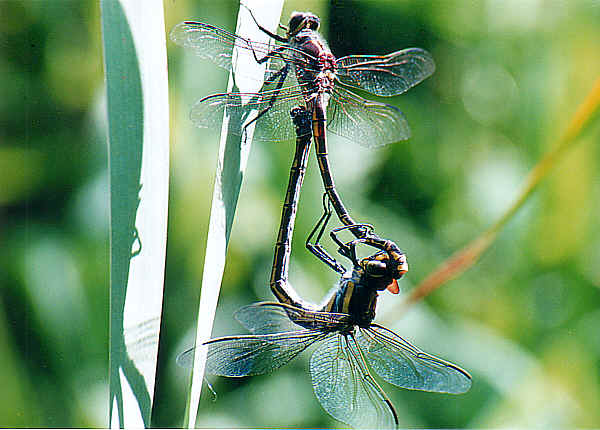

We are very lucky to record the Petaltail Dragonflies mating. At about 2:00pm, we saw two huge dragonflies flying in tandem over the pools 2 to 5 meters high in the sky. Then later we saw a mating pair in wheel position rested on grass about 1.5 meters above ground. We are not sure if they are the same pair. We found that they remained in wheel position for over half an hour. Then the female separated from the male. The male flied away first. After about ten seconds, the female flied away at another direction and disappear on a tree top. We did not see how the female lays her eggs.
The female is about the same size as the male, with thicker abdomen and no petaltail. The base of her hind wings are round instead of angular, otherwise, look the same as the male.
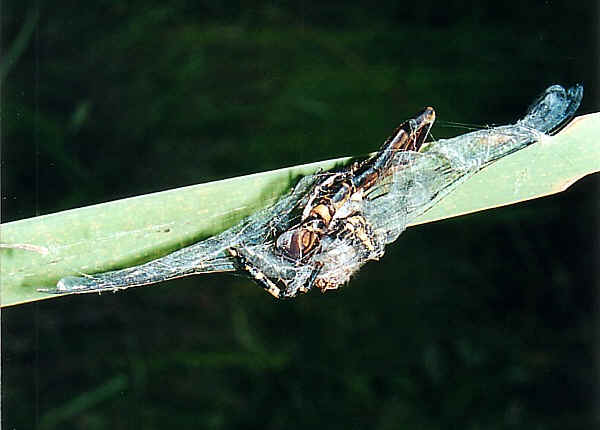
The above picture shows a Petaltail male wrapped up in a spider web. By carefully inspect the contents, we can see the Petaltail was wrapped up together with another smaller dragonfly, the Pale Hunter. Usually dragonflies 'know' where are the spiders webs and will avoid them most of the times. We can imagine that the Petaltail get caught in the spider web was because it was chasing the Pale Hunter and forgot the danger. We recorded another dragonfly get caught in spider web case in the Australian Emerald page.
