1890-1910

The Teachers Residence
Problems
A Change of Name
The fact that the teacher did not live on the school grounds because there was no teachers residence provided and this meant he could not supervise the grounds. When Albert Gale returned to the school in 1893 at the end of a long dry spell he found everything parched yet obviously well attended to. "One great drawback to keeping these grounds in perfect order", he replied, "are the depredations of outsiders the playgrounds have frequently been entered at night and trees, flowers, etc., pulled up for no other purpose than their destruction." Longley mentioned that the greatest amount of damage had been done to the gardens and trees about two months before Gale's arrival; the police and parents had been alerted to watch for intruders and there had been no recurrence of the vandalism.
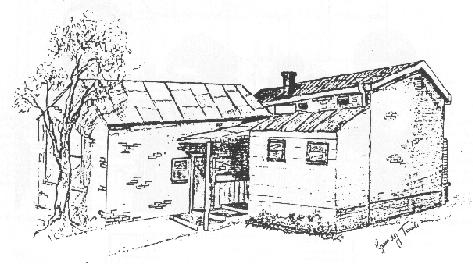
The question of a residence for the principal had been raised in the late 1880's and deferred. The vandalism of the school grounds raised it again and this time the inspector recommended the erection of a cottage in a corner of the school grounds. The Minister for Education, Joseph Carruthers, who was particularly keen to enlarge school sites, was against encroaching on pupils' playing areas by the erection of a residence within the original 1887 site. But he was happy to approve a residence if it could be erected on land across the street from the School. Consequently in 1892 half an acre of empty land in Park Road was purchased from John Brew and a teachers residence erected.

The Teachers Residence


Problems

Most of the 1890's went by at Eastgrove quietly. The early rapid growth of enrolment was not continued and by 1900 it had dropped to 132 from a peak of 186 in 1889. Accommodation was therefore not a problem. LongIcy remained at the helm through until 1904 and gave a sense of continuity to the educational process. There were some hints, though, that the life of the school was not as quiet as it appeared from this broad view. In 1899 the Inspector of Schools {Dwyer had long gone) visited the school and as was customary at inspections, examined the progress made by every pupil. He reported adversely on the school and LongIcy was asked to "please explain". He responded this way:

The low results have been caused in a great measure through sickness, for since last examination Eastgrove has been visited by no less than four epidemics, viz, Measles, Scarlet Fever, Whooping Cough and Influenza, consequently, many of the pupils have been very irregular in their attendance, so much so, that I had to repeat the work over and over again, and therefore, was unable to make the progress I was desirous of doing. Another serious drawback was caused by an attack of nervous debility from which I suffered for several months, brought on chiefly from worry, at not being able to make the progress I desired, and also from hard work; for I had to work two divisions of the Third Class, and two in the Fourth, as my pupil-teacher, being a new hand, had all she could do to manage the Second Class, and was unable to render me any assistance.

With regard to Arithmetic and History, I admit that the children worked badly, the reason for so doing I am at a loss to understand as I have given plenty of revision in back work, and the majority of the pupils in their daily work, do on an average 80% of their sums of equal difficulty, correctly, but in many of the subjects as Grammar, Geography, Writing, Drawing, Poetry, Scripture, etc., I consider the work done by the pupils was deserving of better marks than those given.

The Department cautioned him that better results would be expected in future. A year later Mr C. Walton complained to the Department about the punishment of his little daughter for having dirty fingernails and his other child for having dirty hands. He had never heard the likes of children being punished for such offences. LongIcy explained that the children had been warned by the assistant teacher about dirty nails and she had given four of them a light slap on the hand because they failed to obey. The older child was also lightly punished for having fingers that were sticky and dirty from eating fruit and not washed before entering the classroom. The Department's senior officers admired the stand being taken by Longley on cleanliness but took a dim view of the punishment: corporal punishment was always only to be given in extreme cases and neither of their cases came into that category. So LongIcy was again cautioned.

A Change of Name


As the school was located in Eastgrove the name Eastgrove Public School seemed a very sensible name for the school to have. Indeed if it was being named these days it would again be named Eastgrove because the addition of directions in names is normally not permitted in new schools. Everybody in Goulburn knew exactly where Eastgrove was and there was no need to explain that it was to the east of Goulburn proper. The Department of Education often used to head its correspondence to the school as "Eastgrove (Goulburn East)" so that it was clear where the school was. "To those, however", noted Inspector D.J. Cooper in September 1900,"who may not have some knowledge of this city, there is nothing in the designation to indicate the fact; consequently, it is not surprising that, at times, the school's existence as a Goulburn school has been overlooked". As an example of this neglect Cooper pointed to the fact that on a recent visit to Goulburn by the chairman of the Public Service Board, Eastgrove was left off the list of schools to be visited; more tragically,. as far as pupils were concerned, the school was not on the list of schools to receive a holiday on the occasion of the governor's visit to the city. Cooper recommended that the name of the school be changed to Goulburn East, to correspond to the existing schools of Goulburn North, Goulburn South and Goulburn West. The Minister approved in October 1900 the name was officially changed to Goulburn East. Then, for quite a long period the Department headed its matters related to the school as "Goulburn East (Eastgrove)".

Back 1 PageTo the TopBack to Welcome pageThis will take you to the next page