Land Pollution
Land pollution is when many kinds of wastes, solid, chemical, etc, pollute the land. The largest sourse of waste is solid waste. Paper is the largest sourse of solid waste. Most solid waste is recyclable but people still don't recycle.
Solid Waste -->
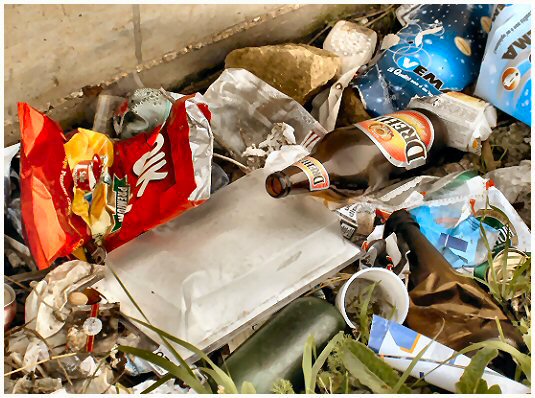
Waste that is solid, such as paper, bottles, glass, old food, etc. Everything you throw away is solid waste. See some solid waste.
Municipal Waste -->
Waste that comes from cities. Everything you throw away adds up to the amount of your city's municipal waste. Most of this waste all goes to a landfill to be stored. Fourty percent of municipal waste is paper and cardboard, both of which can be recycled.
Biodegradable Material -->
Material that can decompose naturally because it is natural made. Such as paper, old food, vegetables/plants, cotton, leather, etc, these can be broken down easily by living things like bacteria. Unfortunately, most of this waste goes into landfilis and are unable to decompose.
Synthetic Material -->
Material that is man-made so it cannot decompose naturally. These are polyester, nylon, and plastic, which cannot be broken down.
Landfill -->
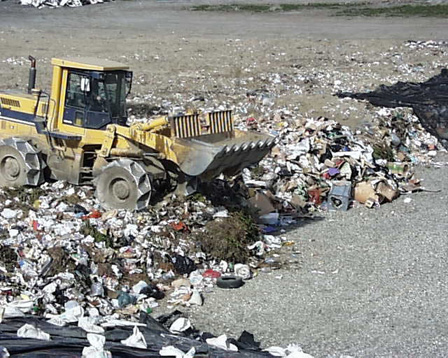
Eighty percent of our waste ends up in a landfill, which is a designated area dug up and sealed to store our garbage. See a landfill. When most landfills are full, they are often covered and used as parks or parking lots.
Leachate -->
Leachate is a hazardous mix of different chemicals and water that mixes in a landfill and can seep into the ground water if the landfill isn't properly sealed. This makes groundwater unsafe to drink.