|
crew
|
|
|
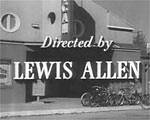
Lewis
Allen - Director
Allen
seems to have had a knack for making suspenseful pictures. He
made a splash with his directing debut in the moody classic The
Uninvited (1944) and followed it up a year later with the
similar The Unseen (1945). His best known films, after
Suddenly, of course, are most likely A Bullet for Joey
(1955) and the 1959 Whirlpool. After that, he worked mostly
in television, directing episodes of The Fugitive (1963),
The Rogues (1964), Mission: Impossible (1966) and
The Invaders (1967).
Born:
25 December 1905, Shropshire, England ~ Died: 3 May 2000, Santa
Monica, CA
|
|
Richard
Sale - Screenwriter
Sale
was an all-around Hollywood talent, with acting, writing, directing
and producing credits under his belt. He directed about a dozen
films from the late forties through the fifties, as well as numerous
television westerns, like The High Chaparral (1967). His
writing credits are more extensive, covering lighthearted comedies
like Mr. Belvedere Goes to College (1949) and Campus
Honeymoon (1948), to war films like Torpedo Run (1958).
As Suddenly's writer, Sale brought a wealth of experience
to the story. In fact, it's reported that he was inspired by a
real-life president's visit to Palm Springs, which at the time
was a small, sleepy town much like his mythical Suddenly, California.
Sale's final film credit dealt with a familiar theme: The Assassination
(1987).
Born:
17 December 1911, New York, New York ~ Died: 4 March 1993, Los
Angeles, CA
|

|
David
Raksin - Musical Score
No
matter how much I may enjoy Suddenly and its music, Raksin
will always be remembered for composing the theme to Laura
(1944) or the theme song to the TV medical show Ben Casey
(1961), or the theme to the classic western Wagon Train
(1957), and not for composing the bouncy theme song to Suddenly
(1954). But that's not surprising, because by the time Suddenly
rolled around, Raksin had already penned the score to over 110
films dating back to the 1930s. Currently an Adjunct Professor,
Scoring for Motion Pictures and Television at the prestigious
Thorton School of Music at the University of Southern California,
Raksin began his long career when he traveled to Hollywood to
score Charlie Chaplin's Modern Times (1935). His name can
be found on more than 450 movie and television credits, as well
as on numerous stage, musical theater, dance and chamber musical
productions. He is also the first member of his profession to
have received the Elizabeth Sprague Coolidge Foundation Commission
from the US Library of Congress.+
His more memorable scores include the prison film San Quentin
(1937), the adventure picture The Oregon Trail (1939),
Whirlpool (1949) directed by Suddenly alum Lewis
Allen, The Big Combo (1955), the crime picture Al Capone
(1959), and the western Invitation to a Gunfighter (1964).
Born:
4 August 1912, Philadelphia, PA
+
Information Courtesy USC Thorton School of Music
|
| |
Producer:
Robert Bassler
Production
Company: Libra Productions
Distributor:
United Artists
Assistant
Director: Hal
Klein
Production Manager: Charles
R. Hall
Editor: John
F. Schreyer
Cinematographer:
Charles G. Clarke
Production
Designer:
F. Paul Sylos
Set Decorations:
Howard Bristol
Sound Recorder:
Joseph Edmonson
Sound Editor:
Delmore Harris
Wardrobe:
Jack Masters
Make-up:
Willard Buell
Hair Dresser:
Lois Murray
Special
Effects: Herman Townsley
Photographic
Effects: Louis DeWitt / Jack Rabin
|
|
credited
|
|
|
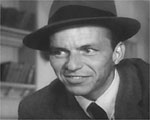
Frank
Sinatra as John Baron
Born
Francis Albert Sinatra in Hoboken, NJ, Sinatra started as a
singer with the Harry James big band before moving on to sing
for Tommy Dorsey. He was a huge hit, with thousands of screaming
"bobbysoxers" hanging on his every song. He went solo
in 1942, making his film debut a year later in Ship Ahoy
(1943). With no formal acting experience, he starred in a series
of lighthearted musicals culminating in On The Town (1949),
costarring his pal, Gene Kelly. After a vocal hemorrhage in
1952, Sinatra fought for and landed the role of "Maggio"
in From Here To Eternity (1953) for which he won a Best-Supporting
Oscar. After Suddenly (1954), Sinatra is probably best
remembered for his portrayal of a drug addict in The Man
With The Golden Arm (1955) and starred in another assassination-suspense
film, The Manchurian Candidate (1962), perhaps his best
work. Films that followed in the early 1960's were more uneven,
like his rat pack romps Ocean's 11 (1960) and Robin
And The Seven Hoods (1964) with fellow crooner Bing Crosby.
Neither has aged very well, in my opinion. His last film was
the 1980 release, The First Deadly Sin. Sinatra is buried
in Cathedral City's "Desert Memorial Park" in his
old haunt Palm Springs, California, ending an extraordinary
career as a singer, actor, artist and producer. Without question,
one of the twentieth century's most enduring personalities.
Born:
15 December 1915, Hoboken, NJ~ Died:14 May, 1998, Los Angeles,
CA
|
|
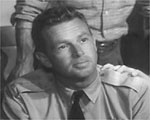
Sterling
Hayden as Sheriff Tod Shaw
Real
name: Sterling Relyea Walter. Actor Sterling Hayden's first love
wasn't acting, but the sea. He left home at 17 to work aboard
various vessels, eventually becoming a respected captain. During
W.W.II he joined the precursor to the OSS to run guns to Yugoslav
partisans fighting the Nazis. He briefly flirted with communism
before testifying before the House Un-American Activities Committee
during the Red Scare of the early 50's (which he later regretted).
Tall, rugged and good-looking, he seemed to take to acting naturally,
though he claimed to freeze under the camera's unblinking stare.
His first two films were with Paramount: Bahama Passage
and Virginia, both released in 1941. He starred mostly
in westerns and crime dramas. After landing what some call his
best role in The Asphalt Jungle (1950), his career
suffered when his supposed communist sympathies came to light.
The same year he donned the sheriff's badge in Suddenly,
Hayden starred opposite Joan Crawford in the bizarre western Johnny
Guitar (1954), which is now regarded as a cult classic. Afterwords,
Hayden swore never to work with Crawford again. In 1956 he appeared
in Stanley Kubrick's gem, The Killing, and would later
be remembered to millions of fans as the fanatical "General
Jack D. Ripper" in another Kubrick classic, Dr. Strangelove
(1964). Slated to play the crusty shark-obsessed sea captain "Quint"
in Spielberg's Jaws (1975), he was unable to commit due
to financial difficulties, which is unfortunate, as it would have
combined two of Sterling Hayden's most treasured talents.
Born:
26 March 1916, Upper Montclair, NJ~ Died: 23 May 1986, Sausalito,
CA
|
|
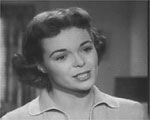
Nancy
Gates as Ellen Benson
Gates
signed on with RKO when she was only 15 and made her first film
in 1942, Hilter's Children. After several busy years she
took a break from acting before finally landing a role in Target
Hong Kong (1952). This was followed by five more films, including
Suddenly (1954), definitely her greatest role. After Commanche
Station (1960), Gates retired from films to spend more time
with her family. Some of her other films include The Master
Race (1944), Some Came Running (1958), The Bottom
of the Bottle (1956), The Magnificent Ambersons (1942),
and The Gunfight at Dodge City (1959).
Born: 1 February 1926, Dallas, TX
|
|
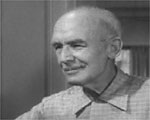
James
Gleason as Peter "Pop" Benson
Gleason
died at the age of 72 from asthma just five years after making
Suddenly (1954), bringing an end to a long and successful
acting career stretching nearly back to the dawn of the talkies.
Gleason began his career on the stage, playing in a small theater
owned by his parents. Finally appearing on Broadway in the late
1920's, he wrote several other shows and became known in Hollywood
as a script doctor before landing a variety of character roles.
He was nominated for an Academy Award for Best Supporting Actor
in 1941 for his portrayal of the nervous trainer in Here Comes
Mr. Jordan. His first film was the forgettable Polly Of
The Follies (1930) but he went on to appear in such memorable
films as Meet John Doe (1942), Arsenic And Old Lace
(1945), and A Tree Grows In Brooklyn (1946). Fittingly
enough, his last movie was The Last Hurrah (1958). However,
no matter what film I see James Gleason in, I'll always think
of him as Suddenly's crusty old "Pop" Benson.
Born:
23 May 1886 New York, NY~ Died: 12 April 1959, Woodland Hills,
CA
|

|
Kim
Charney as "Pidge" Benson
Suddenly
was Charney's first film, and he went on to appear with Nancy
Gates again in Bottom Of The Bottle (1956). He worked
mostly in westerns popular in the fifties: Guns For Fort
Petticoat (1957), Man From God's Country (1958) and
Quantrill's Raiders (1958) with the great Brian Donleavy.
His television appearances include a recurring role as "Terry"
in the heartwarming, iconic Leave It To Beaver (1957),
and the venerable western classic Wagon Train (1957).
Charney has the distinction of appearing as "Sam Prescott"
in what I like to call the Suddenly Reunion Movie, otherwise
known as John Ford's mega-western How The West Was Won
(1962), which featured Charney and three other of his Suddenly
alums.
Born:
2 August 1945, California
|
|
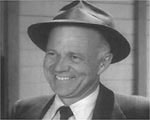
Willis
Bouchey as Chief Dan Carney
The
entries for Willis Bouchey's film career and TV appearances
total 135 entries in the Internet Movie Database, so you know
he had one long, active career. With his silver hair and deep,
soothing voice, he could be found playing a nearly endless series
of judges, doctors, and military officers. While he was in charge
of guarding the President of the United States in Suddenly
(1954), Bouchey actually got to be the president in the
science fiction film Red Planet Mars (1952). Both he
and Sinatra appeared in From Here To Eternity (1953),
although Bouchey's part was uncredited. Other noteworthy films
are Darby's Rangers (1958), The Horse Soldiers
(1959), and playing conductor "Jason Tully" in
The Man Who Shot Liberty Valance (1962). Bouchey enjoyed
a six year stint behind the bench as a judge on the Perry
Mason TV series (1960-1966). Another alum of How The
West Was Won (1962); Bouchey played a surgeon.
Born:
24 May 1907, Michigan, USA~ Died: 26 August 1977, Burbank, CA
|
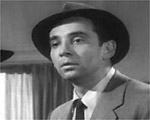 |
Christopher
Dark as Bart Wheeler
Never
one to light up the screen, Dark made a career out of being
the guy in the background, the onlooker. From his first film
appearance as a passport clerk in September Affair (1950)
to an uncredited poker player in How The West Was Won
(1962), Dark was always one of a faceless crowd. But where would
Hollywood be without its faceless crowds? Not everyone can be
a John Wayne or a Mel Gibson, right? But the question I have
to ask is this: Would your plans to assassinate the President
of the United States rely on stepping into an airplane with
Christopher Dark at the controls? The sweaty brow, the nervous
gestures, the fake, tough-guy bravado. I mean, you know somewhere
along the line something awfully bad is going to happen. Buckle
your seatbelts, folks.
Born:
21 April 1920, New York, USA ~ Died: 8 October 1971, Hollywood,
CA
|
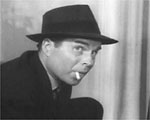 |
Paul
Frees as Benny Conklin
I
grew up knowing Paul Frees from his great voice work on the Rocky
and Bullwinkle Show and from his innumerable commercial, television
and film appearances, both credited and uncredited. There was
no mistaking that voice. Born B. Soloman Hersh, Frees grew up
in Chicago where he started working the nightclubs. He later fought
in W.W.II, and received a Purple Heart. Frees' career stretched
over five decades and contains over 220 entries. It was impossible
to grow up in the fifties or sixties and not hear Frees in something,
usually a cartoon or a perennial Christmas special. Whether it
was the voice of "The Rings" in George Pal's production
of The Time Machine (1960), The Manchurian Candidate
with Suddenly sidekick Frank Sinatra (1962), The Dudley
Do-Right Show (1969) or even voicing "The Pillsbury Doughboy"
in The Puppetoon Movie (1987), Frees has just about done
it all. In Suddenly (1954), after Jud fixes the TV, Frees'
voice is used for the baseball announcer. What makes this a little
creepy is that this takes place after Benny Conklin is
flattened by a machine-gun wielding cop. Using an actor already
in the movie for voice-over work in the same film no doubt helped
keep production costs down, but when that voice belongs to Paul
Frees, it's too obvious to go unnoticed.
Born:
22 June 1920, Chicago, IL ~ Died: 2 November 1986, Tiburon, CA
|
|
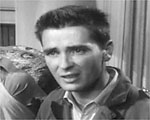
James
Lilburn as Jud Kelly (Hobson), TV Repairman
Poor
Jud has the distinction of being only one of a handful of folks
who die at the hands of John Baron and his gang. The likable
Lilburn was the real-life brother of actress Maureen O'Hara,
and as far as I know, the only actor in Suddenly not
born in the United States, though director Lewis Allen was British.
Playing "Father Paul" in the John Wayne classic The
Quiet Man (1952) and a soldier in What Price Glory?
the same year gave Lilburn the experience he needed for bigger
roles to come, but after Suddenly, his biggest movie
was probably The Desperate Hours (1955). His final film
was the 1956 western Mohawk, leading me to wonder what
he did all those years until his death in 1992? One note: Lilburn's
character in the film is introduced as "Jud Kelly,"
but in the film's credits he's listed as "Jud Hobson."
What gives?
Born:
11 September 1927, Dublin, Ireland ~ Died: 3 December 1992,
Glendale, CA
|
|
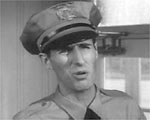
Paul
Wexler as Deputy "Slim" Adams
Slim
Adams was named right -- if he turned sideways he might disappear.
Handling the subdued but unmistakable comedy relief role in Suddenly
fell to the bemused, bucolic Paul Wexler, whose string of endearing
country rube roles started back in 1952 with the appropriately
titled Feudin' Fools. That was followed by Bloodhounds
of Broadway the same year and The Silver Whip in 1953.
Wexler played a butler in The Bowery Boys Meet the Monsters
(1954) before putting on the khaki to help Tod clean up the streets
in Suddenly. Other notable films were The Kentuckian
(1955), The Buccaneer (1958), The Way West (1967)
and voice-over work for the Disney classic One Hundred and
One Dalmatians (1961).
Born:
23 May 1929, Oregon, USA ~ Died: 21 November 1979, Los Angeles,
CA
|
|
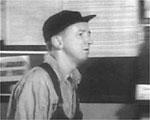
Charles
Smith as Baggage Handler "Bebop"
It's
funny, but you think of Charles Smith as almost being a kid and
then you realize that he was nearly thirty-four years old when
he made Suddenly. What's stranger still, is that he was
just about at the end of a very long film career. I guess that's
what happens when you're a rapidly aging child star; very few
actors can make the transition. Best known for playing "Dizzy
Stevens" in the old Henry Aldrich films of the 1940s
-- from Henry Aldrich for President (1941) to Henry
Aldrich Plays Cupid (1944) -- Smith appeared in hundreds of
films and TV shows. Usually playing an affable country-bumpkin
type, Smith also played a wounded soldier in the gritty 1949 war
film Battleground. His later films include Johnny Tremain
(1957), Good Times (1967) and The Gnome-Mobile (1967)
before going off to a well-deserved retirement.
Born:12
September 1920, Flint, Michigan~ Died: 26 December 1988, Burbank,
CA
|

|
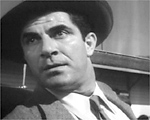
Clark
Howat as Agent Haggerty
Suddenly
stands as a familiar place for Clark Howat. As the Secret Service
Agent who talks to Ellen Benson while killer John Baron crouches
behind the door, Howat brings a mix of kindness and authority
to his roles which served him well throughout his career, playing
an endless string of agents, inspectors, and policemen. He appeared
as an uncredited intern in his first film, Kiss Tomorrow Goodbye
(1950), and as "Agent Roy Philips" in Customs Agent,
released the same year. He also appeared in The Sniper
(1952), in the great noir classic, The City That Never Sleeps
(1953), in The Glass Web (1953), and the gritty Korean
War picture Battle Cry (1955). Two sci-fi films followed:
the pretty decent Earth vs. the Flying Saucers (1956) and
the merely hokey The Giant Claw (1957). Two seventies classics
also appear on Howat's resume: Airport (1970), and Billy
Jack (1971) in which he played "Sheriff Cole." TV
appearances include a lot of Perry Masons, a lot of Dragnets,
and one T.J. Hooker (1982).
Born:
Unknown ~ Died: Unknown
|
|
Ken
Dibbs as Agent Wilson
You
would think that after Suddenly, Ken Dibbs' career would
have taken off, but alas, such was not the case. I thought he
was good as Agent Wilson, barking orders into a microphone, but
I guess that kind of talent only takes you so far. Dibbs' first
film was The Bigamist in (1953), after appearing on TV
as "Captain Geral" in Captain Video and His Video
Rangers in 1949. After donning a spacesuit again in Riders
to the Stars (1954) he embarked on a Dangerous Mission
that same year. He appeared in the bloated Cecil B. DeMille three
hour advertisement for Old Testament testosterone, The Ten
Commandments (1956), but then again, everyone was in
that one. After a couple of runs through the woods in Daniel
Boone, Trail Blazer (1956), and Spoilers of the Forest
(1957), he appeared as "Private Lejeune" in the Kubrick
antiwar classic Paths of Glory (1957). Finally, a decent
picture. Apparently hankering for those old days in orbit, he
signed on as one of the brave Men Into Space (1959-60),
playing "Captain Harvey Sparkman." Another alum of the
Suddenly Reunion Movie (How the West Was Won, 1962),
Dibbs' last film was Fate is the Hunter (1964), where,
fittingly enough, he played an FBI Agent.
Born:
12 August, 1917 ~ Died: 28 March, 1996, Rancho Mirage, California
|
|
uncredited
|
|
|
Anyone
can act when their name is in lights and they collect a big paycheck,
but these folks do all the heavy lifting without anyone even knowing
their names. Such dedication takes a special kind of person. So
here it is, the Suddenly Uncredited Actor's Website, honoring
all the uncredited actors and actresses who appear on camera,
deliver their lines, and then return to the shadows of total obscurity
without so much as a "Thanks for hitting your mark."
Read on: the nameless are nameless no longer! (Except for Schultz
& Kelly, that is, but you get the general idea.)
|
|
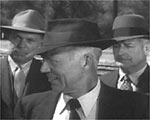
Agents
Schultz and Kelly
Look
at these guys. These are agents Schultz and Kelly standing behind
the Chief. They all just got off the train in Suddenly and they
flash their IDs and walk around a little and that's about it -
no lines, no gestures, nothing to do but just stand there. To
tell the truth, I'm not even sure which one is which. I'm not
even sure they knew which one was which. The guy on the
right, Schultz, I think, looks a bit like "Perry White"
on the old Superman TV series, but he's a bit too dapper
to pull it off. The guy on the left, Kelly, looks familiar, too,
like he's played a neighbor or something in another film. I know
I've seen them both before, but I just don't know where. Don't
you hate that? Well, I can tell this is going to really bug me.
Born:
Unknown ~ Died: Unknown
|
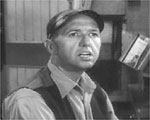 |
Richard
Collier as Clerk Ed Hawkins
Collier
plays the Suddenly stationmaster so well that you can really
believe that he's done nothing else all these years but wait around
for one more important message to disturb his quiet routine. Suddenly
was the first of many clerk roles for Collier, whose career spanned
the next 5 decades. He played a barber in Hello, Dolly!
(1969), "Mr. Kagle" in Mr. Hobbs Takes a Vacation
(1962), "Bronco Andy" in the much better then it had
to be TV-movie Amateur Night at the Dixie Bar and Grill (1979),
and "Dr. Sam Johnson" in the 1974 Mel Brooks comedy
western Blazing Saddles. Collier's TV credits include Batman
(1966), Mayberry, R.F.D. (1968), Petticoat Junction
(1963), and the creepy classic Alfred Hitchcock Presents
(1955).
Born:
13 June 1919, Boston, MASS ~ Died: 11 March 2000, Calabasas, Los
Angeles, CA
|
|
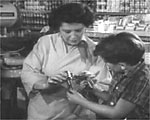
The
Gun-Examining Checkout Lady
The way
she's handling that gun, you can tell she's terrified the lousy
thing's going to go off, and it's only a cap pistol! This is
the lady at the M&N Market where Tod and Ellen air all their
dirty laundry, so you know she gets a earful. I do like the
scarf around her neck. Very stylish. I'm wondering though, did
she wear it just because she knew she was going to be in a movie
that day or would she have worn it anyway? Yes, I actually think
about stuff like that. At least she got some dialogue, which
is more then you can say for Schultz and Kelly.
Born:
Unknown ~ Died: Unknown
|
|
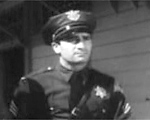
John
Beradino as a State Trooper
This
guy has an interesting story. He was a major league baseball player
before catching the acting bug. Maybe that's why he looks so comfortable
wearing a uniform and swinging a machine gun. Beradino played
professional ball from 1939 to 1952 before age and injuries forced
him to put down his glove. Besides Suddenly, he appeared
in The Naked and the Dead, Wild Heritage and The
World Was His Jury.
Born:1
May 1917, Los Angeles, CA ~ Died: 19 May 1996, Beverly Hills,
California
|
|
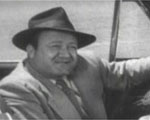
Roy
Engel as Mystery Driver#1
This
is the man who gets the entire story going with his innocent question
"What town is this?" You'd think that at least he would
have made the credits; but no, he drives away in total obscurity.
Or almost total, anyway. It turns out that Engel played more cops,
police sergeants, and plainclothes inspectors in his long career
than appear in the entire town of Suddenly. He could have caught
John Baron single-handed if only he'd stuck around. Other film
appearances include Viva Las Vegas, The Naked Dawn,
Some Came Running (1958), and the 1963 all-star comedy
It's a Mad, Mad, Mad, Mad World. One curious entry: Hollywood.com
has a credit for Engel as Joyride (2001), even though the
Internet Movie Database lists his death as occurring in 1980.
A pretty neat trick if true. Third opinion, anyone?
Born:
13 September 1913 ~ Died: 29 December 1980, Burbank, CA
|

|
Ted
Stanhope as Mystery Driver #2
Is
it just me, or does this guy look like he's wearing his wife's
sunglasses? The second bookend in Suddenly had a short
career according to his listed filmographies, so I wonder what
else he did for all those years? Maybe he just drove through small
towns asking what they were called. Nah, probably not. Stanhope
didn't appear in many movies, but he did snag some airtime in
some real doozies: The Big Heat (1953), High Noon
(1951), and A Gathering of Eagles. Not bad for a lost tourist.
Born:
30 January 1902, New
York ~ Died: 10 July 1977, Los Angeles County, CA
|
|
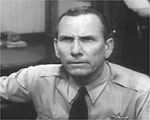
Dan
White as Burg the Desk Cop
Ah,
the uncreditied actor's uncredited actor. Suddenly's deskbound
Dan White has three expressions: concerned, very concerned and
very extremely concerned. You decide which one this is. Actually,
Dan had a very long and successful uncreditied acting career and
even if nobody ever knew his name, doesn't that make it all the
more impressive? His film and TV appearances top the 200 mark
so he must have been doing something right. Between an uncredited
role in Everybody's Old Man (1936) and an uncreditied role
in Apache Uprising (1966), he appeared in such movie milestones
as Duel in the Sun (1946), the great John Wayne westerns
Red River (1948) and She Wore a Yellow Ribbon (1949),
The Red Badge of Courage (1951) with Audie Murphy, Giant
(1956) with James Dean, the Elvis version of hard time, Jailhouse
Rock (1957), the great Civil War western Quantrill's Raiders
(1958) with Suddenly alum Kim Charney, the Orson Welle's
masterpiece Touch of Evil (1958), and one of the best book
adaptations to film ever, To Kill a Mockingbird (1962).
All great films, and all uncreditied appearances. Of course, let's
not forget his credited roles, like "Slim Reed" in Attack
of the Giant Leeches (1959) or "Pete Ketchum" in
Jesse James Meets Frankenstein's Daughter (1966). Hmmm.
On second thought, I'm beginning to see where being uncredited
definitely has its advantages.
Born:
25 March 1908, Falmouth, Florida ~ Died: 7 July 1980, Tampa, Florida
|
|
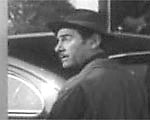
Charles
Waggenheim as Is Kaplan the Gas Attendant
What
can you say about this guy? His film credits are Suddenly
and Beauty and the Beast, although I don't know which version.
I swore he was at least Italian, but with a name like Waggenheim,
that doesn't sound like a good bet. I haven't checked out Beauty
and the Beast to see what he plays, but it's probably not
a gas station attendant. One of the wonderfully obscure characters
that makes Suddenly such an enjoyable film to watch.
Born:
Unknown ~
Died: Unknown
|
|
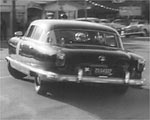
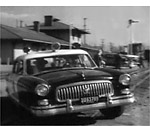
The
1954 Nash Statesman
No
film credit page would be complete without a tip of the hat to
the '54 Nash. Look at those sleek, aerodynamic lines. Doesn't
it just scream film noir? And, no, that isn't French for "lousy
gas mileage." These monsters ruled the roads of postwar America
at a time when gas was cheap and the future was one uninterrupted
concrete highway. I remember the first time I saw one of these
beauties on film, in the 1951 Dick Powell actioner Cry Danger,
(well worth checking out) in which he tooled around Los Angeles
(naturally) looking for the mugs who sent him up the river. The
first of the postwar cars with an eye toward airplane-like aerodynamics,
the 1949 Nash Airflyte (as the design was called) did remarkably
well in wind tunnel tests and speed trials at the Bonneville Salt
Flats. The bathtub styling introduced that year was a hit with
the public as well, and Nash sold more cars in the early fifties
than in any previous time period. The 1954 model that Tod Shaw
drives in Suddenly can trace its roots back to that proud
heritage. This old Nash is truly a classic. In fact, I have a
theory: in order to be considered a genuine film noir, a movie's
got to feature a crook, a cop, and at least one cool, old car.
|
|