Europe
|
First Issues Europe |
 |
|
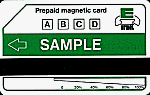
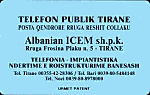
 he light blue definitive card manufactured and supplied by Urmet is well known among collectors and usually considered the first issue of Albania. But less known indeed is that another card was used previously, some months before the official issue, just for a short period: sold to the public at the face value of US$ 16,00, it was one of the cards often used by Urmet to test their phones, the sample card with the picture of the blue Urmet phone on back. he light blue definitive card manufactured and supplied by Urmet is well known among collectors and usually considered the first issue of Albania. But less known indeed is that another card was used previously, some months before the official issue, just for a short period: sold to the public at the face value of US$ 16,00, it was one of the cards often used by Urmet to test their phones, the sample card with the picture of the blue Urmet phone on back. |
|
 |
|
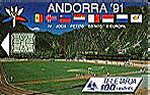
 honecards coming from this small European Country are highly popular among collectors especially for their beauty and low mintages. The first one, of which 20,000 cards were issued,
commemorated the 4th Games of the small States of Europe. honecards coming from this small European Country are highly popular among collectors especially for their beauty and low mintages. The first one, of which 20,000 cards were issued,
commemorated the 4th Games of the small States of Europe. |
|
 |
|
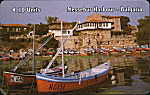
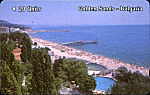
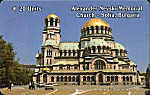
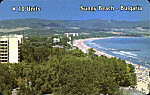
Betkom is a joint venture between the Bulgarian Telecommunication Authority (BTC) and GPT of the United Kingdom, and their cardphones are located especially at the airports, border crossings, railway stations, central PTT offices, major hotels, holiday resorts and motorway petrol stations. The first Betkom cards were a set of four, issued in 1990, showing Bulgarian touristic views, and just 12,500 each were printed. | ||||
|
 |
|
 e all know the beautiful Croatian cards with chip, but the first cards, in use from 1990 to 1993, were magnetic cards supplied by GPT. The first one had the Croatian colors on white background, and just 5,000 printed with 1CROA... control. e all know the beautiful Croatian cards with chip, but the first cards, in use from 1990 to 1993, were magnetic cards supplied by GPT. The first one had the Croatian colors on white background, and just 5,000 printed with 1CROA... control.The same picture was reprinted later in larger quantity, but with 3CROA... control. |
|
 |
|
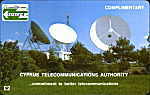
 anufactured by GPT,
U.K., the first cards issued were a complimentary card, featuring a satellite
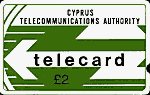
station (10,000 printed), and a set of 3 cards with a plain green design
on white background (£2, £5 and £10). The first printing
of cards had the so-called deep notch, while the following printings
had the same design but a small notch. anufactured by GPT,
U.K., the first cards issued were a complimentary card, featuring a satellite
station (10,000 printed), and a set of 3 cards with a plain green design
on white background (£2, £5 and £10). The first printing
of cards had the so-called deep notch, while the following printings
had the same design but a small notch.GPT cards have been in use up to our days, with several pictorial sets issued; but recently, chip cards system has been introduced. |
|
 |
|
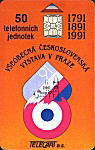
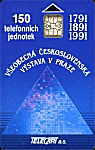
hese two phonecards appeared in Czechoslovakia in May 1991, commemorating 200 Years of the Country; there were 10,000 of the 150 units and 20,000 of the 50 units, both with chip SI-6; the same quantities were reprinted 6 months later, but this time with chip SI-5. |
|
| |
|
 ollowing the separation from Slovakia, Telecom Praha continued to issue phonecards for the new Country. The first one is shown here, published in January, 1993 with a printing of 200,000 and some variants. ollowing the separation from Slovakia, Telecom Praha continued to issue phonecards for the new Country. The first one is shown here, published in January, 1993 with a printing of 200,000 and some variants. |
|
 |
|
 wiss-made Landis &
Gyr cards have been used for a short time, as in 1985 Telet adopted a telephone
system based on magnetic cards, while chip cards system have been recently introduced too. wiss-made Landis &
Gyr cards have been used for a short time, as in 1985 Telet adopted a telephone
system based on magnetic cards, while chip cards system have been recently introduced too. |
|
 |
|
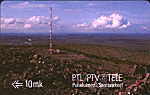
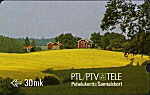
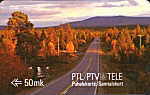
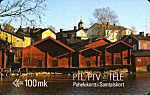
It was only in 1989 that English GPT cards were adopted, and they remained in use up to 1992, when they were replaced by chip cards which are actually still in use, even if other systems are still in use by regional finnish telephone companies. The first GPT cards were a set of 4 landscapes: 10mk (10,000 printed), 30mk (90,000), 50mk (50,000), and 100mk (50,000). | ||||
|
 |
|
|
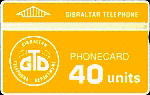
e all know that Gibraltar Telephone Company is GNC, a joint venture between the Government of Gibraltar and the American Telecommunications Company NYNEX. But the first card issued, manufactured by Swiss Landis & Gyr, still carried the GTD (Gibraltar Telephone Department) logo, as they had been ordered prior to the formation of GNT. 9.600 cards had been printed, with control 909A. |
|
 |
|
|
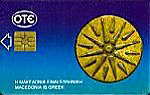
ollowing a period of field trials which started far in 1987, during which several systems were tested, the first public cards were finally introduced in 1992, at the International Fair of Thessaloniki. Some cardphones were installed on that occasion, and a certain number of cards (32,000 of which had been printed) were distributed free to the public. |
|
 |
|
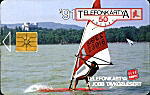
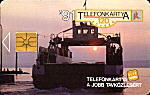
 t's not difficult to know which ones are the first Hungarian issues...they carry a "First Issue" logo in Hungarian on front of card, in English on back. There had been two values, 50 units showing a windsurf on Lake Balaton (250,800 printed), and 120 units, with a picture of a Ferry-Boat on the same lake (88,400 printed). t's not difficult to know which ones are the first Hungarian issues...they carry a "First Issue" logo in Hungarian on front of card, in English on back. There had been two values, 50 units showing a windsurf on Lake Balaton (250,800 printed), and 120 units, with a picture of a Ferry-Boat on the same lake (88,400 printed). |
|
 |
|
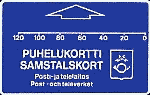
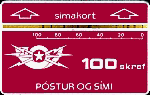
 ptical cards, manufactured by Landis & Gyr, were introduced in 1986 and are still in use. The first issue was a simple definitive, 100,000 of which had been printed, but two different variant exist, the first one being covered with non-metallic paint, while later specimens were in metallic paint and are more common. Icelandic cards are usually hard-to-get due to their low printings. ptical cards, manufactured by Landis & Gyr, were introduced in 1986 and are still in use. The first issue was a simple definitive, 100,000 of which had been printed, but two different variant exist, the first one being covered with non-metallic paint, while later specimens were in metallic paint and are more common. Icelandic cards are usually hard-to-get due to their low printings. |
|
 |
|
|
or some years, only definitive cards with a simple design were used in Malta: the first one was a 50 units orange card, together with a blue 100 units: both had big wordings in logo and face value was printed in units only. Later on, two new values of 20 and 60 units were introduced, and all the values, except the 50 units, were reprinted several times with slight variations. |
|
 |
|
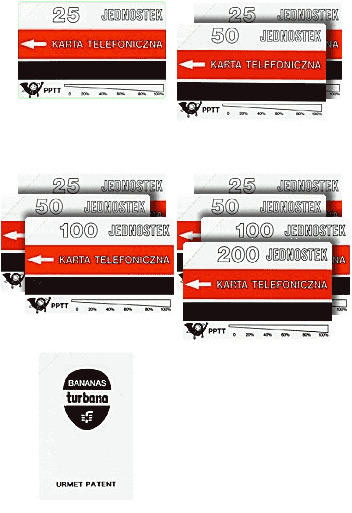
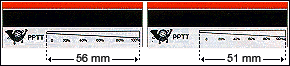
 fter testing several systems, like GPT, optical, and Autelca, magnetic cards, supplied by Urmet of Italy were adopted in 1991 and are still in use, even if now they are manufactured and encoded under licence in Poland. The first cards issued were a set of four, advertising Turbana Bananas, with a printing of just 5,000 each. The same subject was reprinted one year later, but it was a single card of 100 units, with a printing of 15,000.These may be easily distinguished by the first issue, due to the lower lenght of units scale (51 mm.). fter testing several systems, like GPT, optical, and Autelca, magnetic cards, supplied by Urmet of Italy were adopted in 1991 and are still in use, even if now they are manufactured and encoded under licence in Poland. The first cards issued were a set of four, advertising Turbana Bananas, with a printing of just 5,000 each. The same subject was reprinted one year later, but it was a single card of 100 units, with a printing of 15,000.These may be easily distinguished by the first issue, due to the lower lenght of units scale (51 mm.). |
| |
 | ||
 |
|
 hip cards were introduced in Romania in 1991, and the first one, with a printing of just 1,000 cards, was used during a field trial in Bucarest. Large printing of definitives started to be available since 1993. hip cards were introduced in Romania in 1991, and the first one, with a printing of just 1,000 cards, was used during a field trial in Bucarest. Large printing of definitives started to be available since 1993. |
|
 |
|
|
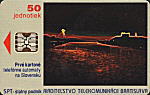
fter the separation from Czech Republic, Slovakia started to issue its own phonecards, the first one just in January, 50 units, 20,000 printed, showing a night view of Bratislava. |
|
 |
|
|
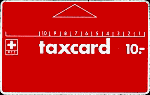
he small Country in the heart of Europe has recently introduced a public cardphone system based on chip cards, but for over 15 years the optical system by Landis & Gyr has been in use. The first card to be issued was a red definitive, color-coated, without the typical white band. About 250,000 of them were printed. |
|
|
 allcards@mail.com |
 |