
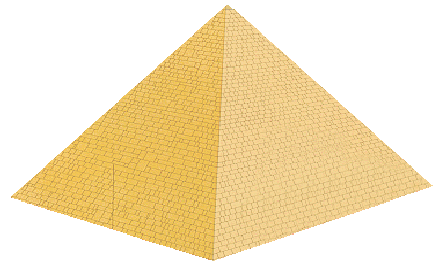
 Built: From about 2700 to 2500 B.C.
Location: Giza, Egypt, on west bank of Nile River near Cairo
History: The Egyptian Pyramids are the oldest and only surviving member of the ancient wonders. Of the 10 pyramids at Giza, the first three are held in the highest regard. The first, and largest, was erected for the Pharaoh Khufu. Known as the Great Pyramid, it rises about 450 feet (having lost about 30 feet off the top over the years) and covers 13 acres. It's believed to have taken 100,000 laborers about 20 years to build the mammoth Khufu pyramid, using an estimated 2.3 million blocks. By one theory, crews dragged or pushed limestone blocks up mud-slicked ramps to construct the royal tombs. Many scholars think the pyramid shape was an important religious statement for the Egyptians, perhaps symbolizing the slanting rays of the sun. Some speculate the sloping sides were intended to help the soul of the king climb to the sky and join the gods.
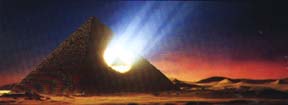
The Fire Within
The Greek origin of the word "pyramid" derives from fire —
especially funeral pyre — the flame that purifies.
The King's Chamber is located at the energetic center of
the Great Pyramid, whose shape has unique energy properties
that seem to retard the process of decay.
Napoleon Bonaparte was just one in a long line of visitors, famous and infamous, drawn to the Great Pyramid in Egypt. On August 12, 1799, he asked to be left alone in the King's Chamber, as Alexander the Great supposedly had done millennia before.
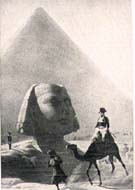
"Coming out, the general is said to have been very pale and impressed. When an aide asked him in a jocular tone if he had witnessed anything mysterious, Bonaparte replied abruptly that he had no comment, adding in a gentler voice that he never wanted the incident mentioned again. "Many years later, when he was emperor, Napoleon continued to refuse to speak of this strange occurrence in the Pyramid, merely hinting that he had received some presage of his destiny. At St. Helena, just before the end, he seems to have been on the point of confiding . . . but instead shook his head, saying, 'No. What's the use. You'd never believe me.'" (Secrets of the Great Pyramid by Peter Tompkins)
| About Me | Hot Links | Photogallary
| Home | Contact
 Backword
 Forward
 HOME
HOME