Chinese
Chopsticks
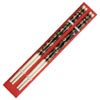
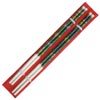
Chopsticks play an important role in Chinese food
culture. Chopsticks are called "Kuaizi"
in Chinese and were called "Zhu" in ancient
times (see the characters above). Chinese people
have been using kuaizi as one of the main tableware
for more than 3,000 years.
It
was recorded in Liji (The Book of Rites) that
chopsticks were used in the Shang Dynasty (1600
BC - 1100 BC). It was mentioned in Shiji (the
Chinese history book) by Sima Qian (about 145
BC) that Zhou, the last king of the Shang Dynasty
(around 1100 BC), used ivory chopsticks. Experts
believe the history of wood or bamboo chopsticks
can be dated to about 1,000 years earlier than
ivory chopsticks. Bronze chopsticks were invented
in the Western Zhou Dynasty (1100 BC - 771 BC).
Lacquer chopsticks from the Western Han (206 BC
- 24 AD) were discovered in Mawangdui, China.
Gold and silver chopsticks became popular in the
Tang Dynasty (618 - 907). It was believed that
silver chopsticks could detect poisons in food.
Chopsticks
can be classified into five groups based on the
materials used to make them, i.e., wood, metal,
bone, stone and compound chopsticks. Bamboo and
wood chopsticks are the most popular ones used
in Chinese homes.
There
are a few things to avoid when using chopsticks.
Chinese people usually don't beat their bowls
while eating, since the behavior used to be practiced
by beggars. Also don't insert chopsticks in a
bowl upright because it is a custom exclusively
used in sacrifice.
If
you are really interested in chopsticks, you may
want to visit the Kuaizi Museum in Shanghai. The
museum collected over 1,000 pairs of chopsticks.
The oldest one was from the Tang Dynasty.
|