|
|
| |
|
|
. | ||
 |
| |
|
............................................... |
............................................... .............................................................. |
|
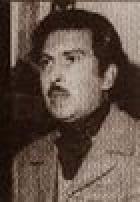
Late Hayat Mohammad Khan Sherpao*Published by the daily Khyber Mail, Peshawar on February 17, 1988 By now it is universally agreed that the decade of 60 had been a revolutionary period around the entire world. During these ten years a worldwide unrest, demonstrations and protests by students, intellectuals and have-nots were staged. Surprisingly the great international cities of London, Paris, Bonn, Frankfurt, Rome, Tokyo and others had led their respective national governments into hot waters. Similarly the third world countries were also in the gripe of such scenario and in this respect Pakistan, then a developing nation was badly indulged into a peaceful anti government strife. Unlike Europe, Pakistani situation was more a Political than cultural cum social as the government in power headed by President Field Marshal Ayub Khan had just celebrated its first decade in office. Coming into power in 1958 as result of coup d'etate, the government had resorted to a gradual industrialization in the country through its quasi-democratic order. This gave positive results and as such Pakistan was recognized publicly by great leaders like President Linden Johnson, Degaul of France and Kosighin of USSR, the world Bank and UN agencies as being the country doing great towards modernization of its economy and society. However, soon the feedback was witnessed as Zulfiqar Ali Bhutto, a trusted Lieutenant of Ayub Khan, serving the regime for ten years parted his ways. The reason behind his resignation was said to be his differences with the President that were caused on the policy of normalization of relations with India after 1965 war. In November 1967, Z. A. Bhutto announced the formation of his own Pakistan Peoples Party and that was when for the first time the name of Hayat Mohammad Khan Sherpao was heard about in the country. Bhutto had appointed the young Landowner agriculturist as his Party leader for the province of NWFP. Frankly speaking, Hayat Sherpao himself had then said on various occasions that he was learning politics and was not a politician. However his alliance with a Political had enlarged his person disproportional. Coming from a respectable Pathans family of Hashtnagar that knew about the politics and government since the British era, Sherpao soon prevailed upon his difficult to play role. Were after. To this end Sherpao worked around the clock. During the hot soaring summer noon he was found addressing bar councils, students and labours in the southern cities of Dera Ismail Khan, Bannu, and Campbalpur while still in the freezing winters he would be available to speak to people in Chitral, and Hazara. His own people in his Sherpao estate and the surrounding areas had become fond of him. The ordinary labours, land tellers and low paid workers used to feel great finding a young feudal lord speaking on their interests, lamenting their miseries and promising them a good future. Sharing their tobacco pipe and indulging into quail hunting Sherpao had made a lot many friends around the province. After coming into power Z. A. Bhutto appointed him the Governor NWFP. Hence his name was once for all included into the list of VIPs. During his governorship he did him best to serve the cause of ordinary poor masses. In this regard he succeeded in producing exemplary legislations where under all those have-nots working for the landed gentry in the province were allotted the ownership of their dwelling homes and the lands that they tilted from generation to generation. This was his rare unbelieving gesture towards the poor masses on whose support and vote bank his party was returned to power. However, this measure was not an ordinary act and it enraged those feudal lords who had huge estates and were exploiting the labour of the poor formers who would tile their lands. So sooner, the province of NWFP was indulged into violence between the landowners and those toiling on such lands. In Hazara, Mardan, Charsadda, Chitral, and other places the farmers labour also organized their armed units as the feudal lords had. Now in the provincial politics an element of communist insurgency had start influencing which like a double-edged sword was eroding the influences of both nationalism and democracy in favour of class struggle. However, Hayat Sherpao did his best to freeze such extremism and as such even police operations were ordered against some pockets resisting law enforcing agencies. After some time Sherpao was inducted into the federal cabinet as a minister for fuel and energy. Here again he served his constituency and province with the best of his abilities as he ensured the extension of Hydro and Natural gas facilities into the province of NWFP. This produce an abrupt rise in the standard of living of the Pathans who were now enjoying the modern facilities around the clock. After remaining in Federal Cabinet for some time he was shifted back to the provincial politics and as such returning from the Peshawar constituency he was able to hold a portfolio in the provincial government of Enayathullah Gandapur as a senior minister. In fact it was a very difficult era for the province of NWFP and Pakistan because the opposition parties had then resorted to a move against the government. Due to such a campaign certain nationalist elements had gone underground and were resurfaced in Afghanistan where the regime of Daud Khan was keenly pursuing for the establishment of Pathanistan. It was a stunt raised by India in 1947 after the establishment of Pakistan and where under a network was provided with the task to secure the succession from Pakistan of the Pathans provinces of NWFP and Balochistan. Occurring on the borders with Afghanistan both these north western provinces were to be called Pathanistan or land of the Pathans and was to be annexed with Afghanistan, the ancestor country of the Pathans. Despite a referendum held in 1947 to this effect wherein the local population had overwhelmingly opted to stay with Pakistan, the move of Pathanistan was still being brewed by Indo-Afghan-Soviet triangle. And that is where patriotic people like Hayat Sherpao had time and again vowed not to be hesitating from rendering any sacrifice for the integrity, solidarity and sovereignty of Pakistan. Hayat Khan Sherpao could stood in word and spirit to this very solemn oath as on February 8,1975 he died in a bomb blasted in the history hall of the university of Peshawar. The death of Hayat Khan Sherpao created a deep and fare reaching reaction. In ancient eight villages aggregation called Hashtnagar, a millions of mourning Pathans declared to be taking revenge of the tragic death of their beloved leader. The young adorable and prestigious bachelor never deserved such an end. And that is why in his remembrance and homage to his services his people accepted his younger brother Aftab Ahmed Khan Sherpao to be his successor. Since his death a lot many changes over took his brutal murder. But still the conscience of the province of NWFP, Pakistan Peoples Party and the Pathans as a whole wonders about the capabilities of the state machineries who job is to protect the public leaders and national figures. Historically in Pakistan, Hayat Sherpao death is mourned publicly on the similitude of the murder of the country first Prime Minster Liaqat Ali Khan who was killed in a similar conspiracy. And all these instances of political violence ask us when our nation would learn to safeguard and defend our national leader. To me resolution to non-violence rather peaceful politics would be and an appropriate salutation to those who were lost to political violence.
|
|
.......................................................... ..................................................................................................... ...... |
 .
.