|
NEWS ROUND-UP |
NEW ZEALAND |
Travelling FilmShow 2600 To
celebrate the new millennium the New Zealand Film Archive, in association with
the Bank of New Zealand, has organized the Travelling Film Show 2000. The
eight-month New Zealand wide tour also celebrates the end of the successful
Last Film Search project. Over 90
free screenings will feature treasures from the vaults of the Film Archive
and will focus on the discoveries from the Bank of New Zealand Last Film
Search that ended last December. In the course of the Search over 7,000 films
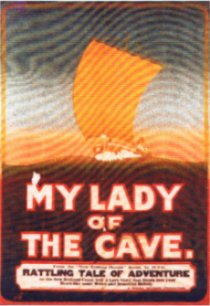
were deposited with the Film Archive for preservation. The Travelling Film Show is a gesture of thanks to all those who responded to the Last Film Search and a chance for the whole country to share the Film Archive's film treasures. Rudall Hayward, filmmaker This year is the 100th anniversary of the birth of an early New Zealand filmmaker, Rudall Hayward. To mark the occasion, it was decided to complete the editorial restoration of his first feature film, My Lady of the Cave, made in 1922. In mid-1999, the conservation staff, under the guidance of Cushla Vula, began the final steps in the restoration of this silent feature film. The initial deposit of nitrate material comprised six reels of original camera negatives (containing off cuts and material not included in the release print), and five reels of tinted release print. Two reels of the nitrate full gate print |
|
material were starting to decompose, necessitating the
repair and transfer to safety stock immediately. This produced academy ratio
negatives and print material since at the time there was no full gate
printing available locally. In 1992,
work began on a paper edit to determine the total footage held. At this
stage, the original nitrate negatives and the remaining nitrate print
material were transferred to safety stock at full gate ratio. Research
led to the discovery of the H T Gibbons serial published in The New Zealand
Herald during 1921. This gave us a storyline and we could start work with the
film material to see if the remaining sequences were in fact shot accordingly.
Not only were some of the intertitles word for word with the original
serialization but the written scene descriptions were in many cases as good
as story boards and the reconstruction could proceed. To save
handling the film material excessively during this pre-edit stage, |
|
we transferred all images to video at silent speed and
produced copies from which we could construct a video pre-edit. We produced
a video cutting copy from all the preserved material and despite the fact that
the original nitrate camera negative or the nitrate release print were not
complete, we were able to assemble close to the original 5,000 feet of film. The film
cutting copy was made using a mixture of 35mm academy and full gate ratio
print material; with the final cutting copy made after the academy sections
were optically printed to full gate. Some original intertitles were stretch-printed
to enable them to be read, and some picture material was also stretch-printed
to compensate for loss through decomposition. There were
two obvious sections of the story missing and we created archive acknowledged
intertitles to fill these gaps. Because there were serious racking problems
in the cutting copy, we made a new dupe negative by optically printing from
the existing dupe positives, thus producing a master negative from which we
made a black and white trial print and a fully tinted release print. This new
print will be screened later this year with a commissioned musical score to
celebrate Hayward's centenary. Included in
the Hayward Centennial celebrations will be the premier of a new tinted print
of his 1928 feature The Bush Cinderella. A Chamber ensemble score for piano,
clarinet, and cello has been commissioned by well-known New Zealand composer
Dorothy Buchanan. The
premier will take place this July during the Auckland, Wellington and Dunedin
film festivals. |
Page 7– AV Archives Bulletin |
January-June
2000
|