| (SHIMITUS)
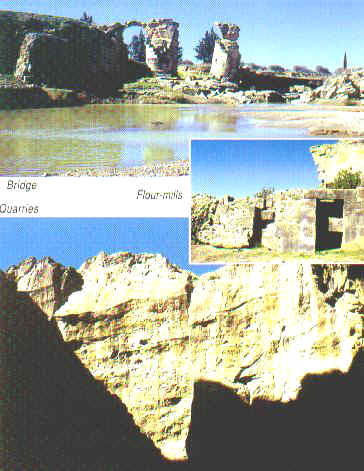
where it was quarried was connected to the port by a road
60 km long and 5,10m wide, and was a flourishing
manufacturing centre. Thabraca thus played a Pivotal role
in the development of those arts associated with
luxurious buildings. Painters, decorators, sculptors and
ceramic artists made Thabraca a town of the arts. Mosaic
artists founded a school whose prestige won wide renown
abroad for three centuries. From the 5th to
the 12th century the town
alternated between prosperity-strikingly so with the
spread of Christianity in the 5th century and
especially during the reign of the Fatimides in the 10th
century-and decadence. It was only in the 16th
century that the town recovered its status as a strategic
harbour for merchant shipping. It was the subject of
endless quarrels between France, Italy and even Denmark
over the exploitation of its coral reefs. More than once
the Genoese took possession of it, only to lose it again.
It was retaken by Tunisia in the 18th century
and was still acting as a fortress during the second
world war under the French protectorate. |
|
 |