- SUFETULA
- Probably on the same site as a libyan settlement,
Sufetula was founded in the late 1st C
A.C. by veterans demobbed after the 3rd
Augustan legion of Ammaedara ( Haidra ) was moved
to theveste ( Tebessa in Algeria). From the 2nd
to 4th centuries it prospered (Some
10.000 residents) from the olive crop; in the 2nd
C it was embellished with monumental classical
buildings, and from the 4th C on with
Christian churches and basillicas. When the
empire declined (5th C), and the
Vandals invaded (6thC)Sufetula's situation on the
edge of the steppe, and thus its contact with the
Berbers of the Aurès and Tripolitania (who had
recovered their independence) made it a border
town of strategic importance.
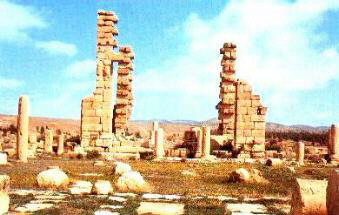
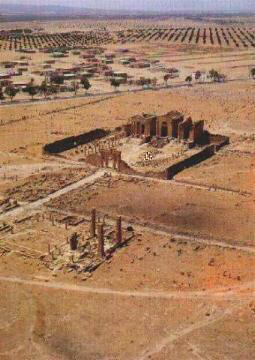
- THE FORUM AND THE
CAPITOL
- The Curia and the Capitol face onto
Antoninus'Gate, which marks the entrance to the
Forum. The Capitol is not one single temple
consecrated to the Capitoline Triad but 3
temples joined together, each with its
own special divinity Each temple has 4 columns
across the front and 2 set back (Corinthian
columns in the central temple and composite for
the 2 side temples and pilasters or half-pillars
around the cellae.
-
|
|
-
|
- CHRISTIANITY
- Sufetula had at least 6 churches serving either
Catholics or Donatists in the 4th C,
built over older pagan edifices. The church at
the Forum's outer corner ( late 4th,
early 5th C ) is set out like a
basilica with 3 aisles. The episcopal complex
is composed of baths and homes for the clergy,
the Catholic Catherdral of Bellator (4th
C, with 3 apses) with the Chapel of Jucundus and
its baptistry (added in the 5th C )
and the Church of Saint Vitalis (5 aisles, 2
apses and baptistry) The Church of Servus
( perhaps the Donatist Cathedral) has 5 aisles,
baptistry built in the cella of a temple, and
chapel
|