|

 Nashville,
TN Nashville,
TN
Travel
Information
Accommodations
Ceremony
Murfreesboro
Wedding
Traditions


The Engaged

The Bride's Maids
 
The Bride's Family

The Groom's Men

The Groom's Family

USA
Bride
Ungroom'd
iBride
Wedding
Singer
Dillards Registry
Target Registry
|
 |
|
|
|

Wedding
Superstitions & Traditions
Section: 2
|
wedding
traditions section 1
|
The
Wedding 
Your
wedding day: a day which will impact the
entire lives of the bride, groom, family
and friends who witness this joyous occasion.
You may decide to make this special day
uniquely yours by incorporating one or more
creative and innovative touches into the
ceremony. Following is a list of ideas to
inspire you to think about ways to make
this day uniquely your own. You may decide
to make the entire ceremony a creative experience
or you may choose to add only a few unique
touches to your special day. Either way
you are only limited by your imagination.
Wedding
History
Up to and during the Middle
Ages, weddings were considered family/community
affairs. The only thing needed to create
a marriage was for both partners to state
their consent to take one another as spouses.
Witnesses were not always necessary, nor
was the presence of the clergy. In Italy,
for example, the marriage was divided into
three parts. The first portion consisted
of the families of the groom and bride drawing
up the papers. The bride didn't even have
to be there for that. The second, the betrothal,
was legally binding and may or may not have
involved consummation. At this celebration,
the couple exchanged gifts (a ring, a piece
of fruit, etc.), clasped hands and exchanged
a kiss. The "vows" could be a simple as,
"Will you marry me?" "I will." The third
part of the wedding, which could occur several
years after the betrothal, was the removal
of the bride to the groom's home. The role
of the clergy at a medieval wedding was
simply to bless the couple. It wasn't official
church policy until the council of Trent
in the 15th century that a third party (i.e.,
a priest), as opposed to the couple themselves,
was responsible for performing the wedding.
In the later medieval period, the wedding
ceremony moved from the house of the bride
to the church. It began with a procession
to the church from the bride's house. Vows
were exchanged outside the church (by the
way, the priest gave the bride to the groom...I
don't think she was presented by her father)
and then everyone moved inside for Mass.
After Mass, the procession went back to
the bride's house for a feast. Musicians
accompanied the procession.
"Let's
Tie the Knot" or 'Let's Get Hitched
Tying the Knot, an old term
for a ritual now being renewed in our weddings
today. Not new-age or western-slang about
'hitchin' up yer gal like a horse'. Although
the term hitching was a rope making process
used for tying up horses with ancient old
world roots, it is undoubtedly associated
with 'tying the knot'. These terms are analogous
with a proposal of wedlock. The term Tie
the Knot came from the Renaissance Ceremony
called "Handfasting". 'Handfast' and its
variations are defined in the Oxford English
dictionary as "to make a contract of marriage
between (parties) by joining of hands."
This could also be interpreted today as
a proposal of marriage for a specific period
of time, traditionally a year and a day.
A Hand Fasting ceremony is incorporated
into formal wedding ceremonies and sometimes
done at or as an Engagement Party.
The
Bouquet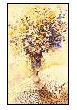
At its inception,
the bouquet formed part of the wreaths and
garlands worn by both the bride and groom.
It was considered a symbol of happiness.
Originally bridal wreaths and bouquets were
made of herbs which had magical and meaningful
definitions for the couple’s future life.
Traditional Celtic bouquets included ivy,
thistle and heather. Ancient uses included
herbs, not flowers, in bouquets because
they felt herbs -- especially garlic --
had the power to cast off evil spirits (can
you imagine walking up the aisle holding
a clump of garlic!?). If a bride carried
sage (the herb of wisdom) she became wise;
if she carried dill (the herb of lust) she
became lusty. Flower girls carried sheaves
of wheat, a symbol of growth, fertility,
and renewal. Later, flowers replaced herbs
and took on meanings all their own. Orange
blossoms, for example, mean happiness and
fertility. Ivy means fidelity; lilies mean
purity.
The
Best Man
Many centuries ago, before
the women's rights movement, men who had
decided upon a wife often had to forcefully
take her with him (or kidnap her) if her
family did not approve of him. The tradition
of a "best man" probably has its origin
with the Germanic Goths, when it was customary
and preferable for a man to marry a woman
from within his own community. When women
came into short supply "locally," eligible
bachelors would have to seek out and capture
a bride from a neighboring community. As
you might guess this was not a one-person
operation, and so the future bridegroom
would be accompanied by a male companion
who would help. Our custom of the best man
is a throwback to that two-man, strong-armed
tactic, for, of course the future groom
would select only the best man he knew to
come long for such an important task.
The role
of the best man evolved. By 200 AD his task
was still more than just safeguarding the
ring. There remained a real threat that
the bride's family would attempt to obtain
her return forcibly, so the best man remained
at the groom's side throughout the marriage
ceremony, alert and well-armed. He continued
his duties after the ceremony by standing
guard as sentry outside the newlywed's home.
Much of this is German folklore, but is
not without written documentation and physical
artifacts. We have records that indicate
that beneath the altars of many churches
of early peoples (the Huns, Goths, Visigoths,
and Vandals) there lay an arsenal of clubs,
knives, and spears. The indication is that
these were there to protect the groom from
possible attack by the bride's family in
an attempt to recapture her.
Traditionally,
the bride stands to the left side of the
groom. This was much more than meaningless
etiquette. Among the Northern European barbarians
(a name given to them by the Romans), a
groom placed his captured bride to his left
to protect her, as he kept his right hand
free to use for defense. Also originating
from this practice of abduction, which literally
swept a bride off her feet, sprang the later
symbolic act of carrying the bride across
the threshold of her new home. It may well
be that even the honeymoon had its origin
with this capture scenario. It may well
have served as a cooling-off period for
the bride's family. It was the groom's hope
that when the newlyweds returned from their
honeymoon that all would be forgiven.
Giving
Away The Bride
The father who "gives away"
his daughter at her wedding ceremony is
following an ancient tradition that has
evolved over hundreds, if not thousands,
of years. The custom dates back to the time
when a daughter was considered property,
and the groom had to pay a price to her
family before he could be permitted to marry
his intended.
Another theory
is that it symbolized the transition of
authority from the bride's father to her
husband as she moved from the parental home
to the conjugal home. Today, many brides
follow this custom, but its meaning has
emerged as an outward approval of the groom
by the parents or family of the bride.
In old times,
female children were deemed to be the property
of their fathers. When it came time for
the daughter to marry and her father approved
of the arrangement, he was actually transferring
ownership of his daughter to the groom.
Today, the act of giving the bride away
is symbolic of her parents’ blessing of
the marriage to the chosen groom.
Women who
consider this tradition archaic, or who
have lived independently for years before
their wedding, can eliminate this custom
entirely or revise it to include their mother,
brother, step-father or any other significant
member of the family. Some brides even elect
to walk down the aisle alone.
Shoes
Tied on the Car Bumper
Brides’ shoes once were
considered to be symbols of authority and
possession. They used to be taken from her
when she was led to the wedding place, and
given to the groom by her father, effecting
the transfer of his authority to her husband
and as a sign that the husband now had possession
of her (and she couldn't run away). The
new husband then tapped her on the head
to show his new role as her master.
It is obvious
why this doesn't continue, but it helps
to explain why we tie shoes to the back
of the get-away car. Incidentally, the ever
popular horn honking has its beginnings
in the days when brides traveled in open
carriages. They were an easy target for
evil spirits, so defenders would use bells
and firecrackers to scare them away. No
chance of any spirits getting in your way
-- it's honeymoon or bust!
Carrying
The Bride Over The Threshold
Generations ago it was considered
lady-like for the new bride to be, or to
appear to be, hesitant to "give herself"
to her new husband, whether or not she truly
was. At the threshold to the bridal chamber,
the husband would often have to carry the
bride over to encourage her to go in. An
older meaning is that during the days of
"Marriage by Capture," the bride was certainly
not going to go peacefully into the bridegroom's
abode; thus, she was dragged or carried
across the threshold.
Veils
The veil originally symbolized
the bride's virginity, innocence, and modesty.
The veil can be traced back to Roman times
when it was a complete head to toe cover
(that was later used as her burial shroud!).
This symbolism has been lost over the years
but the veil is still customarily worn.
In some middle eastern and Asian cultures,
the veil was worn to hide the bride’s face
completely from the groom who had never
seen her. Only after they were married would
the groom be allowed the lift the veil to
see his new wife's face.
Diamond
Engagement Rings
In medieval times, the groom
would most often pay for the bride's hand
in marriage. Precious stones were often
included in this payment as a symbol of
his intent to marry. While this practice
eventually stopped, the gift of the precious
stone as a symbol of intent remains today.
The
Ring Finger
All wedding and engagement
rings are worn on the third finger of the
left hand. The vein in this finger was once
believed (by ancient Romans) to go directly
to the heart. Pretty obvious symbolism there.
Medieval
bridegrooms placed the ring on three of
the bride's fingers, in turn, to symbolize,
God the Father, God the Son and God the
Holy Spirit (thought of as God the Mother
or Goddess). The ring then remained on the
third finger and has become the customary
ring finger for English-speaking cultures.
In some European countries, the ring is
worn on the left hand before marriage, and
is moved to the right hand during the ceremony.
However, in most European countries the
ring is still worn on the brides left hand.
A Greek Orthodox bride wears her ring on
her left had before marriage, and moves
it to her right hand after the ceremony.
Wedding
Rings
In ancient times, when life
was much harder and oftentimes shorter,
husbands practiced a superstitious ritual
to ensure their wives' spirits wouldn't
leave too soon. The husband would wrap the
bride's ankles and wrists with ropes of
grass believing this would keep here spirit
within her. Over the years, as religious
beliefs evolved, the meaning (and material)
of the bonds evolved as well. Today, brides
thankfully don't bind their wrists and ankles,
only their ring fingers, and grooms have
adopted the practice as well. The grass
gave way first to leather, then stone, then
metal, and finally to gold and silver. Today,
the rings symbolize the love and bond between
husband and wife.
The
Bride’s Garter
The garter
from the bride comes from the ancient custom
of witnesses at the marriage bed (to make
sure the couple consummated the marriage);
the witnesses would bring it forth as a
sign of the witnessing. It became such a
violation of privacy that eventually the
bride would have the groom throw it to prove
consummation. This is one of the oldest
customs surviving wedding rituals.
The
Wedding Cake
You might find it interesting
that, originally, the cake was not eaten
by but thrown at the bride! It developed
as one of the many fertility traditions
surrounding a wedding. Wheat too, is traditionally
a symbol of fruitfulness and was among the
earliest grains (predating rice) to be ceremoniously
showered on the bride and groom. In its
earliest origins, the unmarried young women
attending the wedding were expected to scramble
for the grains to ensure their own betrothals,
much as they do today for the bridal bouquet.
Early Roman
bakers, we are told, changed the "throw
it" to the "eat it" tradition. These bakers
were distinguished and respected in their
trades. Somewhere around 100 BCE they began
taking the wedding wheat and creating small,
sweet cakes with it; the cakes were eaten
while the service was in progress.
Following
the tradition of eating the crumbs of the
wheat, sweet meat cakes spread throughout
Europe. In medieval England the tradition
broadened to include the practice of washing
down the cakes with a special ale called
"bryd ealu," translated as "bride's ale,"
words that eventually became the word "bridal."
In the Middle
Ages when food tossing became rice tossing,
the once decorative sweet meat cakes evolved
into small biscuits or scones. Guests were
encouraged to BYOB (bake/bring your own
biscuit) with them to the ceremony. After
the wedding, leftovers were distributed
among the poor. It is those very simple
biscuits and scones that became the forerunner
of the elaborate multi-tiered wedding cake
we know today. Legend has it that throughout
the British Isles it became customary to
pile the biscuits, scones, and baked goodies
on top of one another in one huge heap.
The taller the pile, the more the future
prosperity of the young couple, who exchanged
a kiss over the mound. It is told that in
the 1660's during the reign of King Charles
II, a French chef (whose name, unfortunately,
is now lost) visited London and was appalled
at the cake-piling ritual. It was his idea
to transform the messy mound of bland biscuits
into a beautiful work of art, an iced, multi-tiered
wedding cake.
The
Wine/Champagne Toast
Throughout the ages, wine
has been used for celebration. Often and
among many people, wine has signified life,
vitality, love, and a life of plenty. Often
and among many people, drinking wine from
a common cup has been the intimate mark
of deep sharing. "Entwined as the Vine.
. . ." It is also in remembrance of Jesus
turning the water into Wine as his first
miracle at the Wedding of Cana in Galilee.
It can be celebrated intimately during the
Ceremony between the bride & groom or
it can be at the Reception or both.
The feeding
of the wedding cake and the wine toast is
a derivation of the Wedding Eucharist nuptial
wherein a part of a ceremony is their giving
each other a sup from the Cup of Love and
to eat from the Bread of Life and Health.
The
Wedding Candle
The side tapers are the
family or individual candles. These flames
represent you and your ties to your family.
The middle or unity candle represents your
marriage and your new family. As the two
flames merge into one and can no longer
be separated, so are the bride and groom
joined as one in marriage. The side tapers
may be blown out to represent the start
of your life as a couple or remain burning
to signify the continued ties to your family
or the retention of your indviduality.
The unity
candle is not necessarily a religious symbol
and is not identified with a particular
religion or denomination, although religious
readings or prayers may be incorporated
within unity candle ceremonies.
Bridal
Showers
This event has its roots
in Holland. When a bride's father did not
approve of the husband-to-be, he would not
provide her with the necessary dowry. The
bride’s friends would therefore "shower"
her with gifts so she would have her dowry
and thus marry the man of her choice. While
dowries are long gone today, the practice
of giving gifts to the bride-to-be remains.
Flower
Ceremony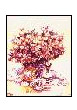
An
ivy wreath is used as the base (introduced
by the minister who will relate it to ivy's
traditional meanings, including the marital
connection). Various friends and family
members will add sprigs of various plants/flowers
with their traditional or symbolic meanings
related to marriage... building a wreath
of flowers in the center of a circle ceremony
or on the altar before or beside the bride
& groom.
Honeymoons
In
ancient times, the Teutonic people began
the practice of the honeymoon. Teutonic
weddings were only held under the full moon.
After the wedding, the bride and groom would
drink honey wine for one full moon cycle
(thirty days). This "moon" (i.e., "month")
became known as the "honey moon." While
the name survived, the purpose of the honeymoon
changed. After the wedding, newlyweds would
leave their family and friends to go and
do what newlyweds are supposed to do. Today
that purpose survives, only now a vacation
is incorporated, usually to a romantic get-away
locale.
|
wedding
traditions section 1
|

Return To Top
|
|
|
|
|
|