Geography
| Attica Aegean Crete Cyclades Dodecanese Euboea Epirus Ionian Macedonia Peloponesse Thessaly Thrace |
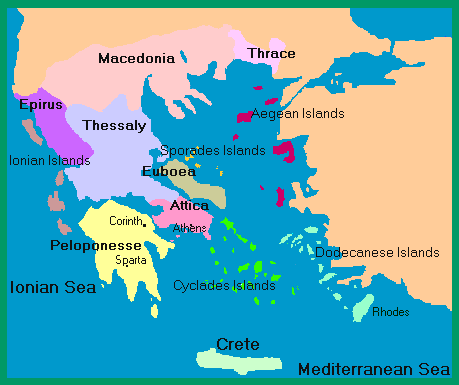 |
Greece is located at the most southeastern point on the European continent. It is surrounded by mountains or water on all sides. The mountains prevented large-scale farming and consequently the Greeks had to look abroad to find fertile soil; they also shaped the political character of Greece since the people had to live in independent and isolated communities. Later these communities would develope into the 'polis' or city-state, Athens being the most famous, and the birthplace of democracy.
Besides the mountains, the Ionian and Aegean seas to the east and west, the many deep bays and natural harbors along the coastlines also helped contribute to Greece's strong maritime commerce, and a culture that is both indigenous and foreign in its orgins. The Mediterranean Sea to the south moderates Greece's climate, cooling the air in summer warming it in the winter. Summers are generally hot and dry while winters are rainy and moderate in the coastal regions, while snowy and cold in mountainous areas.
In the ancient world, gold and silver were available in the mountains of Thrace in northern Greece and on the island of Siphnos. Silver was mined from Laurion in Attica. Iron ores were also available on the mainland and in the Aegean islands. All of these contributed to the richess and power of ancient Greece.