
 Christopher Columbus
Italian-born navigator and explorer
* Birth 1451 Genoa, Italy + May 20, 1506
Start• 2 • 3 • 4 • 5 • 6 • 7 • 8 • 9 • 10 • 11 • 12 • 13 • 14 • 15 • 16 • Frm• Home •
Christopher Columbus

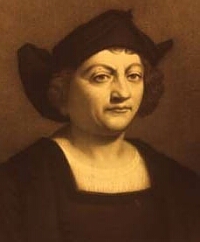
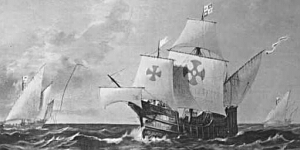 Spanish patrons King Ferdinand V and Queen Isabella funded Columbus's voyages, and allowed him to govern all territories he established.
During the 1492 voyage, Columbus kept a second log showing a reduced distance from that actually traveled; he shared this abridged version with his crew to alleviate alarm at how far from home they were.
Columbus called the inhabitants of the Caribbean Islands Indians because he thought he had reached the East Indies.
Stopping at the island of Puerto Rico during his second voyage earned Columbus the lasting reputation of discovering America.
Columbus brought back several previously unknown crops to Europe, including tobacco. Return to Top •
by Mauro ©
|
|