Michelangelo Buonarroti
Italian High Renaissance artist
* March 6, 1475 Caprese, Italy + February 18, 1564
Known for Painting the ceiling of the Sistine Chapel. In painting and in sculpture, rendering the human form in a wide variety of positions and with great emotional expression, and creating several of the most important works of the Italian Renaissance.
- 1490-1492 While residing in the palace of Lorenzo de' Medici in Florence, carved the Battle of the Centaurs, a relief sculpture characterized by dynamic action and a dense, complex arrangement of figures.
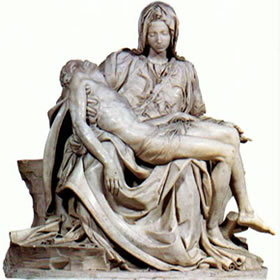
- 1498-1500 In Rome, carved the Pietà, a sculpture remarkable for its emotional control, delicate rendering of flesh and cloth, and sophisticated composition.
- 1501-1504 In Florence, sculpted David, which despite its monumental size is notable for portraying a subtle balance of strength and vulnerability.
- 1505-1512 In Rome at the request of Pope Julius II, executed ceiling frescoes for the Sistine Chapel.
- 1510-1516 Created a series of sculptures for the tomb of Julius II, including Moses and Dying Slave, but the project was never completed.
- 1516 Returned to Florence, where from 1519 to 1534 he worked on designs for the Medici family tombs.
- 1527-1529 Discontinued his art temporarily to defend the newly created republic of Florence, utilizing his design skills to modernize defenses and supervise construction of the city's fortifications.
- 1534-1541 In Rome, painted The Last Judgment on the wall of the Sistine Chapel.
- 1546 Became chief architect of Saint Peter's Basilica in Rome, and designed the dome that became the inspiration for many capital buildings in the United States.
- 1498-1500 In Rome, carved the Pietà, a sculpture remarkable for its emotional control, delicate rendering of flesh and cloth, and sophisticated composition.