 Heinrich & Maria Magdalena Werner
Origins of the Werner surname
Ruppertsberg, Rhineland-Palatinate
German history and the Palatinate
Heinrich & Maria Magdalena Werner
Origins of the Werner surname
Ruppertsberg, Rhineland-Palatinate
German history and the Palatinate
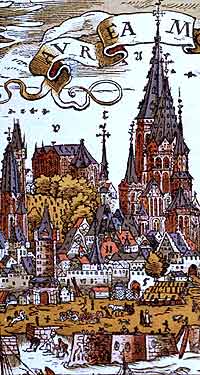
Mainz, Capital of Rhineland-Palatinate
| Generation 2 | 3 | 4 | 5 | 6 | 7 | 8 | Main |
|---|
Heinrich & Maria Magdelana Werner
The only mention of Heinrich & Maria Magdelana is in the baptismal record of their son Heinrich on May 15, 1724 in the village of Ruppertsberg situated in the German province of Rhineland-Palatinate.
Heinrich & Maria Magdelana would have married sometime around 1720 and were born circa 1690 to 1700. This couple had at least two sons named Heinrich & Johann.
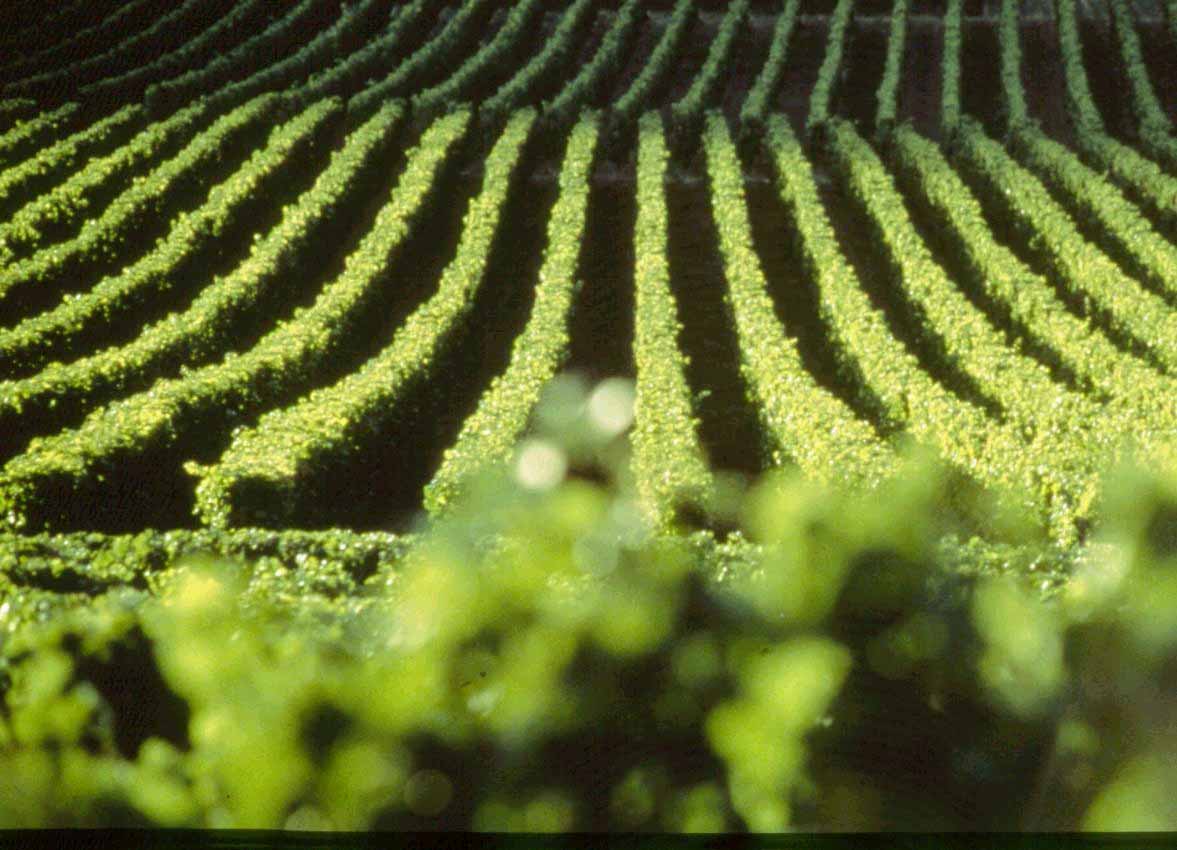
Vineyards in Rhineland-Palatinate
Unfortunately, the church registries of Ruppertsberg were destroyed in 1620 during the Thirty-Year War with France. As well, between 1620 and 1700, the old registries are difficult to read so there may not be much more that can be found on this couple. However, the Werner family in that region have a long line of farmers and vintners in their history and there are still villagers living today in Ruppertsberg that bear our family name. (2)
The German Werner/Warner/Woerner surnames are believed to have evolved from one of the two old Germanic words warinhari or warinheer which are two-root words. The first warin meaning "guard" and the second hari meaning "army" or heer which means "volk" (people). The name may have had many possible meanings but the most popular are Guardian/Sentry or one who is aware/wary/alert. (25)
Surnames in general first appeared during the Roman Empire but its usage in the European population became more prevalent during the Middle Ages. The origin of a surname can be either descriptive, paternal, geographic or professionnal. Although not as prominent as Miller or Smith (for blacksmith), the Warner/Werner names are seen often enough to presume they could have had more than one village origin. Just like there is usually a Smith in every village, there could have also been a guardian / watchman or warner in many German towns and castles of the Middle Ages.
Ruppertsberg is a small German village in the Palatinate, which forms part of the province of Rhineland-Palatinate (Rheinland-Pfalz) Today, its population of about 1500 is incorporated with the village of Deidesheim.
About 30 kilometers west of the Rhine River, Ruppertsberg is situated along the Weinstrasse, an 80-kilometer long highway where the main agricultural product is wine. (2)
Rhineland-Palatinate (Rheinland-Pfalz) is bound to the north by North Rhine-Westphalia (Nordrhein-Westfalen) to the east by Hessen and Baden-Württemberg, to the south by France and Saarland, and to the west by Luxembourg and Belgium. Mainz is the capital.The state is cut by the Rhine River, which flows south to north, and by the Mosel River, which flows southwest to northwest. (10)
Besides sporadic French occupations, the Palatinate was part of Bavaria from 1214 until 1946 when by referendum, it became part of Rhineland-Palatinate.
The palatinate is in the central region of the Rhine River Valley. The Rhine flows down from the mountains of Switzerland going west then north to empty in the North Sea.
The region has been a main channel of trade and communication since prehistoric times and is central to the development of German culture and civilization. (21)
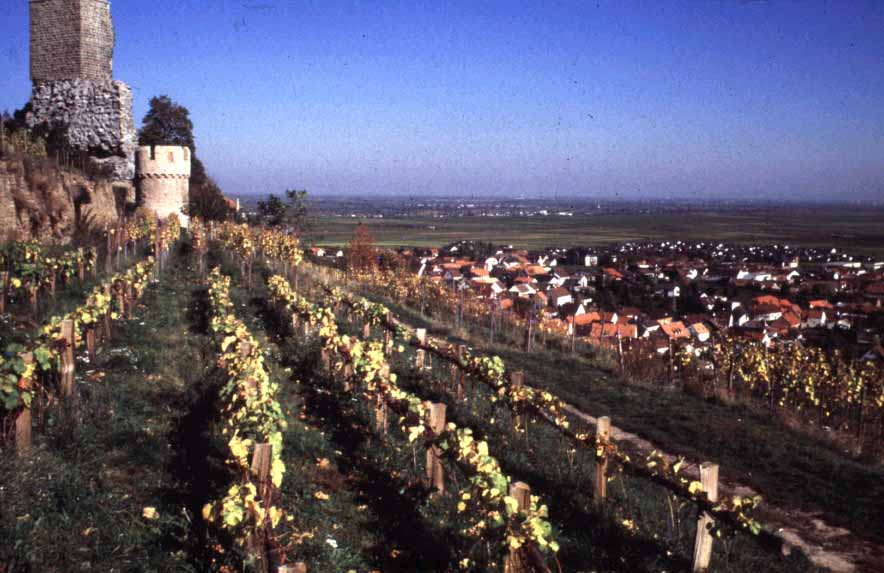
This view of the Rhine River Valley The Palatine region was part of the Roman Empire from the 1st century BC to the 5th century AD. (10) During this time, the term 'Germania' was used to describe the lands occupied by Germanic tribes. (21)
The Palatinate or German Pfalz, was the land of Count Palatine, a leading secular prince of the Holy Roman Empire. (17)
After the withdrawal of Roman forces, the region changed hands among Frankish, Merovingian and Carolingian Empires. During the Middle Ages, the archbishoprics of Mainz and Trier, and the countship of Palatine became the most important German provinces. (10) From the 16th century on, Germans became increasingly involved in European wars and religious struggles. Although the Palatinate had good land for the farmers and vintners, it was in a prime location for invasion by armies of surrounding countries especially France. (17)

Origins of the Werner surname
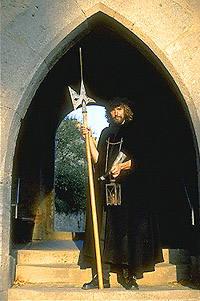
German guard in the Middle Ages

Ruppertsberg, Rhineland-Palatinate
German history and the Palatinate
is seen from Ruine Limberg in Bad Dürkheim,
approx. 5 miles from Ruppertsberg in Rhineland-Palatinate.
SOURCES
LINKS
MAIN
NEXT
This page created on March 3, 2001 by Diane Pitre Werner