 Marcelli (Martius) Werner
Franziska Etmayer
Marcelli (Martius) Werner
Franziska Etmayer
Children of Marcelli & Franziska
| Generation 4 | 5 | 6 | 7 | 8 | Main | 1 | 2 |
|---|
Marcelli (Martius) Werner
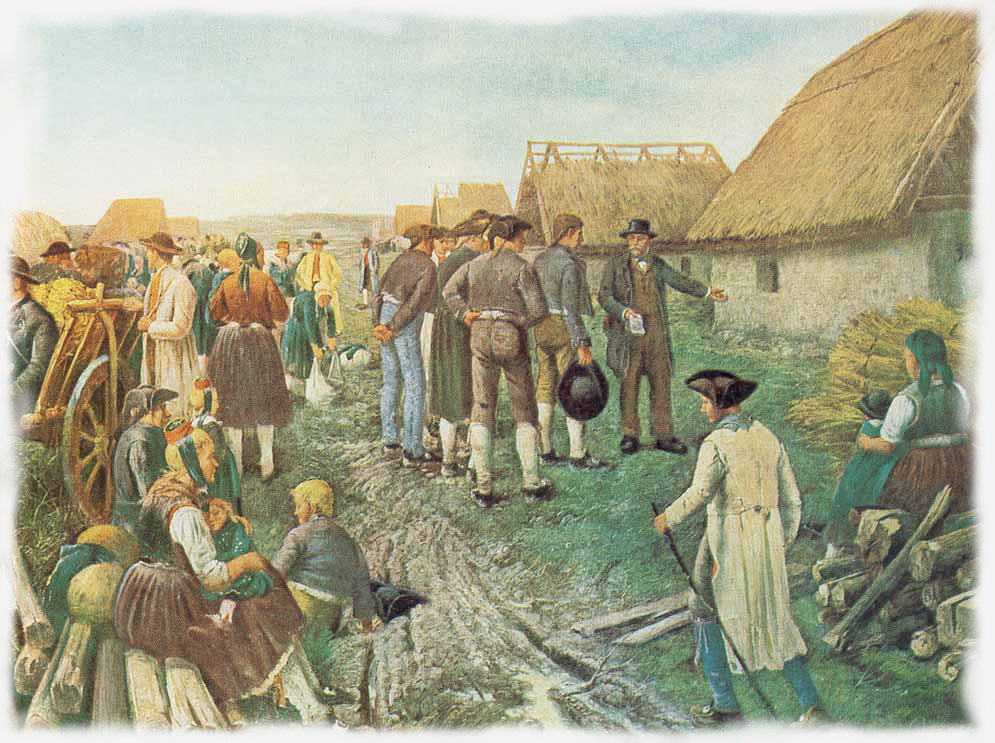
Marcelli (Martius) Werner was born October 31, 1756 in Ruppertsberg, Germany. He was 8 years old when he journeyed along the Danube with his family to settle in the Village of Filipowa in the Batchka region of Hungary. Life would have been difficult for Martius as his family was among the first to settle in this new community.
At the age of 19, Martius had married the 17-year old Franziska Etmayer who also lived in Filipowa. The children of this couple would be part of the first generation to grow up in a Donauswaben (Danube Swabian) Village.
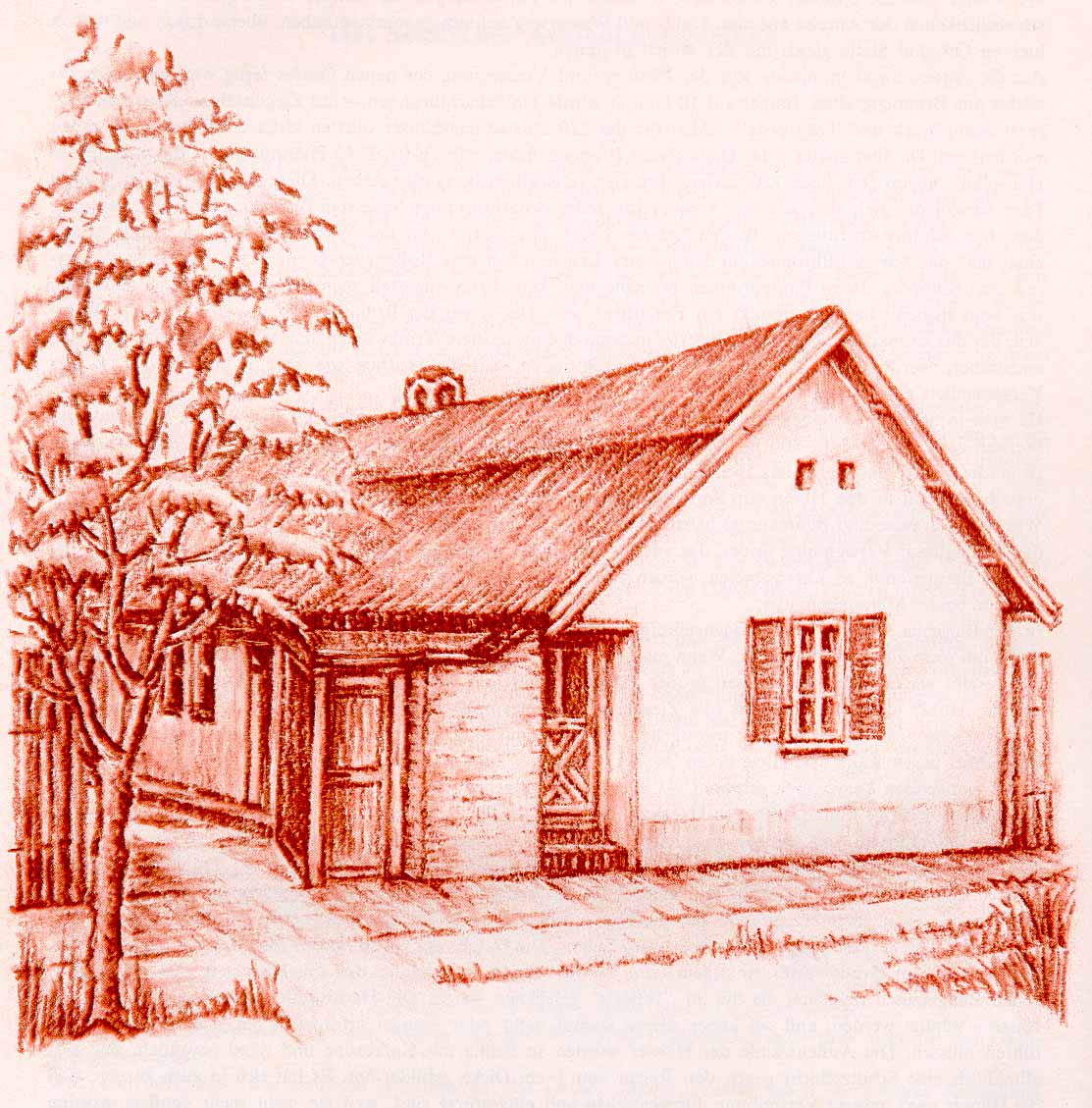
As seen above, a house from a Danube Swabian Village was typically aligned perpendicular to the street. Their white-washed house had a tiled roof and was built in a series of adjoining rooms. There was a parlor at the end facing the street and the sheds for domestic animals at the opposite end. A long covered porchway could extend the full length of the house.
The Swabians
had a reputation for the cleanliness of their carefully maintained houses and gardens.
Each houseplot had a fence surrounding a courtyard with vines of which the grapes would be eaten and used for wine. They would also contain fruit trees such as peach and apricot. As well, the Mulberry trees that would line the streets of some villages had at one time, supported a thriving silkworm industry. The
home gardens of melons and tomatoes would grow well in the Danube valley soil and larger crops of sugar beets, hemp, wheat, corn and alfalfa were also grown in the fields surrounding the village.
(5)
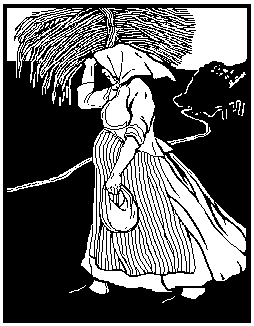
Franziska Etmayer was born around 1759 in Abenheim, Germany. The village of Abenheim is also in Rhineland-Palatinate, approximately twenty-six miles from Ruppertsberg where her husband, Martius Werner
was born.
Franziska was only a little girl when she left Germany with her parents, Anton Etmayer and Maria-Elisabeth Scherer who followed the Danube to southern Hungary. Her family arrived in 1768 to join other German settlers in Filipowa. The village of Filipowa was situated in the Batchka region of Hungary. This German settlement had only been established a few years prior and there was still much work to do.
The Etmayer family was also counted among the first settlers in Filipowa. Franziska's parents both passed away in 1783.
Franziska Etmayer and Martius Werner had ten children born in Filipowa between 1776 and 1801. The difficulties they faced are evident in that three of their children would not reach adulthood. Nevertheless, five sons will leave a descendancy.
Franziska Etmayer passed away in Filipowa on November 27, 1827 at the age of 68. Her husband, Martius Werner died less than a year later on September 12, 1828. He was 71 years old.
These villages would form the heart and soul of Danube Swabian life. The wide streets in the Swabian villages were always kept clean and became pathways for
community events such as baptism, wedding and funeral processions.
(21)
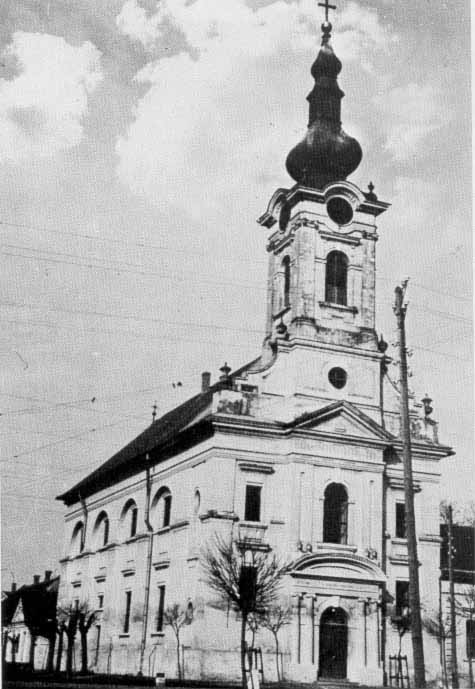
Whether religious or not, the focal point of the swabian villager's life was the church which held most social activities and family events. The most important local holiday called the "Kirchweih" (church consecration) was held on a Sunday in Autumn. Following a special mass, the villagers would join in a major feast, with processions, reunions, games, fun and dancing in the streets to the sounds of an Oompah band, usually far into the night.
(21)
The settlers were allowed to bring their own German clergy
and teachers. The school masters that came with them would continue to teach in German.
(5). The Danube Swabians were proud of their German language and cultural heritage and formed close-knit settlements. (4)
Typical Baroque style church
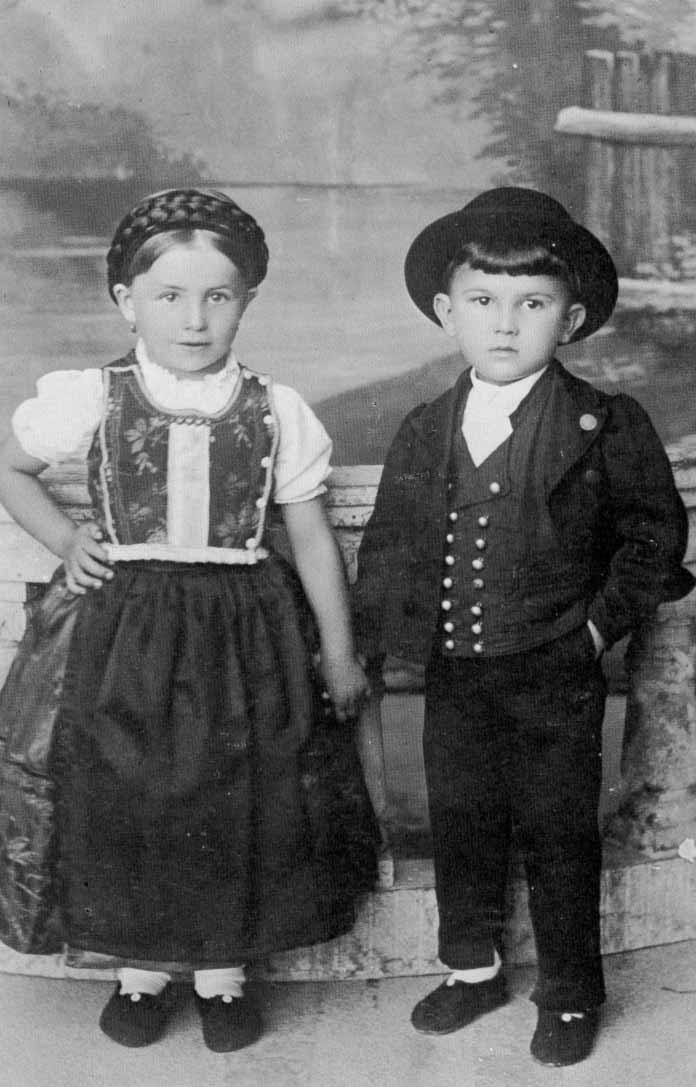
On Sundays, local customs would have the women wear their village costume known as "tracht"
which consisted of a distinctive dress plus decorative shawls,
scarves and aprons. Each village would develop its own dress and
hair style. (5)
This ethnic group would also develop its own dialect. The Danube Swabian dialect is an amalgem of Palatine and Swabian, with a hint of Viennese that is not always understood in Germany.
(21)
The Germans who settled in the larger cities of Hungary, were craftsmen and shopkeepers that would develop
their own middle-class and cultural life. In
German areas of the cities, they had their own schools as well as German-language newspapers and magazines.
The City of Temeschburg was known for its fine German theater events and other cultural activities. (5)
The expertise of Danube Swabian craftsmen, merchants and professional would also help develop the cities and towns of Hungary. Their impact is visible in an old guide to Budapest as the noteworthy structures listed are mostly Danube Swabians.
A new culture with its own customs was developed by this ethnic group. The Swabians in the Danubian plains of Hungary, Romania and Yugoslavia would be distinguished from the German Swabians and known as Donauswaben Danube Swabians.
(21)
Danube Swabian children in

Franziska Etmayer
A new Ethnic group emerges
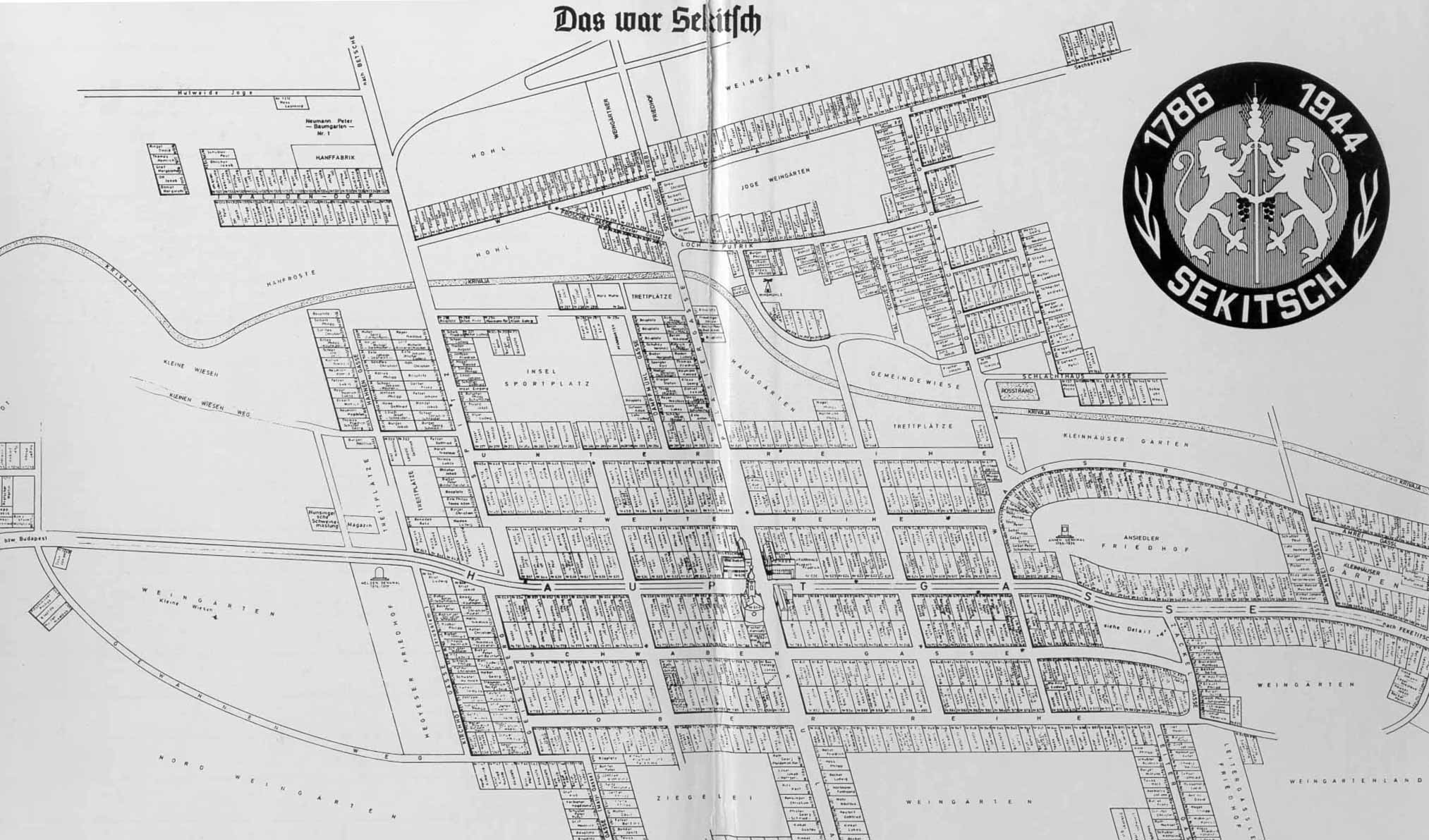
The plans for more than 1,000 German agrarian villages bordering the middle Danube in Southern Hungary, were actually laid out in Vienna, Austria. They were models of 17th century rural planning scattered on purpose across the entire Danubian Plain as examples for other ethnic groups.
An agrarian village is one where the barns, sheds etc., are grouped together like a hundred farmsteads side by side and where the grazing and crop fields surround the town. Most were built in a square checkerboard pattern as seen in this street plan of the village of Sekitsch in the Batchka. However, the decorative finish of the buildings in each village was designed slightly different and these differences can still be seen today. (21)
From the Swabian village of Sekitsch
traditional village costume
Children of Marcelli & Franziska
Died July 29, 1849 in Brestowacz
Married in Brestowacz
Died October 7, 1785 in Brestowacz
Died August 26, 1785 in Filipowa
Died Sept. 11, 1850 in Brestowacz
Married
Died October 20, 1871
Married November 7, 1809 Katharina Lintzmayer (Josef & Christina Hill)
Died August 13, 1849
Married November 2, 1813 Anna Maria Lintzmayer (Josef & Christina Hill)
Died January 24, 1798 in Filipowa
Died September 29, 1860
Married November 20, 1821 Marianna Baumstark (Franz & Franziska Jergler)
SOURCES
LINKS
MAIN
GENERATION 2
GENERATION 4

This page created on March 18, 2001 by Diane Pitre Werner