 Jakob Werner
Barbara-Maria Didio
Jakob Werner
Barbara-Maria Didio
Children of Jakob & Elizabetha
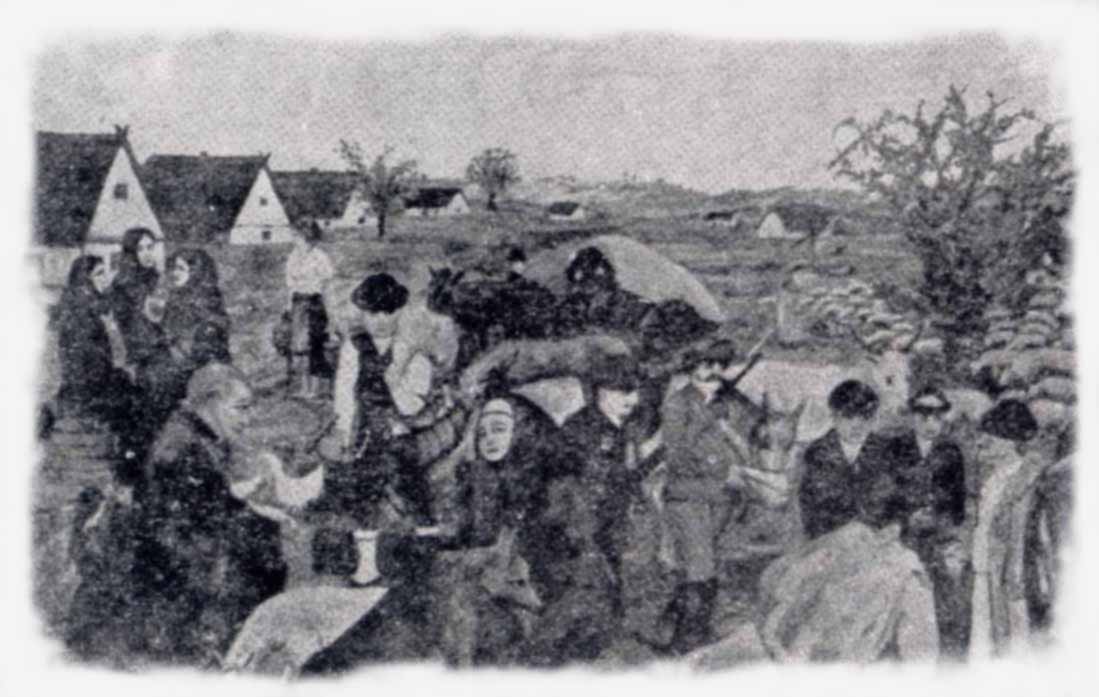
A Danube Swabian Day at the Market
| Generation 5 | 6 | 7 | 8 | Main | 1 | 2 | 3 |
|---|
Jakob Werner
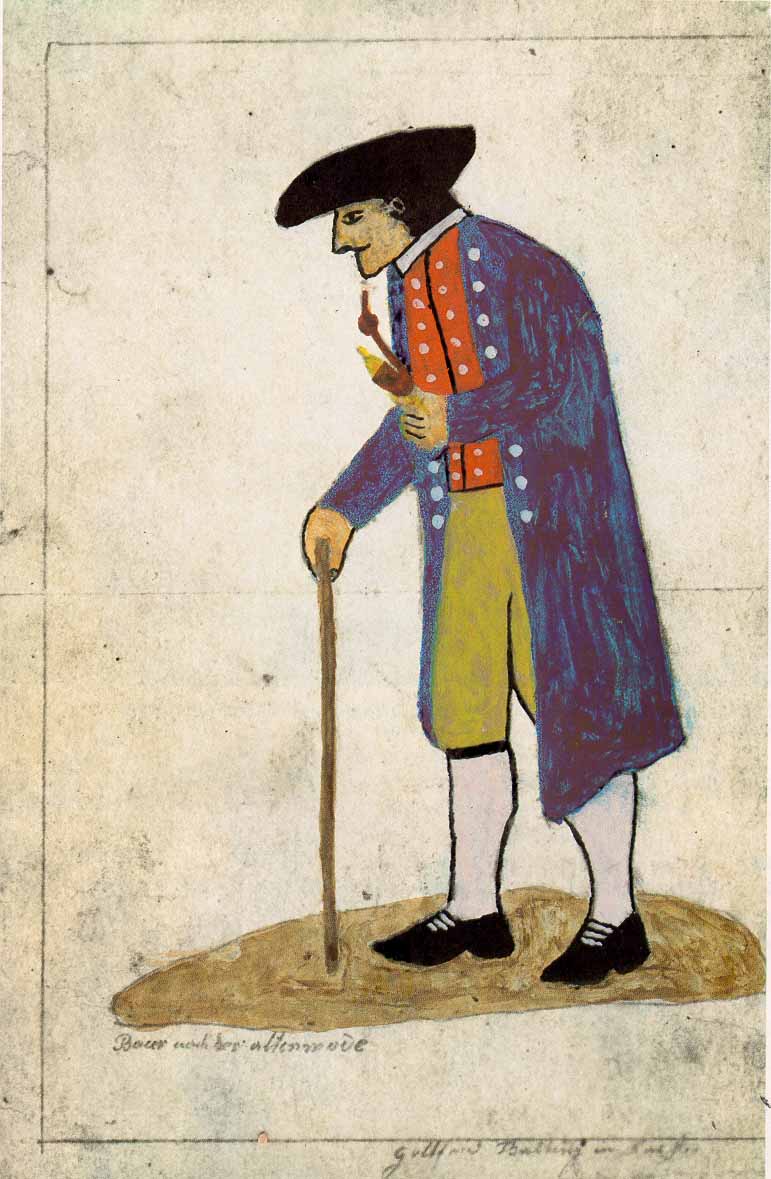
Jakob Werner, son of Martius and Franziska Etmayer, was born in Filipowa on March 10, 1786. Filipowa was situated in the Danubian plains of the Batchka region in Southern Hungary.
Jakob was only 18 when he married the 28 year old, Elisabetha Sherer also in Filipowa, on January 29, 1805. Elisabetha was the widow of Peter Unterreiner and the daughter of Johann Sherer and Elisabetha Teiger.
The marriage of Jakob Werner and Elisabetha Sherer was registered in Brestowacz, about 10 kilometres from their native village of Filipowa. Three children will be born of this couple although the first daughter who was named Elisabetha after her mother, will not survive. As was often the case, a few years later the third child will also be named Elisabetha. Unfortunately, one month after the birth of their third child, Jakob's first wife Elisabetha Sherer, died on November 26, 1810. She was 32.

Barbara-Maria Didio
 Jakob Werner was a widower for less than two months when he married his second wife, Barbara-Maria Didio on January 22, 1811 in Brestowacz.
Jakob and Barbara had eleven children of which three sons, Josef, Johann & Antoni Werner left a descendancy.
Jakob Werner was a widower for less than two months when he married his second wife, Barbara-Maria Didio on January 22, 1811 in Brestowacz.
Jakob and Barbara had eleven children of which three sons, Josef, Johann & Antoni Werner left a descendancy.
Barbara-Maria was the daughter of Josef Didio and Margareta Schulz oder Liez. In the German Village family book of Brestowatz, the mention 'native' is next to the name of Josef Didio (maybe Dydyo, Dydio, Titjo).
With German, Hungarian or Romanian being eliminated as origins of the surname Didio, there is evidence that points to a possible Serb, Croatian or Albanian link. As explained in the following historical tidbit on 'The Batschka', there were many different cultures in and around this region throughout the ages.
The Batschka [German],
Backa [Serbo-Croatian],
Bácska [Hungarian]
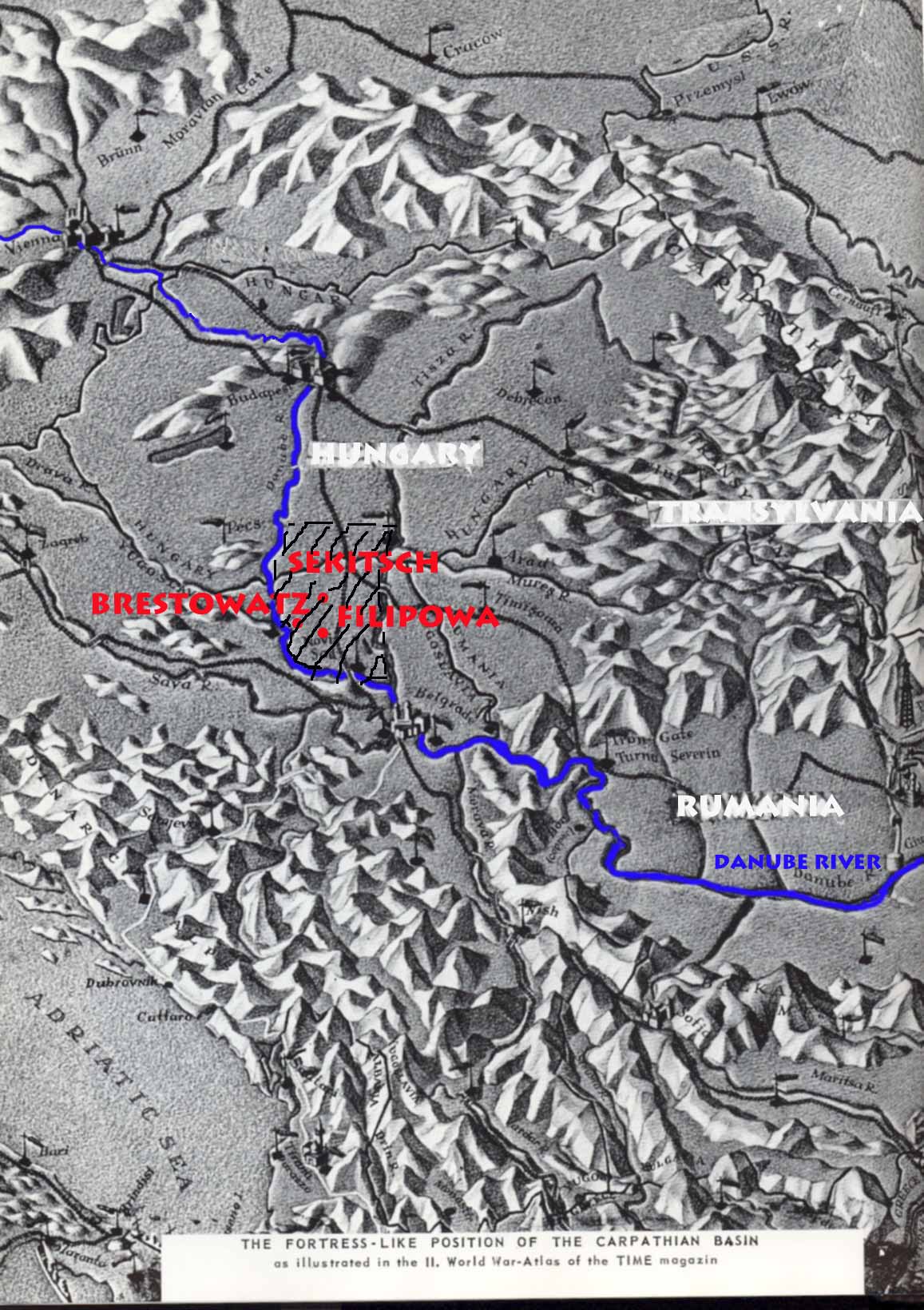
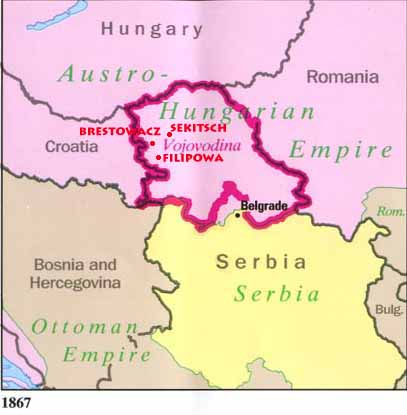
In the eighteenth century, the Swabian villages of Brestowacz, Filipowa and Sekitsch were in a region known as the Batschka, found in the Danubian plains of southern Hungary.
A diversity of ethnic groups surrounded the German villages in the Batschka; the largest being the Hungarians who formed the majority. The presence of Serbs, Croatians, Albanians, Slavs, Romanians, Bulgarians and others, also served as a testament to their part in the history of the region.
There were great migrations beginning in the 5th century from the steppe lands of Asia. Many tribes were attracted to the Great Roman Empire. Their path to Europe behind the north-south Danube corridor, would lead them straight through the Batschka making it a passage for a procession of nomadic tribes. (7)
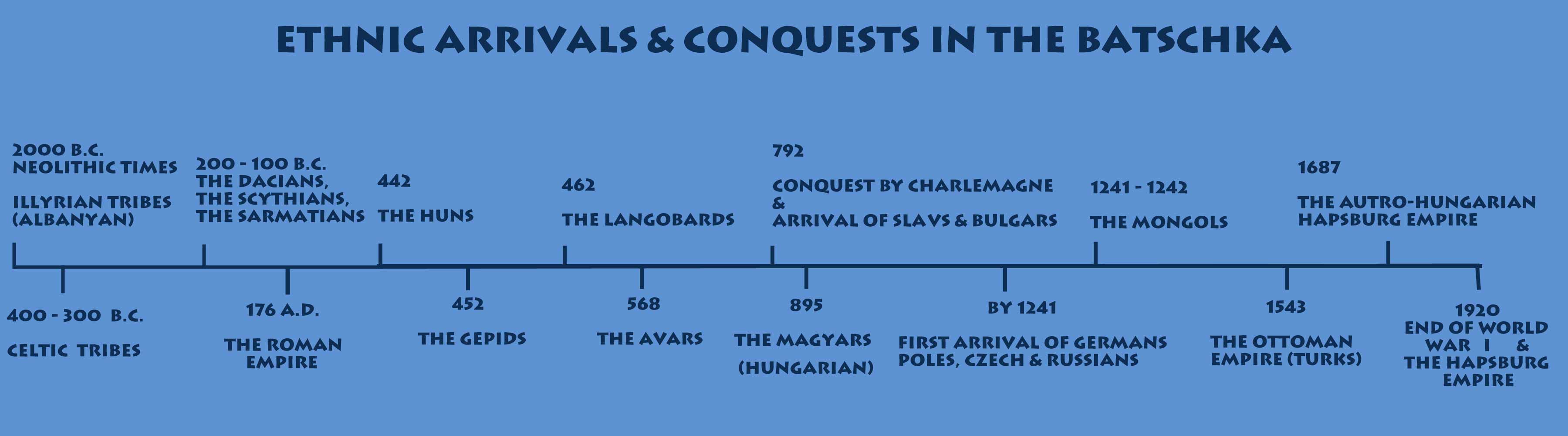
After World War I, the Bastchka was divided between Hungary and Yugoslavia. In 1920, German descendants in the villages of Brestowacz, Filipowa and Sekitsch found themselves living in the country of Yugoslavia. (5)
After the breakup of Yugoslavia towards the end of the Twentieth Century, part of the region known to the Danube Swabians as the Batschka would form northwestern Vojovodina in Serbia.
 The rise of Hitler and the outbreak of World War II would bring about the German occupation of Yugoslavia. Hitler's Germans occupied the Batschka from 1943 until 1944 when the Russians arrived and Yugoslavia fell to a communist regime under the dictatorship of Tito and his Serbian partisans.
Children of Jakob Werner & Elizabetha Scherer
Died before 1810
Children of Jakob Werner & Barbara Maria Didio
Died February 11, 1870
Married in Brestowatz
Married
Died January 15, 1834
Died March 24, 1825
Died December 23, 1898
Married in Brestowatz January 14, 1850 Marianna Redenz (Johann and Elisabeth Dworsky)
SOURCES
LINKS
MAIN
GENERATION 3
GENERATION 5
This page created on April 12, 2001 by Diane Pitre Werner