 Heinrich Werner & Susanna Bader
Two brothers settle in Filipowa, Hungary
Children of Heinrich & Susanna
| Generation 3 | 4 | 5 | 6 | 7 | 8 | Main | 1 |
|---|
Heinrich Werner & Susanna Bader
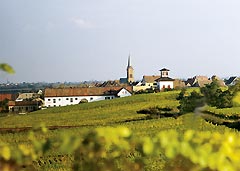
On May 15, 1724, Heinrich Werner was christened in the German village of Ruppertsberg in the Rhine River Valley where he grew up. He was the son of Heinrich & Maria Magdalena Werner.
It was also in Ruppertsberg, that he would marry Susanna Bader on September 19, 1747. Susanna was the daughter of Georg Bader and Eva Scheibin. Today, traces of the Bader family can still be found in the Village of Ruppertsberg.
Ruppertsberg, Rhineland-Palatinate
At that time in German history, there was a general economic stagnation as the population was still recovering from the ravages of the Thirty Year War (1618-1648) with France a century ago. Agricultural production also remained relatively low and potatoes from the Americas became a common crop particularly in the Rhineland.
Other economic obstacles were caused by the multitude of German states as a voyage on the Rhine from Basel to Rotterdam would involve 38 separate pay tolls. Finally, frequent harvest failures, disease and unemployment which had left about a quarter of the population destitute, would lead to widespread migration within the Habsburgs' Austro-Hungarian Empire (9)
Between 1718 and 1787, the Habsburg monarchy of Austria, which ruled Hungary at that time, would entice
Germans to emigrate to Southern Hungary where the lands had been devastated by over 150 years of Turkish occupation.
This mass settlement by the Habsburg would have three aims: to fortify the land against any further Turkish invasions,
to develop farm land and to promote the Roman Catholic Religion in Eastern Europe.
Catholics of the southwest German states were offered inducements such as free
agricultural land, homesites, construction materials, livestock and
exemption from taxes for several years.
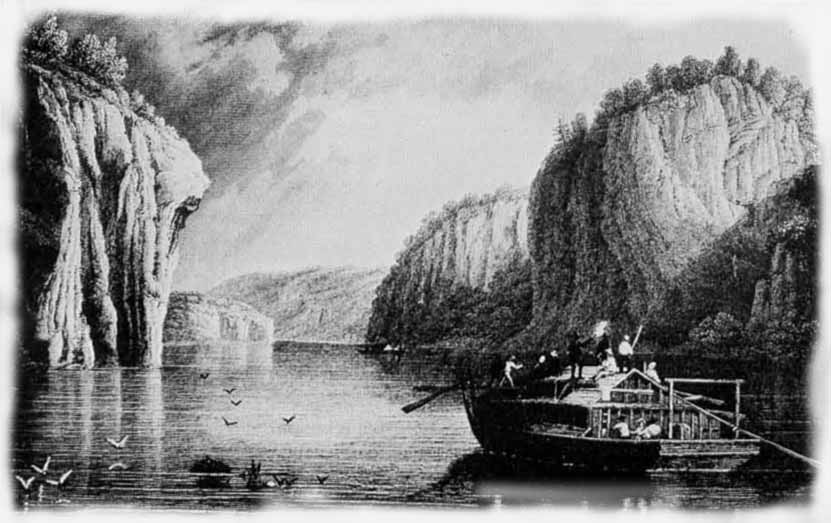
The city of Ulm in the Swabian region of the German states, was a common point
of departure. From there, settlers were boarded on boats called "Ulmer Schachtel"
which sailed the Danube to Vienna, where they registered for their land before continuing to Hungary.
The German colonization was known as "der Grosse Schwabenzug" or the
"Great Swabian Trek." The migration took place in three major
phases named after their Habsburg sponsors:
Settlers originated from the
regions of Baden, Wuerttemberg, Alsace, Lorraine, the Rhinelands,
Westphalia, Bavaria and Swabia as well as other areas. The term 'Swabians' was first used
by the Hungarians to refer to all Germans (regardless of their native region or dialect) who settled in the Danube valley of Hungary.
(5)
Heinrich Werner arrived in Filipowa, Hungary sometime in 1765 with his wife Susanna and their children. The baby Elisabeth was born just in October of the previous year. Heinrich would join his brother Johann and his family, who had arrived in Filipowa in January of 1765.
Heinrich & Johann were part of the second wave of 75,000 German Colonists. The first group of 15,000 German settlers were killed in Turkish raids or died from bubonic plague.
The hardships experienced by these German migrants are summarized in this verse: (5)
Der Erste hat den Tod,
which means, "The first encounters death, the second need,
only the third has bread."
Heinrich and Johann Werner were among the original settlers in Filipowa. We don't know if these hardships contributed to Johann's demise but Heinrich's brother would pass away in 1771, only six years after his arrival in Filipowa.
Heinrich Werner & Susanna Bader had also lost two children in 1769, two-year old Johann and four-year old Elisabeth. Among the eleven children born of this couple, only their son Martius (Marcelli) Werner is known to have left a descendancy.

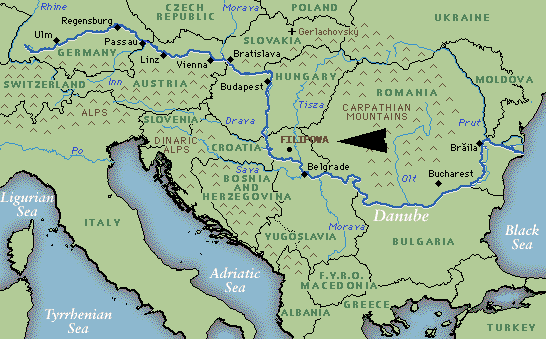
German migration to Hungary
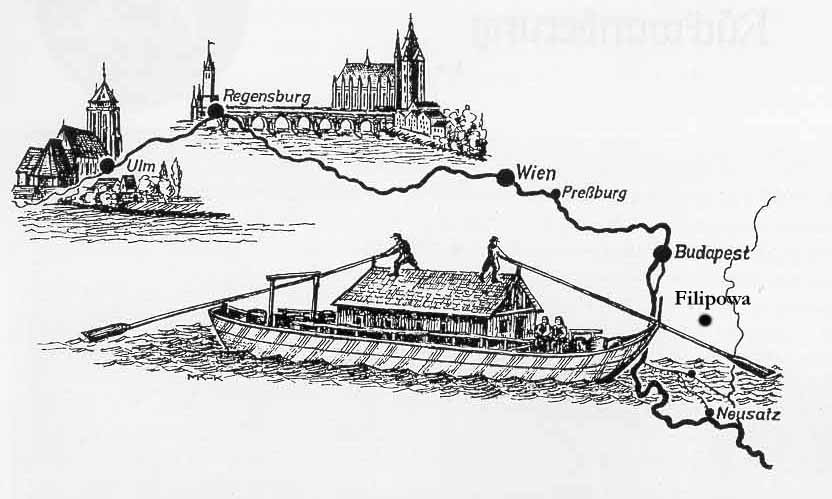
Heinrich & Johann Werner
Two brothers settle in Filipowa, Hungary
Der Zweite hat die Not,
Der Dritte erst hat Brot.
Children of Heinrich Werner & Susanna Bader
SOURCES
LINKS
MAIN
GENERATION 1
GENERATION 3

This page created on March 6, 2001 by Diane Pitre Werner